
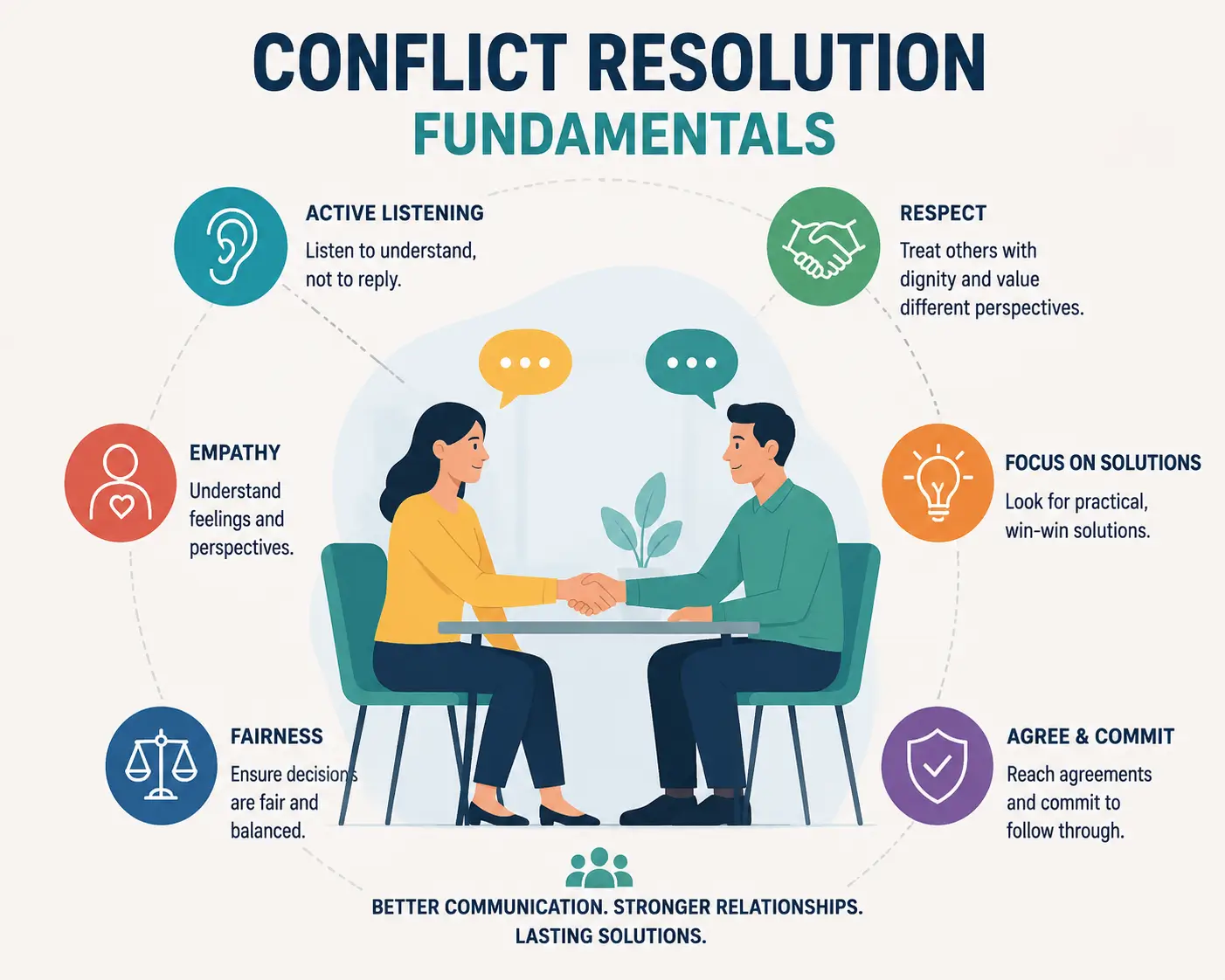
Introduction to Conflict Resolution Fundamentals
The Conflict Resolution Fundamentals course provides learners with an introduction to understanding conflicts and developing effective methods for resolving disagreements. Conflict is a natural part of human interaction and can occur when individuals have different opinions, goals, values, or expectations.
Learning how to manage conflict effectively helps individuals maintain better relationships, improve teamwork, and create positive environments. This course introduces learners to the principles of communication, negotiation, problem-solving, and cooperation required for peaceful conflict management.
The course explains how conflicts arise, how they affect relationships, and how constructive approaches can help create better outcomes.
Importance of Conflict Resolution Fundamentals
Conflict management skills are valuable in everyday life and professional environments.
The Conflict Resolution Fundamentals course helps learners:
- Understand causes of conflict
- Improve communication skills
- Develop problem-solving abilities
- Learn negotiation techniques
- Build stronger relationships
- Improve teamwork
- Manage disagreements effectively
- Develop emotional awareness
Effective conflict resolution helps create respectful and productive interactions.
Understanding Conflict and Its Causes
Conflict occurs when differences create disagreements between individuals or groups.
Learners explore:
Types of Conflict
Understanding personal, workplace, and social conflicts.
Sources of Conflict
Learning about common causes such as communication gaps, differences in opinions, and misunderstandings.
Conflict Impact
Understanding how unresolved conflicts affect relationships and productivity.
Conflict Awareness
Developing the ability to recognize problems early.
Understanding conflict is the first step toward finding solutions.
Communication Skills for Conflict Resolution
Communication plays a major role in resolving disagreements.
The course covers:
Active Listening
Learning how to understand others’ viewpoints.
Clear Communication
Developing skills for expressing thoughts respectfully.
Feedback Skills
Understanding how to provide and receive feedback.
Non-Verbal Communication
Learning how body language and tone influence discussions.
Good communication reduces misunderstandings and improves cooperation.
Problem-Solving and Decision-Making Skills
Resolving conflicts requires practical solutions.
Learners understand:
Identifying Problems
Learning how to recognize the main issues behind conflicts.
Solution Development
Creating possible approaches to resolve disagreements.
Decision-Making
Choosing suitable solutions through careful evaluation.
Collaborative Problem Solving
Working together to achieve positive outcomes.
These skills help individuals handle challenges effectively.
Negotiation Fundamentals
Negotiation helps individuals reach agreements.
The course introduces:
Negotiation Techniques
Understanding methods for finding common ground.
Compromise and Cooperation
Learning how different perspectives can be balanced.
Agreement Building
Developing solutions acceptable to all parties.
Respectful Discussion
Maintaining positive communication during negotiations.
Negotiation skills are useful in workplaces and personal relationships.
Emotional Awareness and Conflict Management
Emotions can influence how conflicts develop and are resolved.
Learners explore:
Emotional Understanding
Recognizing feelings during disagreements.
Self-Control
Managing reactions during challenging situations.
Empathy
Understanding other people’s perspectives.
Respectful Responses
Building healthier communication patterns.
Emotional awareness supports better conflict handling.
Workplace Conflict Resolution
Conflicts often occur in professional environments.
The course discusses:
- Team disagreements
- Workplace communication
- Leadership challenges
- Employee relationships
- Professional problem solving
Conflict management skills help create cooperative workplaces.
Mediation and Cooperation Awareness
Mediation helps people resolve conflicts through guided discussions.
Learners gain awareness of:
Neutral Communication
Understanding the importance of fair discussions.
Cooperation
Working together toward solutions.
Relationship Improvement
Building trust after disagreements.
Peaceful Resolution
Finding solutions without creating further conflict.
These concepts support positive relationships.
Conflict Prevention Strategies
Preventing conflicts is often better than solving them later.
Learners understand:
- Effective communication habits
- Respectful interactions
- Clear expectations
- Team cooperation
- Early problem identification
Prevention strategies help maintain healthy environments.
Skills You Will Gain
After completing this course, learners may develop:
- Conflict management skills
- Communication abilities
- Negotiation knowledge
- Problem-solving skills
- Active listening skills
- Emotional awareness
- Teamwork abilities
- Relationship management skills
Benefits of Conflict Resolution Fundamentals Course
This course provides several benefits:
- Better understanding of conflicts
- Improved communication skills
- Stronger relationship management
- Enhanced teamwork abilities
- Better problem-solving approach
- Increased confidence during disagreements
- Improved workplace interactions
Who Should Join
This course is suitable for:
- Students
- Professionals
- Managers
- Team leaders
- Educators
- Community workers
- Human resource learners
- Beginners interested in communication skills
No previous experience is required.
Career Opportunities
After completing this course, learners may explore:
- Team Coordinator
- Human Resource Assistant
- Community Support Assistant
- Communication Trainer Assistant
- Workplace Relations Assistant
- Management Support Associate
- Conflict Management Assistant
FAQ Section
1. What is Conflict Resolution Fundamentals?
Conflict Resolution Fundamentals is a beginner course that teaches communication, negotiation, problem-solving, and conflict management skills.
2. Who can join this course?
Students, professionals, managers, educators, and anyone interested in improving communication skills can join.
3. Do I need previous conflict management experience?
No, this course is designed for beginners.
4. What will I learn in Conflict Resolution Fundamentals?
You will learn about conflict causes, communication methods, negotiation, problem-solving, and relationship management.
5. Why is conflict resolution important?
It helps individuals manage disagreements, improve relationships, and create positive environments.
6. Does this course teach negotiation skills?
Yes, learners gain awareness of basic negotiation techniques and agreement-building methods.
7. What skills will I gain?
You will gain communication skills, problem-solving abilities, negotiation knowledge, and conflict management awareness.
8. Is this course suitable for beginners?
Yes, it is designed for learners with no previous conflict resolution experience.
9. Can this course help in professional life?
Yes, conflict management skills are useful in workplaces, teams, leadership roles, and customer interactions.
10. How does this course improve relationships?
It teaches respectful communication, empathy, cooperation, and methods for resolving disagreements effectively.


Reviews
There are no reviews yet.