
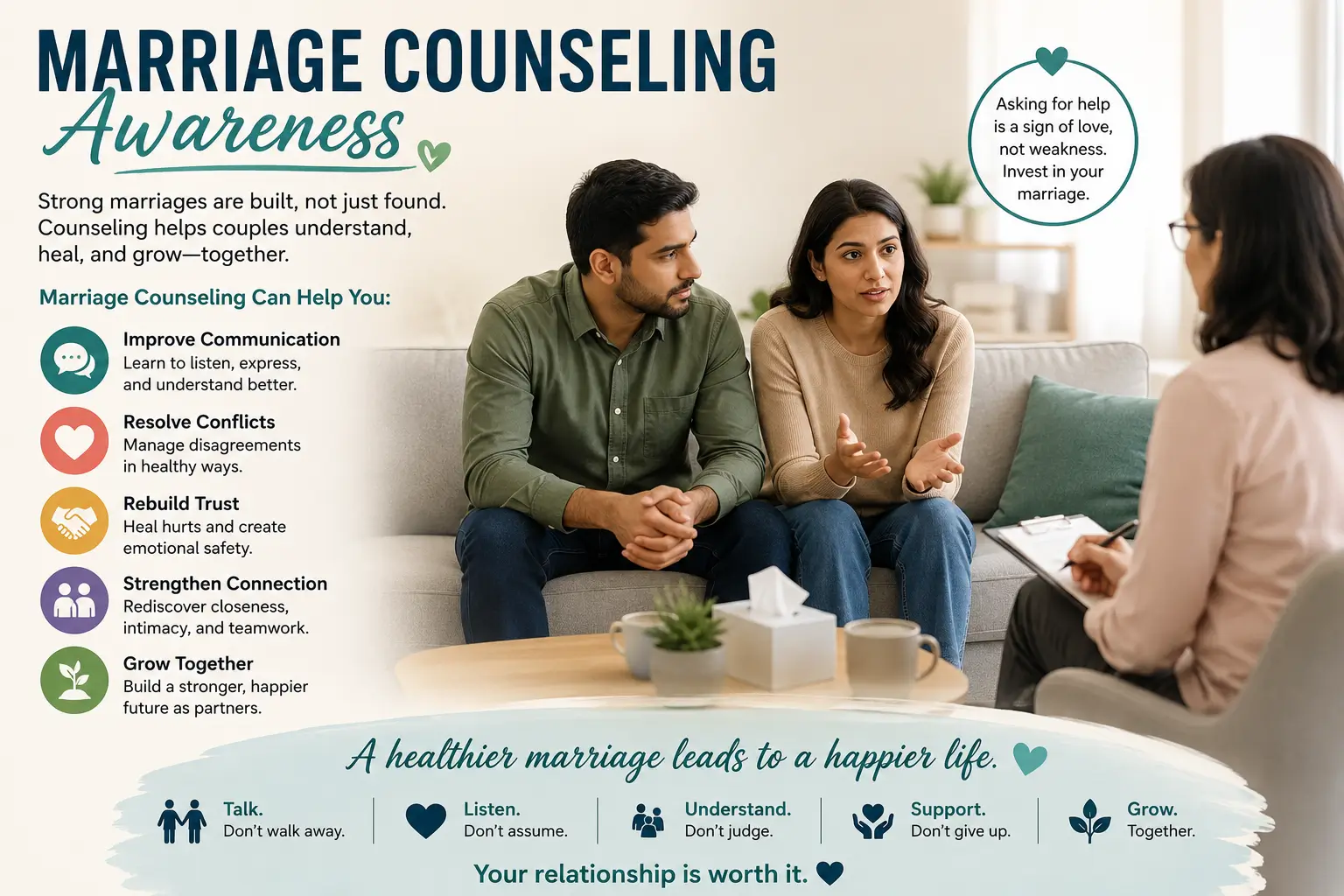
Introduction to Marriage Counseling Awareness
Marriage is an important relationship that involves partnership, communication, mutual support, and shared responsibilities. The Marriage Counseling Awareness course provides learners with a comprehensive introduction to marriage counseling concepts, relationship dynamics, communication skills, and emotional support strategies.
Marriage counseling focuses on helping individuals understand relationship patterns, improve communication, strengthen trust, and develop constructive approaches to resolving challenges. Awareness of counseling principles can help support healthier interactions and stronger marital relationships.
This course introduces learners to the foundations of marriage counseling and explores how communication, empathy, respect, and understanding contribute to successful relationships.
Importance of Marriage Counseling Awareness
Healthy marital relationships contribute to emotional well-being, family stability, and personal growth.
Studying marriage counseling awareness helps learners:
- Improve relationship communication
- Develop empathy and understanding
- Strengthen interpersonal skills
- Support conflict resolution
- Increase emotional awareness
- Build trust and respect
- Improve problem-solving abilities
- Promote healthy relationship practices
These benefits make relationship awareness valuable in both personal and professional contexts.
Understanding Marital Relationships
Every relationship has unique characteristics and dynamics.
Relationship Awareness
Learners explore how marital relationships develop and evolve over time.
Mutual Understanding
The course explains the importance of understanding individual perspectives.
Shared Responsibilities
Participants gain awareness of cooperation and partnership within marriage.
Emotional Connection
Learners understand the role of emotional support in healthy relationships.
Understanding relationship dynamics helps create stronger and more supportive partnerships.
Communication in Marriage Counseling Awareness
Communication is one of the most important elements of successful relationships.
Effective Communication
Learners understand how clear communication improves understanding.
Active Listening
The course introduces listening skills that support meaningful conversations.
Respectful Interaction
Participants explore communication approaches that encourage cooperation.
Open Discussion
Learners gain awareness of constructive ways to share thoughts and feelings.
Strong communication contributes to healthier marital relationships.
Emotional Awareness and Empathy
Emotional understanding supports relationship growth and stability.
The course covers:
Emotional Recognition
Understanding feelings and emotional responses.
Empathy Development
Learning how understanding another person’s perspective improves relationships.
Emotional Support
Exploring ways partners can provide encouragement and understanding.
Relationship Strengthening
Understanding how empathy contributes to trust and connection.
These concepts encourage supportive and respectful relationships.
Conflict Resolution and Problem-Solving
Challenges and disagreements are a normal part of relationships.
Learners explore:
Conflict Awareness
Understanding common causes of relationship disagreements.
Problem-Solving Approaches
Learning constructive methods for addressing concerns.
Communication During Challenges
Exploring ways to maintain respectful interactions.
Relationship Preservation
Understanding strategies that support long-term relationship health.
Effective conflict management can strengthen relationship resilience.
Trust and Relationship Building
Trust is an essential element of healthy marriages.
The course introduces:
- Trust-building concepts
- Relationship support practices
- Respectful communication
- Reliability awareness
- Emotional connection
- Positive interaction techniques
Strong trust contributes to relationship satisfaction and stability.
Marriage Counseling Awareness Principles
Marriage counseling encourages positive communication and understanding.
Learners gain awareness of:
Counseling Communication Skills
Understanding supportive interaction techniques.
Relationship-Centered Approaches
Learning methods that focus on mutual understanding.
Positive Communication
Exploring strategies that strengthen relationships.
Healthy Relationship Practices
Understanding behaviors that support relationship growth.
These principles provide a foundation for relationship awareness and support.
Applications of Marriage Counseling Awareness
Marriage counseling concepts are useful in many areas of life.
Learners understand applications in:
Personal Relationships
Improving communication and understanding.
Family Well-Being
Supporting healthy family environments.
Community Services
Helping individuals and families access support resources.
Personal Development
Building stronger interpersonal skills and emotional awareness.
These applications demonstrate the practical value of relationship education.
Skills You Will Gain
Upon completing this course, learners may develop:
- Relationship communication skills
- Active listening abilities
- Emotional awareness
- Empathy understanding
- Conflict resolution awareness
- Problem-solving skills
- Trust-building knowledge
- Interpersonal communication abilities
- Relationship support understanding
- Personal development awareness
These skills are valuable in personal relationships, family support, counseling-related environments, and community services.
Benefits of Studying Marriage Counseling Awareness
This course offers several valuable benefits:
- Improved relationship communication
- Better understanding of marital dynamics
- Enhanced emotional awareness
- Improved empathy and understanding
- Stronger conflict resolution knowledge
- Better interpersonal communication skills
- Increased relationship awareness
- Preparation for advanced counseling studies
The knowledge gained helps learners support healthier relationships and stronger communication.
Who Should Join
This course is suitable for:
- Students
- Couples
- Parents
- Community workers
- Social service learners
- Educators
- Healthcare support staff
- Personal development enthusiasts
- Counseling learners
- Beginners interested in relationship studies
No prior experience is required.
Career Opportunities
After completing this course, learners may explore opportunities such as:
- Relationship Support Assistant
- Community Support Worker
- Family Services Assistant
- Counseling Assistant
- Social Service Support Worker
- Community Outreach Assistant
- Education Support Assistant
- Human Resources Assistant
- Family Welfare Support Staff
- Communication Support Coordinator
FAQ Section
1. What is Marriage Counseling Awareness?
It is a beginner-friendly course that introduces marriage counseling concepts, communication skills, and relationship awareness.
2. Who can join this course?
Students, couples, professionals, and anyone interested in relationship well-being can join.
3. Do I need prior counseling knowledge?
No, the course is designed for beginners.
4. What will I learn?
You will learn communication skills, empathy, relationship dynamics, conflict resolution, and counseling awareness concepts.
5. Why is marriage counseling awareness important?
It helps improve communication, strengthen relationships, and support emotional well-being.
6. Does the course cover conflict resolution?
Yes, learners gain awareness of constructive approaches to handling relationship challenges.
7. What skills will I gain?
You will gain communication abilities, emotional awareness, empathy understanding, and relationship support knowledge.
8. Is this course suitable for beginners?
Yes, it is specifically designed for learners with no prior experience.
9. Can this course support careers in counseling and family services?
Yes, it provides foundational knowledge useful in community services, counseling support, and family assistance roles.
10. Is Marriage Counseling Awareness useful for personal development?
Yes, it helps improve relationship skills, communication, emotional awareness, and interpersonal understanding.




Reviews
There are no reviews yet.