
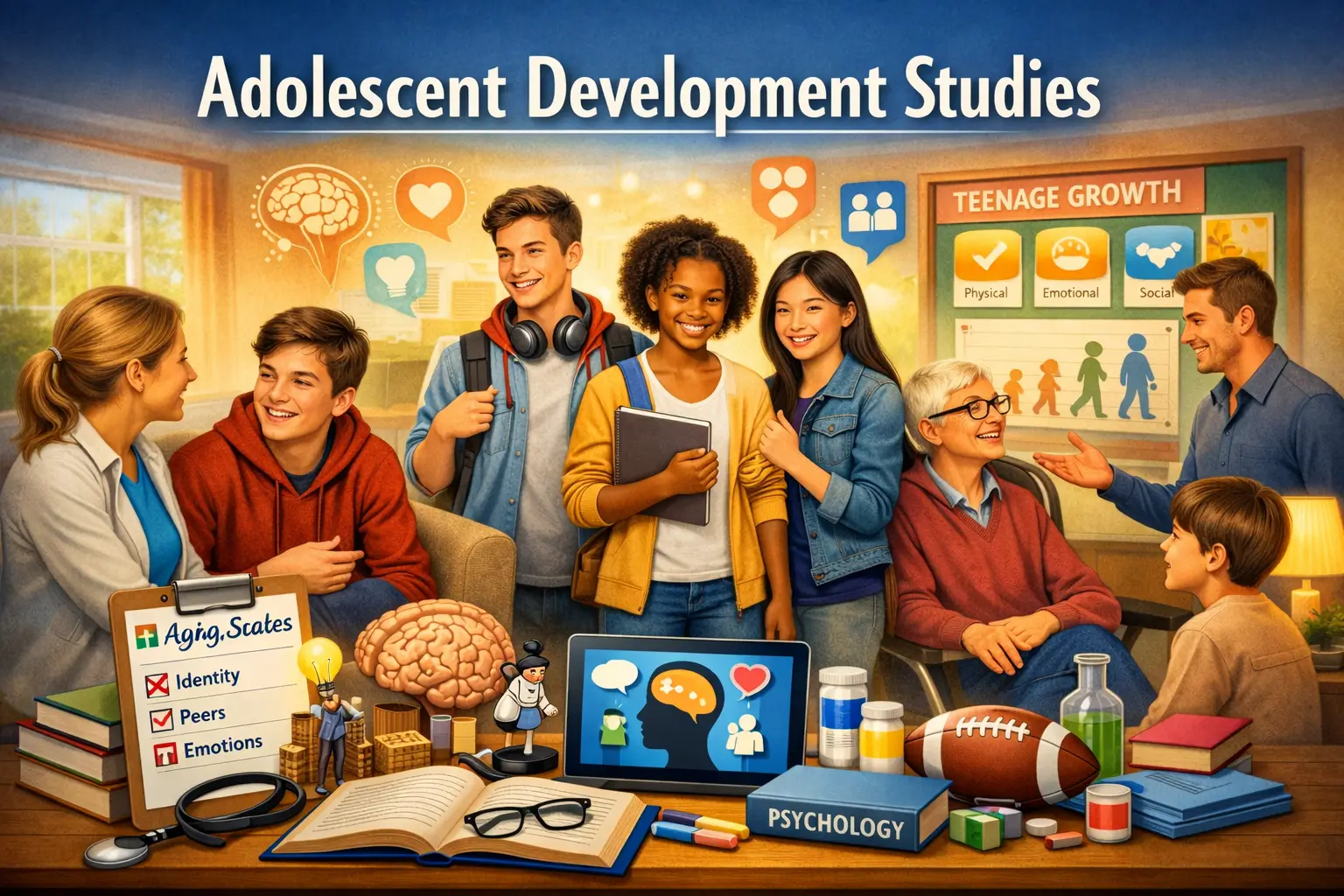
Introduction to Adolescent Development Studies
Adolescence is one of the most important stages of human development. During this period, individuals experience rapid physical growth, emotional changes, cognitive development, and evolving social relationships. The Adolescent Development Studies course provides learners with a comprehensive introduction to the processes and factors that influence adolescent growth and development.
Understanding adolescence is essential for parents, teachers, counselors, youth workers, and community professionals who interact with young people. By studying adolescent development, learners gain valuable insights into the challenges, opportunities, and experiences that shape teenagers as they prepare for adulthood.
This course explores the developmental changes that occur during adolescence and highlights the importance of supportive environments that encourage healthy growth and well-being.
Importance of Adolescent Development Studies
Understanding adolescent development helps individuals support young people more effectively.
Studying adolescent development helps learners:
- Understand teenage growth and development
- Improve communication with adolescents
- Increase awareness of behavioral changes
- Support emotional development
- Encourage positive social interactions
- Improve educational understanding
- Promote healthy decision-making
- Support youth well-being
These benefits make adolescent development knowledge valuable in educational, family, and community settings.
Physical Growth During Adolescence
Physical development is one of the most noticeable aspects of adolescence.
Growth and Maturity
Learners explore the physical changes that occur during teenage years.
Developmental Transitions
The course explains how adolescents move through stages of growth.
Health Awareness
Participants gain awareness of factors that support healthy development.
Lifestyle Influences
Learners understand how daily habits contribute to overall well-being.
Physical development forms an important part of adolescent growth.
Emotional Development and Self-Awareness
Adolescence is a period of significant emotional change.
The course introduces:
Emotional Growth
Understanding how emotional awareness develops during adolescence.
Self-Understanding
Learning how adolescents develop a stronger sense of identity.
Confidence Building
Exploring factors that contribute to self-esteem and personal growth.
Emotional Expression
Understanding how young people communicate emotions and feelings.
These concepts help explain emotional experiences during adolescence.
Cognitive Development and Learning
Adolescents continue to develop important thinking and learning abilities.
Learners explore:
Cognitive Growth
Understanding changes in reasoning and problem-solving skills.
Decision-Making Awareness
Learning how adolescents make choices and evaluate situations.
Learning Development
Exploring how education influences growth and understanding.
Critical Thinking
Understanding the development of analytical and logical thinking skills.
These concepts support academic success and personal development.
Social Development and Relationships
Relationships become increasingly important during adolescence.
The course covers:
Peer Relationships
Understanding the role of friendships in adolescent life.
Family Connections
Learning how family relationships influence development.
Communication Skills
Exploring effective communication and social interaction.
Community Participation
Understanding how adolescents engage with society and communities.
These social experiences contribute to personal growth and development.
Identity Formation and Personal Growth
Identity development is a major focus during adolescence.
Learners gain awareness of:
- Personal values
- Self-concept development
- Individual interests
- Personal goals
- Social identity
- Future aspirations
Understanding identity formation helps explain many adolescent experiences and behaviors.
Behavioral Patterns and Development
Adolescent behavior is influenced by various internal and external factors.
The course discusses:
Behavioral Awareness
Understanding common behavioral changes during adolescence.
Environmental Influences
Learning how surroundings affect development and behavior.
Motivation and Goals
Exploring factors that influence actions and choices.
Personal Responsibility
Understanding the importance of accountability and decision-making.
These concepts help learners better understand adolescent behavior.
Family, School, and Community Influences
Adolescents are shaped by multiple environments.
Learners understand the role of:
Family Support
Providing guidance and emotional stability.
Educational Settings
Supporting learning and personal development.
Community Resources
Encouraging participation and social growth.
Cultural Influences
Understanding how traditions and values affect development.
These influences contribute to healthy adolescent growth.
Applications of Adolescent Development Studies
Knowledge of adolescent development is useful in many fields.
The course explores applications in:
Education
Supporting student learning and development.
Youth Services
Helping adolescents achieve positive outcomes.
Community Programs
Developing youth-focused initiatives and support services.
Family Support Services
Promoting healthy family relationships and communication.
These applications demonstrate the practical value of adolescent development knowledge.
Skills You Will Gain
Upon completing this course, learners may develop:
- Adolescent development awareness
- Communication skills
- Emotional understanding
- Behavioral observation skills
- Youth support knowledge
- Relationship-building abilities
- Educational awareness
- Social development understanding
- Critical thinking awareness
- Personal growth knowledge
These competencies are valuable in education, youth services, counseling support, and community development.
Benefits of Studying Adolescent Development Studies
This course offers several valuable benefits:
- Improved understanding of adolescence
- Better awareness of emotional and social development
- Enhanced communication skills
- Increased understanding of youth behavior
- Improved support for adolescents
- Greater educational awareness
- Better relationship-building knowledge
- Preparation for advanced studies in psychology and human development
The knowledge gained helps learners support adolescents during an important stage of growth and development.
Who Should Join
This course is suitable for:
- Students
- Teachers
- Parents
- Youth workers
- Community service professionals
- Caregivers
- Counselors in training
- Social service learners
- Education professionals
- Beginners interested in human development
No prior experience is required.
Career Opportunities
After completing this course, learners may explore opportunities such as:
- Youth Support Assistant
- Education Support Assistant
- Community Development Worker
- Family Support Assistant
- Child and Youth Services Assistant
- Student Support Coordinator Assistant
- Learning Support Assistant
- Community Outreach Assistant
- Youth Program Assistant
- Social Services Support Worker
FAQ Section
1. What is Adolescent Development Studies?
It is a beginner-friendly course that explores adolescent growth, emotional development, social changes, and behavioral patterns.
2. Who can join this course?
Students, parents, teachers, youth workers, and anyone interested in adolescent development can join.
3. Do I need prior knowledge of psychology?
No, the course is designed for beginners.
4. What will I learn?
You will learn about physical growth, emotional development, cognitive changes, social relationships, and identity formation during adolescence.
5. Why is adolescent development important?
Understanding adolescence helps support healthy growth, communication, learning, and well-being among young people.
6. Does the course cover emotional development?
Yes, learners gain awareness of emotional growth, self-awareness, and emotional expression during adolescence.
7. What skills will I gain?
You will gain communication skills, youth development awareness, behavioral understanding, and relationship-building knowledge.
8. Is this course suitable for beginners?
Yes, it is specifically designed for learners with no prior experience.
9. Can this course support careers in education and youth services?
Yes, it provides foundational knowledge useful in education, community programs, youth support services, and family assistance roles.
10. Is Adolescent Development Studies useful for parents and educators?
Yes, it helps improve understanding of teenage development, behavior, communication, and learning needs.





Reviews
There are no reviews yet.