
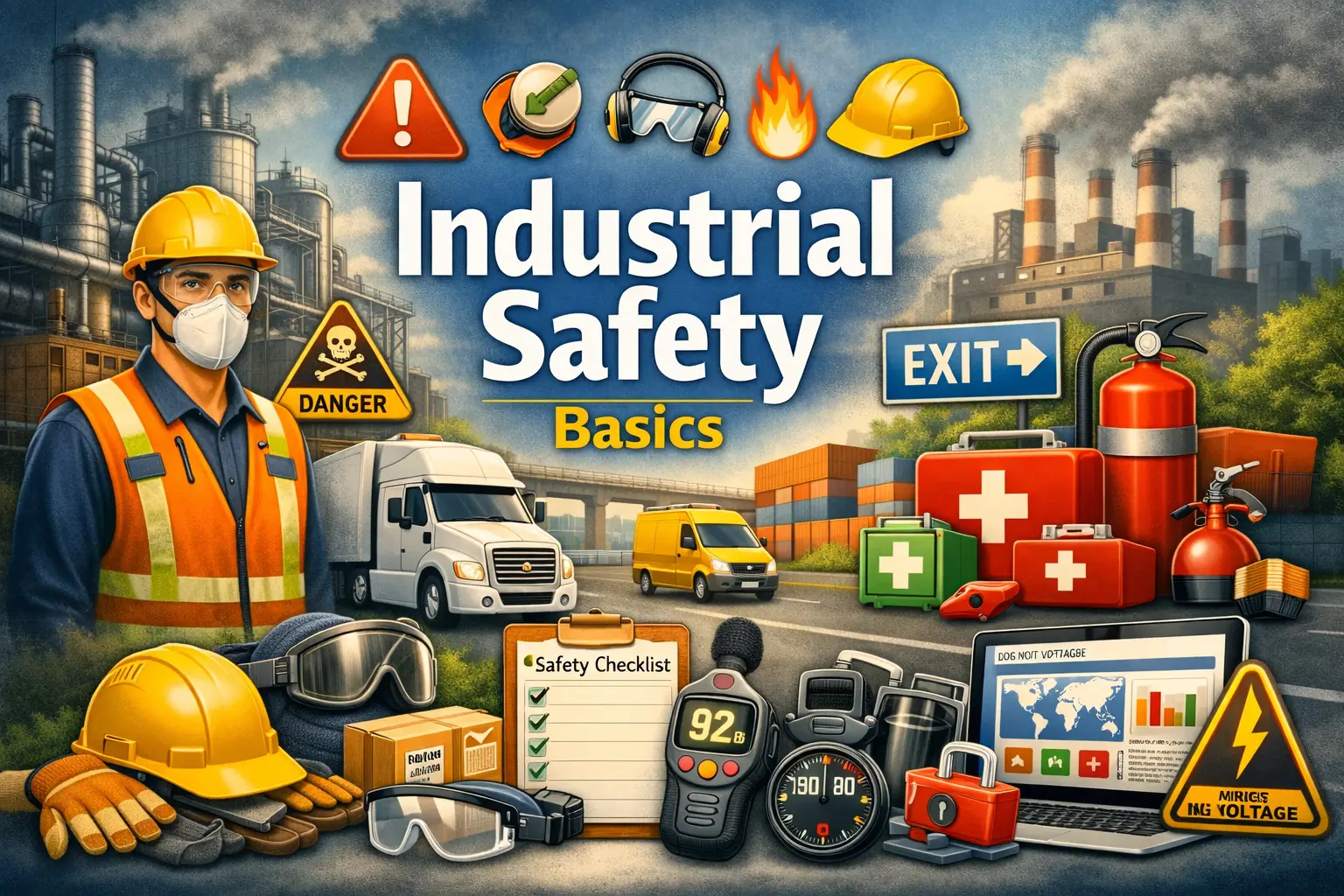
Introduction to Industrial Safety Basics
Safety is one of the most important aspects of industrial operations. Every workplace contains potential hazards that can affect employees, equipment, facilities, and productivity. The Industrial Safety Basics course provides learners with a comprehensive introduction to workplace safety principles, hazard awareness, and accident prevention practices used in industrial environments.
Industrial safety focuses on creating and maintaining safe working conditions while reducing the likelihood of injuries, incidents, and operational disruptions. Effective safety practices help organizations protect workers, improve efficiency, and support long-term operational success.
This course introduces learners to the fundamental concepts of workplace safety and explains how safety procedures contribute to a secure and productive work environment.
Importance of Industrial Safety Basics
Workplace safety is essential for protecting employees and supporting efficient industrial operations.
Understanding industrial safety helps learners:
- Improve hazard awareness
- Support accident prevention efforts
- Promote safe work practices
- Protect workers and equipment
- Improve workplace well-being
- Increase operational safety awareness
- Support emergency preparedness
- Encourage responsible workplace behavior
These concepts form the foundation of effective workplace safety management.
Understanding Workplace Hazards
Industrial environments contain various hazards that require awareness and control.
Hazard Identification
Learners understand how potential workplace hazards are recognized and assessed.
Physical Hazards
The course introduces common physical risks found in industrial settings.
Environmental Awareness
Participants gain awareness of workplace conditions that may influence safety.
Risk Recognition
Learners explore methods used to identify situations that may create safety concerns.
Recognizing hazards is the first step toward creating safer workplaces.
Personal Protective Equipment (PPE)
Personal protective equipment helps reduce exposure to workplace risks.
The course introduces:
PPE Awareness
Understanding the purpose and importance of protective equipment.
Workplace Protection
Learning how PPE supports worker safety.
Equipment Selection Concepts
Exploring awareness of different categories of protective equipment.
Safe Usage Practices
Understanding responsible use of workplace protective equipment.
Proper use of PPE contributes significantly to workplace safety.
Workplace Safety Procedures
Safety procedures help organizations maintain consistent and safe work practices.
Learners explore:
Safety Guidelines
Understanding workplace rules designed to reduce risks.
Safe Work Practices
Learning behaviors that support safer operations.
Operational Safety Awareness
Exploring how safety procedures contribute to daily activities.
Compliance Awareness
Understanding the importance of following workplace safety requirements.
Safety procedures support both employee protection and operational efficiency.
Risk Awareness and Accident Prevention
Risk management is an important component of industrial safety.
The course covers:
Risk Identification
Understanding factors that may increase workplace safety concerns.
Preventive Measures
Learning practices that help reduce accident potential.
Incident Awareness
Exploring how safety incidents can affect organizations.
Safety Culture Concepts
Understanding the role of proactive safety behavior.
These concepts help create safer work environments and reduce workplace incidents.
Emergency Preparedness and Response
Organizations must be prepared to respond effectively during emergencies.
Learners gain awareness of:
- Emergency response principles
- Workplace preparedness concepts
- Evacuation awareness
- Communication procedures
- Incident response awareness
- Safety coordination practices
Preparedness supports faster and more effective responses during unexpected situations.
Safety Communication and Reporting
Effective communication is essential for maintaining workplace safety.
The course discusses:
Safety Reporting Awareness
Understanding the importance of reporting hazards and incidents.
Workplace Communication
Learning how safety information is shared within organizations.
Team Coordination
Exploring collaborative approaches to workplace safety.
Continuous Improvement
Understanding how reporting supports safer work environments.
Good communication helps strengthen organizational safety performance.
Industrial Safety Responsibilities
Safety is a shared responsibility across all levels of an organization.
Learners understand:
Employee Responsibilities
Awareness of individual safety obligations.
Supervisor Support
Understanding leadership roles in workplace safety.
Organizational Commitment
Exploring how businesses support safe operations.
Safety Participation
Learning how employees contribute to safety improvement efforts.
Shared responsibility helps create a positive safety culture.
Skills You Will Gain
Upon completing this course, learners may develop:
- Workplace safety awareness
- Hazard identification knowledge
- Risk recognition skills
- PPE understanding
- Safety procedure awareness
- Accident prevention knowledge
- Emergency preparedness awareness
- Safety communication understanding
- Incident reporting awareness
- Workplace responsibility knowledge
These skills support safer work practices across various industries.
Benefits of Studying Industrial Safety Basics
This course offers several important benefits:
- Improved workplace safety awareness
- Better understanding of hazard identification
- Increased knowledge of accident prevention practices
- Awareness of emergency preparedness concepts
- Improved understanding of PPE usage
- Enhanced safety communication knowledge
- Support for professional development
- Preparation for industrial work environments
The knowledge gained helps learners contribute to safer and more efficient workplaces.
Who Should Join
This course is suitable for:
- Students
- Factory workers
- Industrial employees
- Construction workers
- Supervisors
- Warehouse staff
- Manufacturing personnel
- Safety learners
- Technical trainees
- Beginners interested in workplace safety
No prior experience is required.
Career Opportunities
After completing this course, learners may explore opportunities such as:
- Safety Assistant
- Industrial Worker
- Factory Operations Assistant
- Manufacturing Support Staff
- Warehouse Safety Assistant
- Construction Site Assistant
- Production Support Worker
- Industrial Operations Trainee
- Workplace Safety Coordinator Assistant
- Safety Compliance Support Staff
FAQ Section
1. What is Industrial Safety Basics?
It is a beginner-friendly course that introduces workplace safety and hazard awareness concepts.
2. Who can join this course?
Students, workers, supervisors, and beginners can join.
3. Do I need prior experience?
No, prior experience is not required.
4. What will I learn?
You will learn workplace safety, hazard identification, risk awareness, accident prevention, and safety procedures.
5. Why is industrial safety important?
It helps protect employees, equipment, facilities, and business operations.
6. Does the course cover PPE awareness?
Yes, learners gain awareness of personal protective equipment and its role in workplace safety.
7. What skills will I gain?
You will gain workplace safety awareness, hazard recognition knowledge, and accident prevention understanding.
8. Is this course suitable for beginners?
Yes, it is specifically designed for beginners.
9. Can this course support industrial careers?
Yes, it provides foundational safety knowledge useful in industrial and manufacturing environments.
10. Is workplace safety important in all industries?
Yes, safety practices are essential across manufacturing, construction, logistics, warehousing, and many other sectors.





Reviews
There are no reviews yet.