
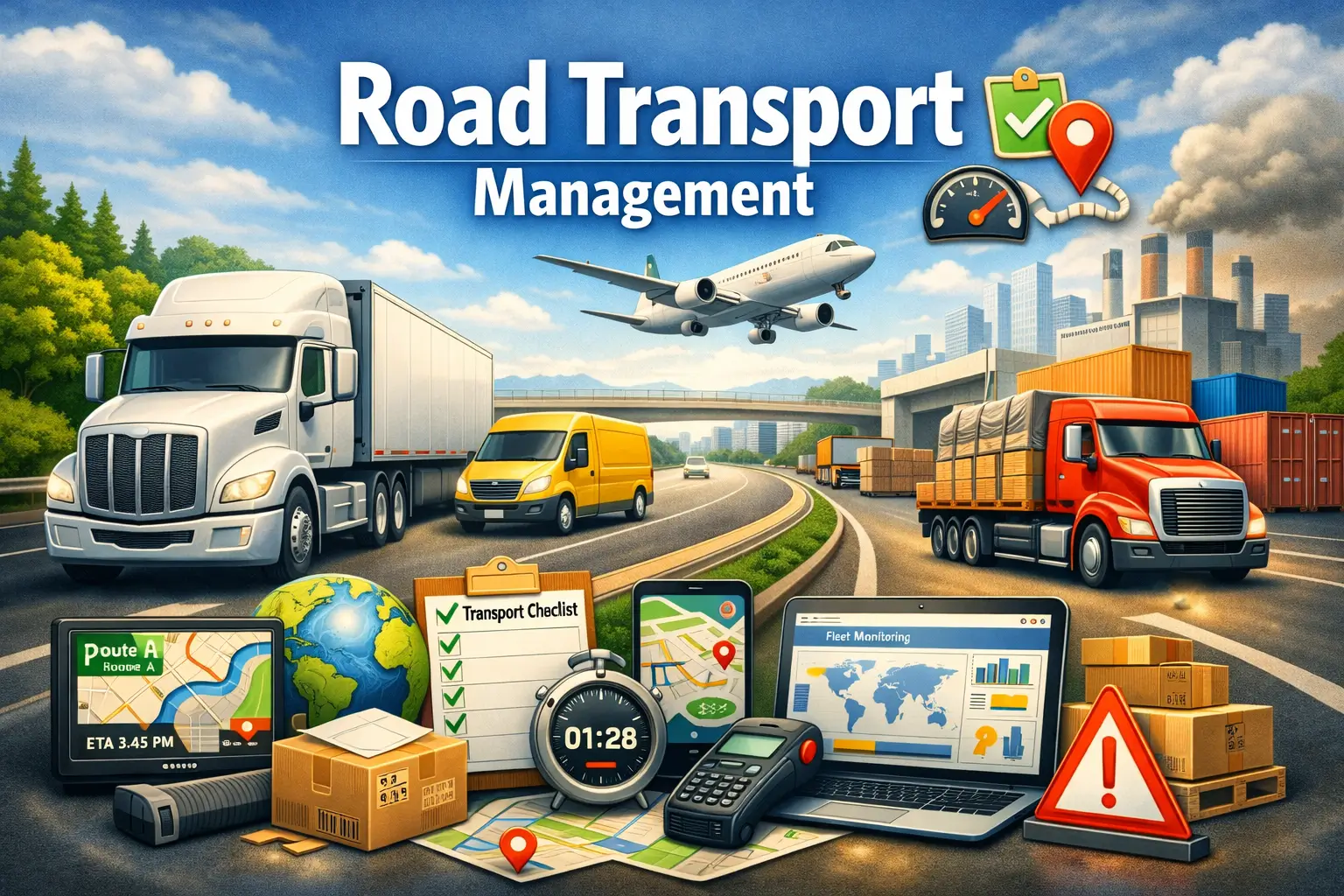
Introduction to Road Transport Management
Road transportation is one of the most important components of modern logistics and supply chain systems. It supports the movement of goods, materials, and passengers between locations while contributing significantly to economic development and business operations. The Road Transport Management course provides learners with a comprehensive introduction to transportation operations, fleet coordination, logistics planning, and transport administration.
Effective transport management helps organizations improve efficiency, reduce operational delays, optimize resource utilization, and support customer satisfaction. Transportation professionals play a key role in ensuring that vehicles, routes, schedules, and logistics activities are coordinated effectively.
This course introduces learners to the fundamental principles of road transport management and explains how transportation systems support business and community needs.
Importance of Road Transport Management
Road transportation serves as a critical link within supply chains and transportation networks.
Understanding road transport management helps learners:
- Improve transportation awareness
- Support efficient logistics operations
- Understand fleet coordination processes
- Increase route planning knowledge
- Improve operational efficiency awareness
- Support vehicle utilization management
- Enhance logistics understanding
- Strengthen transportation administration knowledge
These concepts demonstrate the importance of transport management in modern economies.
Understanding Road Transport Systems
Transportation systems involve the movement of goods and passengers through organized networks.
Transportation Operations
Learners understand how transportation activities are coordinated and managed.
Movement of Goods and Passengers
The course explains the role of road transportation in supporting mobility and logistics.
Operational Coordination
Participants explore activities involved in transportation planning and execution.
Transport Infrastructure Awareness
Learners gain awareness of the systems that support road transportation activities.
Understanding transport systems helps learners appreciate the broader role of transportation in society and business.
Route Planning and Scheduling
Effective route planning contributes to transportation efficiency and service reliability.
The course introduces:
Route Management
Understanding how transportation routes are selected and managed.
Scheduling Concepts
Learning how transport schedules support operational performance.
Delivery Coordination
Exploring transportation activities that support timely movement.
Resource Utilization
Understanding how planning contributes to efficient use of transportation resources.
Good planning helps reduce delays and improve operational effectiveness.
Fleet Coordination and Vehicle Management
Fleet operations are central to transportation management.
Learners explore:
Fleet Awareness
Understanding the role of vehicle fleets within transportation operations.
Vehicle Utilization
Learning how transportation assets are managed efficiently.
Operational Monitoring
Exploring methods used to monitor transportation activities.
Maintenance Awareness
Understanding the importance of vehicle care and operational readiness.
Effective fleet coordination supports transportation reliability and performance.
Logistics and Distribution Support
Transportation is a key component of logistics systems.
The course covers:
Logistics Coordination
Understanding how transportation supports supply chain activities.
Distribution Processes
Learning how products move from one location to another.
Operational Flow Awareness
Exploring transportation’s role in supporting business continuity.
Customer Service Considerations
Understanding how transportation affects service quality and satisfaction.
These concepts help learners understand the relationship between logistics and transportation.
Transportation Documentation and Administration
Proper documentation supports efficient transportation operations.
Learners gain awareness of:
- Transport records
- Delivery documentation
- Vehicle records
- Operational reporting
- Scheduling documentation
- Administrative coordination
Accurate documentation contributes to operational control and accountability.
Transportation Safety and Compliance Awareness
Safety is an important aspect of transportation management.
The course discusses:
Safety Awareness
Understanding the importance of safe transportation practices.
Vehicle Safety Concepts
Learning how safety contributes to reliable operations.
Compliance Awareness
Exploring transportation-related rules and operational responsibilities.
Risk Reduction Practices
Understanding methods that support safer transportation activities.
Safety awareness contributes to improved transportation performance and operational reliability.
Common Transportation Challenges
Transportation operations often encounter various challenges.
Learners explore:
Route Delays
Understanding factors that may affect transportation schedules.
Resource Management
Learning about efficient utilization of transportation resources.
Operational Disruptions
Exploring challenges that can affect transportation performance.
Coordination Requirements
Understanding the importance of communication and planning.
Awareness of these challenges supports better transportation decision-making.
Skills You Will Gain
Upon completing this course, learners may develop:
- Transportation operations awareness
- Route planning knowledge
- Fleet coordination understanding
- Vehicle management awareness
- Logistics support knowledge
- Scheduling concepts understanding
- Documentation skills
- Operational coordination awareness
- Safety awareness
- Transportation administration knowledge
These skills are valuable in transportation, logistics, and supply chain environments.
Benefits of Studying Road Transport Management
This course offers several valuable benefits:
- Improved understanding of transportation systems
- Better fleet coordination awareness
- Increased logistics knowledge
- Understanding of route planning concepts
- Enhanced operational management awareness
- Improved transportation administration understanding
- Support for professional development
- Preparation for transportation-related opportunities
The knowledge gained helps learners understand how transportation contributes to efficient business operations and logistics performance.
Who Should Join
This course is suitable for:
- Students
- Transport coordinators
- Fleet assistants
- Logistics learners
- Warehouse personnel
- Distribution staff
- Business owners
- Supply chain learners
- Administrative personnel
- Beginners interested in transportation operations
No prior experience is required.
Career Opportunities
After completing this course, learners may explore opportunities such as:
- Transport Operations Assistant
- Fleet Coordination Assistant
- Logistics Support Executive
- Distribution Assistant
- Transportation Administrator
- Route Planning Assistant
- Fleet Operations Trainee
- Supply Chain Support Staff
- Dispatch Assistant
- Transportation Support Coordinator
FAQ Section
1. What is Road Transport Management?
It is a beginner-friendly course that introduces transportation operations and logistics management concepts.
2. Who can join this course?
Students, logistics learners, transport staff, and beginners can join.
3. Do I need prior experience?
No, prior experience is not required.
4. What will I learn?
You will learn transportation operations, route planning, fleet coordination, logistics support, and transport administration concepts.
5. Why is road transport management important?
It helps ensure efficient movement of goods and passengers while supporting logistics and business operations.
6. Does the course cover fleet management awareness?
Yes, learners gain awareness of fleet coordination and vehicle utilization concepts.
7. What skills will I gain?
You will gain transportation management awareness, logistics knowledge, and operational coordination understanding.
8. Is this course suitable for beginners?
Yes, it is specifically designed for beginners.
9. Can this course support logistics and transport careers?
Yes, it provides foundational knowledge useful in transportation, logistics, and supply chain sectors.
10. Is road transportation important for business operations?
Yes, road transportation is a critical part of logistics, distribution, and supply chain systems worldwide.




Reviews
There are no reviews yet.