
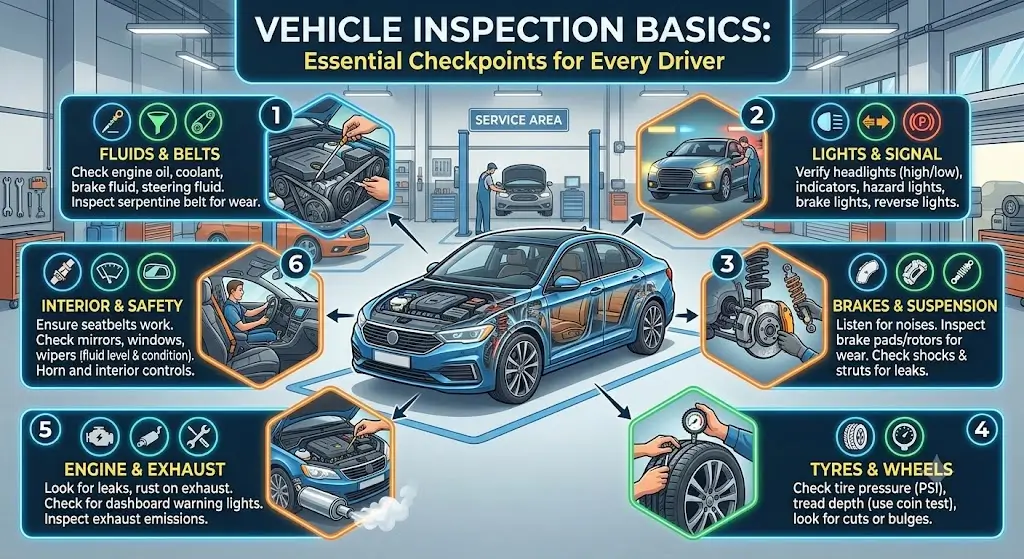
Introduction to Vehicle Inspection Basics
Vehicle inspections are an essential part of safe and responsible vehicle operation. The Vehicle Inspection Basics course introduces learners to the procedures, principles, and practices used to evaluate vehicle condition and safety. Regular inspections help identify potential problems before they become major issues and support the efficient operation of vehicles.
This course provides a comprehensive overview of vehicle inspection methods and explains how different systems and components contribute to vehicle performance and roadworthiness. Learners gain practical awareness of inspection requirements and develop an understanding of how routine checks help maintain safety standards.
Importance of Vehicle Inspection Basics
Vehicle inspections play a critical role in maintaining safety, reliability, and operational efficiency. Proper inspections help detect wear, damage, and maintenance requirements that could affect vehicle performance.
Understanding inspection procedures provides several benefits:
- Improved vehicle safety
- Early detection of mechanical issues
- Reduced risk of breakdowns
- Better maintenance planning
- Increased vehicle reliability
- Enhanced roadworthiness awareness
These benefits make inspections an important part of vehicle ownership and fleet management practices.
Understanding Vehicle Safety Inspections
Safety inspections focus on evaluating critical vehicle systems that directly affect safe operation.
Brake System Checks
Learners understand the importance of inspecting brake components and recognizing signs of wear or reduced performance.
Tire Inspection
The course explains how tire condition affects vehicle handling, traction, and safety.
Lighting System Evaluation
Participants learn how headlights, indicators, brake lights, and other lighting systems contribute to road safety.
Steering and Suspension Awareness
Learners explore the role of steering and suspension systems in maintaining vehicle control and stability.
Understanding these inspection areas helps support safer driving conditions.
Vehicle Components Commonly Inspected
Modern vehicles consist of many interconnected systems that require periodic inspection.
The course introduces:
Engine and Mechanical Components
Basic awareness of engine-related inspection points and maintenance considerations.
Battery and Electrical Systems
Understanding battery condition and electrical system functionality.
Fluid Level Checks
Inspection of engine oil, coolant, brake fluid, and other essential vehicle fluids.
Windshield and Visibility Components
Awareness of windshield condition, mirrors, wipers, and visibility-related equipment.
These inspections contribute to overall vehicle safety and operational efficiency.
Preventive Maintenance and Inspection
Preventive maintenance helps reduce unexpected vehicle failures and improves long-term reliability.
Learners explore:
- Scheduled inspection practices
- Maintenance planning concepts
- Identifying early warning signs
- Importance of regular servicing
- Vehicle care awareness
- Operational safety considerations
Understanding preventive maintenance supports responsible vehicle ownership and effective maintenance management.
Inspection Documentation and Reporting
Proper documentation is an important part of vehicle inspection processes.
The course explains:
Inspection Records
How inspection findings are documented and maintained.
Reporting Procedures
Understanding inspection reports and maintenance recommendations.
Service History Awareness
The importance of maintaining accurate service and inspection records.
Compliance Considerations
Awareness of inspection requirements used in transportation and automotive industries.
Accurate documentation helps support accountability and informed maintenance decisions.
Common Vehicle Issues Identified During Inspections
Vehicle inspections often reveal conditions that require attention.
Learners gain awareness of:
- Tire wear patterns
- Brake wear indicators
- Fluid leaks
- Battery deterioration
- Lighting malfunctions
- Steering concerns
- Suspension wear
- Visibility issues
Recognizing these conditions supports timely maintenance and safer vehicle operation.
Skills You Will Gain
Upon completing this course, learners may develop:
- Vehicle inspection awareness
- Safety evaluation knowledge
- Maintenance planning understanding
- Vehicle component identification skills
- Documentation awareness
- Preventive maintenance knowledge
- Inspection reporting understanding
- Vehicle safety assessment skills
- Automotive inspection awareness
- Roadworthiness evaluation concepts
These skills support both personal and professional vehicle management activities.
Benefits of Studying Vehicle Inspection Basics
This course offers several valuable benefits:
- Improved understanding of vehicle safety
- Increased maintenance awareness
- Better knowledge of inspection procedures
- Enhanced vehicle care practices
- Greater confidence in identifying potential issues
- Awareness of roadworthiness standards
- Support for transportation-related careers
- Improved understanding of preventive maintenance
The knowledge gained helps learners make informed decisions regarding vehicle care and maintenance.
Who Should Join
This course is suitable for:
- Students
- Vehicle owners
- Drivers
- Transportation workers
- Fleet support staff
- Automotive enthusiasts
- Workshop assistants
- Service center employees
- Safety-conscious individuals
- Beginners interested in automotive inspection
No prior experience is required.
Career Opportunities
After completing this course, learners may explore opportunities such as:
- Vehicle Inspection Assistant
- Automotive Service Assistant
- Fleet Support Assistant
- Transportation Operations Assistant
- Workshop Support Staff
- Vehicle Maintenance Assistant
- Service Center Coordinator
- Safety Inspection Support Staff
- Automotive Documentation Assistant
- Transportation Support Executive
These roles may be found in service centers, transportation companies, vehicle maintenance facilities, dealerships, and fleet operations.
FAQ Section
1. What is Vehicle Inspection Basics?
It is a beginner-friendly course that introduces vehicle inspection and safety evaluation concepts.
2. Who can join this course?
Students, drivers, vehicle owners, and beginners can join.
3. Do I need prior automotive knowledge?
No, prior knowledge is not required.
4. What will I learn?
You will learn vehicle inspection procedures, safety checks, maintenance awareness, and inspection reporting concepts.
5. Why are vehicle inspections important?
They help identify potential problems and improve vehicle safety and reliability.
6. Does the course cover safety inspections?
Yes, safety inspections are an important part of the curriculum.
7. What skills will I gain?
You will gain inspection awareness, safety evaluation knowledge, and maintenance understanding.
8. Is this course suitable for vehicle owners?
Yes, it is highly useful for vehicle owners and drivers.
9. Can this course support transportation careers?
Yes, it provides foundational knowledge relevant to transportation and automotive sectors.
10. Is Vehicle Inspection Basics beginner friendly?
Yes, the course is specifically designed for beginners.





Reviews
There are no reviews yet.