
Introduction
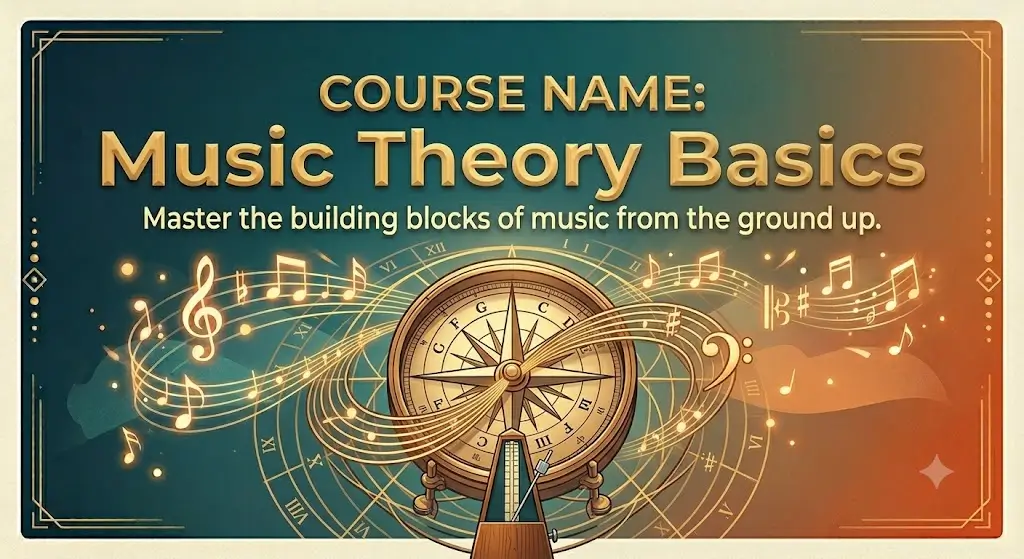
The Music Theory Basics Course is a comprehensive training program designed to introduce learners to the essential principles of music theory. Throughout history, music theory has served as the framework that helps musicians understand how music works. Therefore, learning music theory is an important step for anyone interested in performing, composing, teaching, or appreciating music more deeply.
Music theory provides the rules, concepts, and structures that explain how notes, rhythms, harmonies, and melodies interact to create music. As a result, learners gain a clearer understanding of musical composition and performance.
Whether you are a beginner musician, singer, instrumentalist, composer, student, educator, or music enthusiast, this course provides valuable knowledge and practical insights into the foundations of music theory.
Course Overview
Understanding music requires more than simply listening to sounds. Therefore, musicians benefit greatly from learning the theory behind musical structures and relationships.
In this course, learners explore the foundations of music theory and musicianship. Additionally, participants gain knowledge of notation systems, scales, rhythm patterns, harmonic structures, and musical terminology.
The course combines theoretical concepts with practical musical examples, helping learners understand how music theory applies to real-world musical situations.
What You Will Learn
The Music Theory Basics Course covers a broad range of music-related topics. First, learners study the fundamentals of music notation and musical symbols. Next, they explore rhythm patterns, time signatures, note values, and tempo markings.
Furthermore, the course explains scales, intervals, chords, harmony, and melody construction. Learners also gain knowledge of key signatures, musical forms, and basic composition principles.
In addition, participants examine listening techniques, musical analysis methods, and the practical application of music theory across different genres and styles.
Skills You Will Gain
Upon successful completion of the course, learners will develop valuable skills, including:
- Music notation reading
- Rhythm and timing understanding
- Scale construction knowledge
- Harmony and chord recognition
- Melody analysis skills
- Musical terminology comprehension
- Listening and interpretation abilities
- Basic composition awareness
- Musicianship development
- Music analysis techniques
Moreover, these skills provide a strong foundation for instrumental performance, singing, composition, and advanced music studies.
Benefits of the Course
The Music Theory Basics Course offers numerous benefits for learners interested in music and creative development. First, it provides a strong understanding of how music is structured and organized.
Additionally, the course helps learners improve musical confidence, listening abilities, and performance awareness. Furthermore, participants gain practical knowledge that supports both personal enjoyment and professional musical growth.
Because music theory serves as the foundation for many areas of music education and performance, learners can apply these skills across various musical disciplines. As a result, they become more knowledgeable and versatile musicians.
Who Should Enroll?
This course is ideal for:
- Beginner musicians
- Music students
- Singers and vocalists
- Instrumental performers
- Aspiring composers
- Music educators
- Music enthusiasts
- Creative arts learners
- Songwriters
- Anyone interested in understanding music
No prior music theory knowledge is required. Therefore, beginners can confidently enroll and begin building a strong musical foundation.
Career Opportunities
After completing the course, learners may pursue opportunities such as:
- Music Education Assistant
- Beginner Music Instructor Support
- Songwriting Assistant
- Community Music Facilitator
- Music Workshop Assistant
- Music Program Coordinator Assistant
- Creative Arts Support Professional
- Music Club Coordinator
- Independent Music Learner
- Aspiring Composer or Performer
Additionally, learners can continue advanced studies in music performance, composition, music education, production, and related creative fields.
Certification
Upon successful completion of the Music Theory Basics Course, participants receive a certification recognizing their understanding of music notation, rhythm, harmony, melody, scales, and foundational music theory concepts. This certification can support future learning and professional development within music and performing arts fields.
Why Choose This Course?
The Music Theory Basics Course combines theoretical knowledge with practical musical applications to provide a comprehensive learning experience. Moreover, it equips learners with foundational skills that support musical growth across multiple disciplines.
The curriculum focuses on notation, rhythm, harmony, melody, scales, chords, and musicianship development. Furthermore, learners gain practical insights that help them understand, perform, and create music more effectively.
Whether your goal is to improve musical performance, learn composition, enhance listening skills, or gain a deeper understanding of music, this course provides the knowledge, confidence, and practical understanding needed to succeed.
Enroll today and build a strong foundation in music theory, musicianship, and musical understanding.
FAQ SECTION
1. What is the Music Theory Basics Course?
The course teaches music notation, rhythm, harmony, melody, scales, chords, and essential music theory concepts.
2. Is this course suitable for beginners?
Yes. The course is designed specifically for beginners and does not require prior music theory knowledge.
3. What topics are covered?
Topics include notation, rhythm, scales, intervals, harmony, chords, melody, and musical terminology.
4. Will I receive a certificate?
Yes. Participants receive a certificate upon successful completion of the course.
5. Do I need to play an instrument to take this course?
No. The course focuses on music theory concepts and is suitable for both musicians and non-musicians.
6. Who should enroll in this course?
Musicians, singers, students, educators, songwriters, and music enthusiasts can benefit from this course.
7. Is the course fully online?
Yes. The course offers flexible online learning opportunities.
8. What skills will I gain?
You will gain skills in music notation, rhythm analysis, harmony understanding, chord recognition, and musicianship.
9. Can this course help me become a better musician?
Yes. Music theory helps improve performance, composition, listening skills, and overall musical understanding.
10. Why is music theory important?
Music theory provides the foundation for understanding how music works, enabling musicians to perform, compose, and interpret music more effectively.




Reviews
There are no reviews yet.