
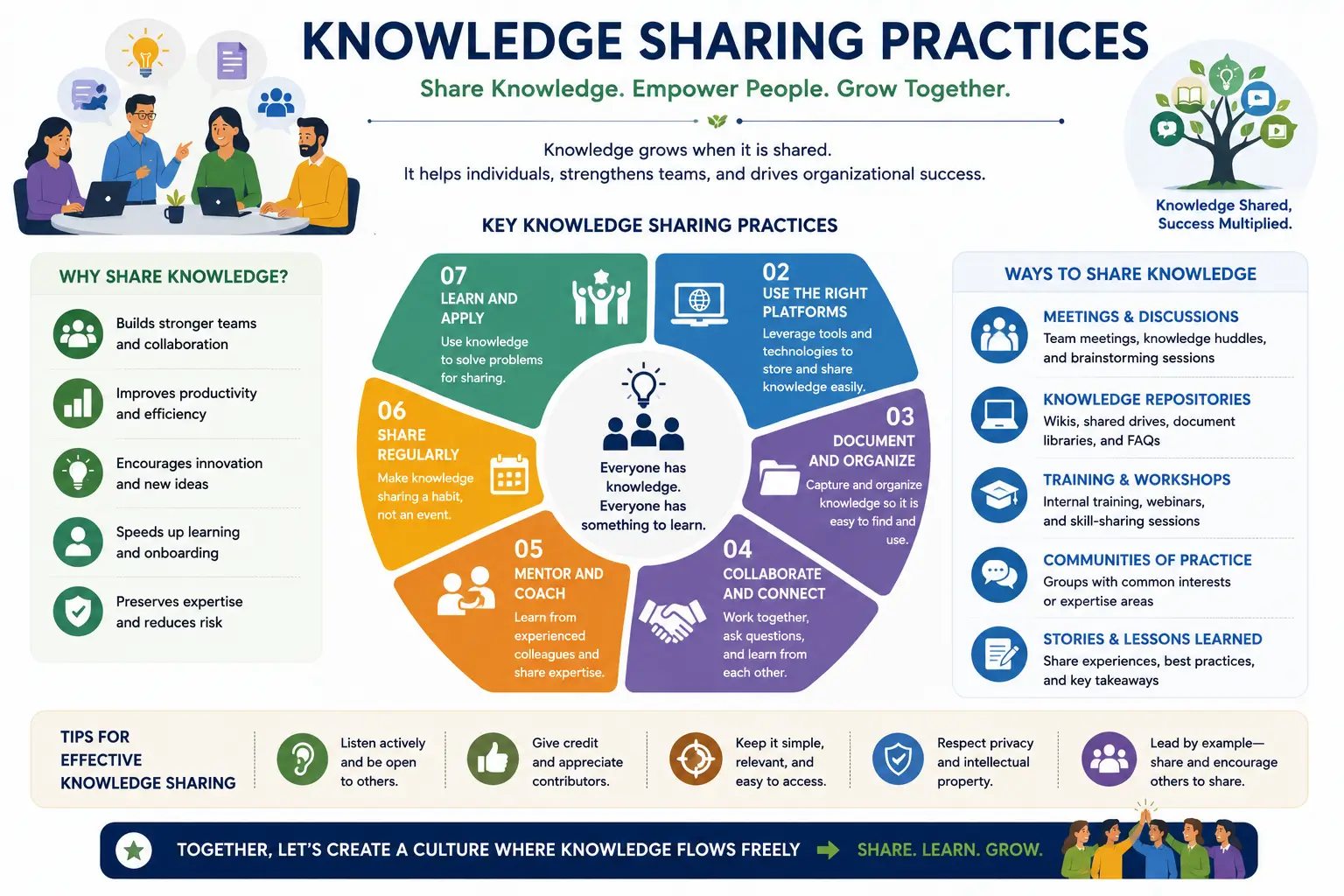
Knowledge Sharing Practices Course
The Knowledge Sharing Practices Course is a detailed and comprehensive training program designed to help learners understand how knowledge is created, captured, organized, shared, and utilized within modern organizations. In today’s fast-paced business environment, knowledge is one of the most valuable assets an organization can possess. However, the true value of knowledge is only realized when it is effectively shared among employees, teams, and departments.
This course focuses on building strong knowledge-sharing systems, improving collaboration, and creating a culture where information flows freely and efficiently. It is designed for students, professionals, HR practitioners, managers, and business leaders who want to improve organizational performance through better knowledge management practices.
Introduction to Knowledge Sharing
Knowledge sharing is the process of exchanging information, skills, expertise, and experiences between individuals or groups within an organization. It ensures that valuable insights are not restricted to a single individual but are available to everyone who needs them.
In modern organizations, knowledge sharing plays a crucial role in improving efficiency, reducing duplication of work, and increasing innovation. When employees share knowledge effectively, organizations become more productive, adaptive, and competitive.
This course introduces learners to the core principles of knowledge sharing and explains how it impacts organizational success. It also highlights the importance of communication, collaboration, and structured knowledge systems.
Importance of Knowledge Sharing in Organizations
Knowledge sharing is essential for organizational growth and sustainability. Without proper knowledge transfer, organizations risk losing critical information when employees leave or change roles.
Key importance includes:
- Improving team collaboration
- Reducing knowledge loss
- Enhancing employee productivity
- Supporting decision-making processes
- Encouraging innovation and creativity
- Strengthening organizational learning
This course explains how organizations that encourage knowledge sharing are more efficient, innovative, and resilient in competitive markets.
Knowledge Management Fundamentals
Knowledge management refers to the systematic process of capturing, organizing, storing, and distributing knowledge within an organization.
Learners will explore:
- Types of knowledge (explicit and tacit)
- Knowledge capture techniques
- Knowledge storage systems
- Information organization methods
- Knowledge distribution strategies
- Organizational learning systems
Understanding knowledge management is the foundation of effective knowledge sharing practices.
Types of Knowledge
In this course, learners will understand two main types of knowledge:
1. Explicit Knowledge
This is formal, documented knowledge that can be easily written, stored, and shared. Examples include manuals, reports, policies, and documentation.
2. Tacit Knowledge
This is personal, experience-based knowledge that is harder to document. It includes skills, insights, intuition, and expertise gained through experience.
A key challenge in organizations is converting tacit knowledge into explicit knowledge so it can be shared effectively.
Knowledge Sharing Methods
Organizations use different methods to share knowledge effectively.
This section includes:
- Team meetings and discussions
- Training sessions and workshops
- Documentation and reporting systems
- Digital collaboration tools
- Mentoring and coaching programs
- Internal communication platforms
Learners understand how different methods can be used depending on organizational needs.
Communication and Collaboration
Effective communication is the backbone of knowledge sharing. Without clear communication, knowledge cannot be transferred properly.
This course explains:
- Importance of clear communication
- Active listening techniques
- Team collaboration strategies
- Feedback mechanisms
- Cross-functional communication
- Building trust in teams
Strong communication leads to better teamwork and more effective knowledge exchange.
Role of Technology in Knowledge Sharing
Technology plays a major role in modern knowledge management systems.
Organizations use tools such as:
- Cloud storage systems
- Internal knowledge bases
- Collaboration platforms (like intranet systems)
- Project management tools
- Communication apps
These tools help organizations store, organize, and share knowledge efficiently across teams and locations.
Building a Knowledge Sharing Culture
A successful knowledge-sharing system depends on organizational culture.
This course covers:
- Encouraging open communication
- Promoting teamwork and collaboration
- Rewarding knowledge sharing behavior
- Reducing knowledge hoarding
- Leadership support for sharing culture
- Employee engagement in learning
A positive culture ensures that employees willingly share their knowledge.
Benefits of Knowledge Sharing
Knowledge sharing provides multiple benefits for organizations:
- Faster decision-making
- Improved problem-solving
- Increased productivity
- Better employee performance
- Enhanced innovation
- Reduced operational errors
- Stronger teamwork and collaboration
Organizations that prioritize knowledge sharing gain a strong competitive advantage.
Challenges in Knowledge Sharing
Despite its importance, knowledge sharing can face several challenges:
- Lack of communication
- Resistance to sharing knowledge
- Poor documentation practices
- Lack of trust among employees
- Absence of proper systems
- Time constraints
This course also explains how to overcome these challenges using structured strategies.
Knowledge Retention Strategies
Organizations must ensure that knowledge is not lost when employees leave.
Learners will study:
- Documentation practices
- Employee onboarding systems
- Knowledge transfer planning
- Mentoring programs
- Exit knowledge capture methods
- Standard operating procedures (SOPs)
These strategies help organizations retain valuable knowledge over time.
Skills You Will Gain
By completing this course, learners will develop:
- Knowledge management skills
- Communication and collaboration skills
- Organizational learning understanding
- Documentation and reporting skills
- Team coordination abilities
- Problem-solving skills
- Workplace efficiency improvement skills
- Knowledge transfer techniques
- Digital collaboration awareness
- Leadership and teamwork skills
These skills are highly valuable in corporate, HR, education, and management roles.
Benefits of This Course
This course offers many benefits for learners:
- Improved understanding of knowledge systems
- Better workplace communication
- Strong collaboration skills
- Enhanced productivity
- Career development opportunities
- Understanding of organizational learning
Knowledge sharing is essential in every modern workplace, making this course highly practical.
Who Should Take This Course?
This course is suitable for:
- HR professionals
- Managers and team leaders
- Business professionals
- Students
- Trainers and educators
- Corporate employees
- Entrepreneurs
- Organizational development specialists
No prior experience is required.
Career Opportunities
After completing this course, learners can explore roles such as:
- Knowledge Management Specialist
- HR Executive
- Learning and Development Officer
- Corporate Trainer
- Organizational Development Specialist
- Team Leader
- Business Consultant
- Project Coordinator
- Communication Manager
These roles exist across industries including IT, corporate sectors, education, consulting, and government organizations.
Certification
Upon successful completion of the Knowledge Sharing Practices Course, learners receive a certification that validates their understanding of knowledge management systems, collaboration strategies, and organizational learning practices.
This certification can enhance career opportunities and professional credibility.
Why This Course is Important
In today’s knowledge-driven economy, organizations rely heavily on information sharing and collaboration. Without effective knowledge management, businesses face inefficiencies, duplication of effort, and loss of valuable expertise.
This course helps learners understand how to build systems that ensure knowledge is accessible, organized, and usable across teams and departments. It prepares individuals to contribute effectively to modern, knowledge-based organizations.
Conclusion
The Knowledge Sharing Practices Course provides a complete understanding of how knowledge is managed and shared within organizations. It highlights the importance of communication, collaboration, documentation, and technology in building effective knowledge systems.
By learning these concepts, individuals can contribute to creating smarter, more efficient, and more innovative workplaces. Knowledge sharing not only improves productivity but also strengthens organizational culture and long-term success.
As organizations continue to evolve in a digital and fast-paced environment, professionals with knowledge management and sharing skills will remain highly valuable across industries.
FAQ SECTION
1. What is Knowledge Sharing?
Knowledge sharing is the process of exchanging information, skills, and experience between individuals or teams within an organization.
2. Why is knowledge sharing important?
It improves productivity, reduces errors, enhances collaboration, and prevents knowledge loss in organizations.
3. What will I learn in this course?
You will learn knowledge management, communication strategies, collaboration techniques, and organizational learning systems.
4. Is this course suitable for beginners?
Yes, it is designed for beginners as well as professionals.
5. Do I need prior experience?
No prior experience is required to join this course.
6. What are the benefits of knowledge sharing?
It improves teamwork, increases efficiency, supports innovation, and enhances organizational growth.
7. Who should take this course?
HR professionals, managers, students, business professionals, and team leaders should take this course.
8. What skills will I gain?
You will gain skills in communication, collaboration, knowledge management, and organizational learning.
9. Does this course include practical concepts?
Yes, it includes real-world knowledge sharing strategies and organizational practices.
10. How does knowledge sharing help organizations?
It helps organizations improve efficiency, reduce duplication, and enhance overall performance.





Reviews
There are no reviews yet.