
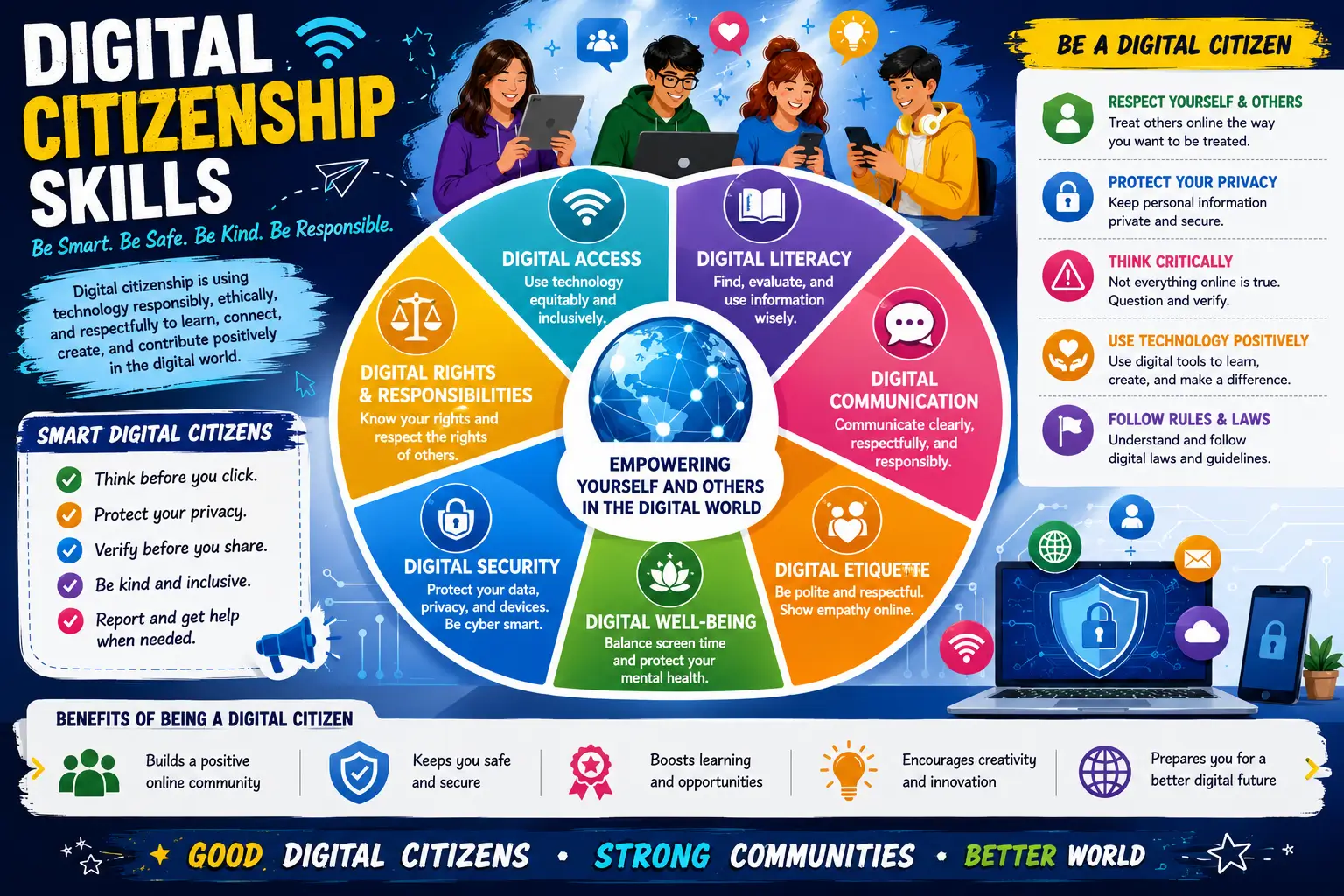
The Digital Citizenship Skills Course is a complete and in-depth training program designed to help learners understand how to behave responsibly, safely, and ethically in the digital world. In today’s technology-driven society, almost every aspect of life is connected to the internet—communication, education, business, entertainment, and social interaction. Because of this, understanding digital citizenship is no longer optional; it is a necessary life skill.
Digital citizenship refers to the responsible use of technology and the internet. It involves understanding how to interact safely online, how to protect personal information, how to communicate respectfully, and how to use digital tools ethically and effectively. This course is designed to build strong awareness and practical skills that help individuals navigate the digital world confidently and responsibly.
This program is suitable for students, professionals, educators, parents, business owners, and anyone who uses digital platforms. It provides a structured learning experience that covers internet safety, online ethics, digital communication, privacy protection, cyber awareness, and responsible online behavior.
INTRODUCTION TO DIGITAL CITIZENSHIP
Digital citizenship is the foundation of responsible behavior in the online world. Just as citizenship in society comes with rights and responsibilities, digital citizenship involves understanding how to act appropriately in digital environments.
The internet is a powerful tool that offers access to information, communication platforms, learning resources, and business opportunities. However, it also comes with risks such as cyberbullying, misinformation, data breaches, identity theft, and unethical behavior. This course helps learners understand both the opportunities and risks of the digital world.
By learning digital citizenship skills, individuals can become more responsible users of technology and contribute positively to online communities.
IMPORTANCE OF DIGITAL CITIZENSHIP IN MODERN WORLD
In the modern era, digital platforms are used for almost everything. People communicate through social media, conduct business online, attend virtual classes, and store sensitive data in digital systems. This increased dependency on technology makes digital citizenship extremely important.
Key reasons why digital citizenship matters include:
- Ensuring online safety and security
- Promoting respectful communication
- Preventing cyberbullying and harassment
- Protecting personal data and privacy
- Encouraging responsible use of technology
- Reducing misinformation and fake news
- Building positive digital communities
Without proper digital citizenship skills, users may unknowingly engage in harmful behaviors or become victims of online threats. This course ensures that learners are well-prepared to handle digital environments responsibly.
UNDERSTANDING DIGITAL LITERACY
Digital literacy is a core part of digital citizenship. It refers to the ability to use digital tools, platforms, and technologies effectively.
This course explains how digital literacy includes:
- Understanding how the internet works
- Using digital devices efficiently
- Evaluating online information
- Identifying credible sources
- Using software and applications responsibly
- Navigating online platforms safely
Digital literacy helps individuals make informed decisions in the digital world and avoid misinformation or unsafe practices.
ONLINE SAFETY AND SECURITY
One of the most important aspects of digital citizenship is online safety. With increasing cyber threats, protecting personal information has become critical.
This section of the course covers:
- Creating strong passwords
- Recognizing phishing attacks
- Avoiding suspicious websites and links
- Protecting personal identity online
- Safe browsing practices
- Secure use of social media accounts
- Understanding digital footprints
Learners will understand how to safeguard themselves from cyber threats and maintain a secure online presence.
DIGITAL COMMUNICATION AND ETIQUETTE
Communication in the digital world is different from face-to-face interaction. It requires clarity, respect, and responsibility.
This course teaches:
- Proper online communication practices
- Email etiquette and professional communication
- Social media behavior guidelines
- Respectful interaction in digital communities
- Avoiding misunderstandings in online messages
- Tone and language awareness in digital communication
Good digital communication helps build trust and maintain positive relationships online.
SOCIAL MEDIA RESPONSIBILITY
Social media plays a major role in modern digital life. However, it also requires responsible usage.
This section includes:
- Responsible posting behavior
- Understanding privacy settings
- Avoiding harmful content sharing
- Managing digital identity
- Preventing misinformation spread
- Ethical engagement on social platforms
Learners will understand how to use social media positively and avoid negative consequences.
CYBER ETHICS AND RESPONSIBLE BEHAVIOR
Ethical behavior is a key pillar of digital citizenship. It ensures that individuals act responsibly and respectfully in digital environments.
Topics covered include:
- Understanding cyber ethics
- Respecting intellectual property
- Avoiding plagiarism and content misuse
- Ethical use of digital resources
- Respecting online communities
- Responsible content creation
Cyber ethics helps maintain fairness, respect, and integrity in digital spaces.
DIGITAL FOOTPRINT AND REPUTATION
Every online action leaves a digital footprint. This includes posts, comments, searches, and shared content.
This course explains:
- What is a digital footprint
- How digital footprints are created
- Long-term impact of online behavior
- Managing online reputation
- Controlling personal data visibility
- Importance of positive digital presence
Learners will understand how their online behavior can affect their future opportunities.
CYBERBULLYING AND ONLINE HARASSMENT
Cyberbullying is a serious issue in digital environments. It can affect individuals emotionally, mentally, and socially.
This section includes:
- Understanding cyberbullying behavior
- Identifying online harassment
- Preventive measures
- Reporting harmful content
- Supporting victims of cyberbullying
- Creating safe online environments
The course promotes respectful and safe digital interactions.
INFORMATION LITERACY AND FAKE NEWS
In the digital world, misinformation spreads quickly. Information literacy helps individuals identify accurate and reliable content.
Learners will study:
- Identifying fake news
- Evaluating online sources
- Fact-checking methods
- Understanding media bias
- Responsible content sharing
- Critical thinking in digital environments
This helps learners make informed decisions online.
PRIVACY AND DATA PROTECTION
Privacy is one of the most important concerns in the digital age.
This course explains:
- Importance of data privacy
- Managing personal information online
- Understanding privacy policies
- Safe use of apps and websites
- Data protection practices
- Controlling digital exposure
Learners will understand how to protect their personal data effectively.
BENEFITS OF DIGITAL CITIZENSHIP SKILLS
Developing digital citizenship skills provides many benefits:
- Improved online safety
- Better communication skills
- Responsible digital behavior
- Enhanced privacy protection
- Stronger digital awareness
- Reduced risk of cyber threats
- Positive online reputation
These skills are essential for both personal and professional life.
SKILLS YOU WILL GAIN
After completing this course, learners will gain:
- Digital literacy skills
- Online safety awareness
- Ethical decision-making ability
- Social media responsibility
- Cyber awareness skills
- Communication etiquette
- Information evaluation skills
- Privacy management skills
- Critical thinking in digital environments
- Responsible internet usage
These skills are valuable in education, workplaces, and everyday digital life.
WHO SHOULD TAKE THIS COURSE?
This course is ideal for:
- Students
- Teachers and educators
- Parents
- Professionals
- Business owners
- Social media users
- Corporate employees
- Anyone using the internet
No prior technical knowledge is required.
CAREER AND PERSONAL IMPACT
Although digital citizenship is not a traditional career field, it strongly supports professional and personal growth.
It benefits roles such as:
- Educators
- IT professionals
- HR professionals
- Corporate employees
- Content creators
- Digital marketers
- Business managers
Strong digital citizenship skills improve employability, professionalism, and online credibility.
CONCLUSION
The Digital Citizenship Skills Course is an essential program for anyone living in today’s digital world. As technology continues to evolve, the need for responsible, ethical, and safe digital behavior becomes increasingly important.
This course helps learners understand how to use technology wisely, communicate responsibly, and protect themselves from digital risks. It also emphasizes the importance of ethics, privacy, and respect in online environments.
By completing this course, learners will be equipped with the knowledge and skills needed to become responsible digital citizens who contribute positively to the online world.
FAQ SECTION
1. What is Digital Citizenship?
Digital citizenship refers to the responsible and ethical use of technology and the internet.
2. What will I learn in this course?
You will learn online safety, digital communication, cyber ethics, privacy protection, and responsible internet usage.
3. Is this course suitable for beginners?
Yes, it is designed for beginners and requires no technical background.
4. Why is digital citizenship important?
It helps individuals stay safe online and use technology responsibly and ethically.
5. What are digital citizenship skills?
They include online safety, digital literacy, ethical behavior, and responsible communication.
6. Who should take this course?
Students, professionals, parents, teachers, and internet users should take this course.
7. Does this course include practical examples?
Yes, it includes real-life digital behavior and online safety practices.
8. What is a digital footprint?
It is the record of all activities a person performs online.
9. Can this course improve my career?
Yes, it improves professionalism and digital awareness in any career.
10. How does this course help in daily life?
It helps you stay safe online, communicate better, and use digital tools responsibly.





Reviews
There are no reviews yet.