
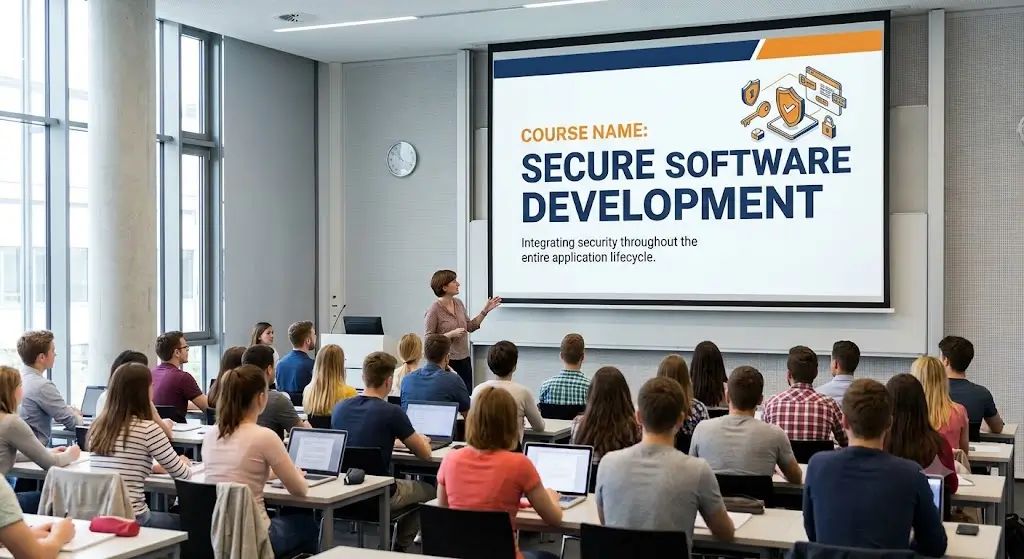
Secure Software Development Course
The Secure Software Development Course is designed to help learners build secure, reliable, and resilient software applications by integrating security throughout the software development lifecycle (SDLC). As cyber threats continue to evolve, secure software development has become an essential skill for developers, software engineers, and IT professionals.
This course introduces learners to secure software development fundamentals, secure coding practices, common software vulnerabilities, secure SDLC, threat modeling, authentication and authorization, input validation, cryptography basics, dependency management, application security testing, code reviews, vulnerability assessment, and software security best practices. Through practical examples and real-world scenarios, participants will learn how to reduce security risks during software development.
Whether you are a student, software developer, backend developer, full-stack developer, cybersecurity professional, QA engineer, DevOps engineer, or technology enthusiast, this course provides a strong foundation in secure software development.
Why Learn Secure Software Development?
Secure software development helps organizations prevent security vulnerabilities, protect user data, comply with industry standards, and reduce the risk of cyberattacks. Applying security throughout the development lifecycle leads to more reliable and trustworthy software.
What You Will Learn
This course covers:
- Introduction to secure software development
- Secure Software Development Lifecycle (SDLC)
- Secure coding principles
- Common software vulnerabilities
- Input validation and output encoding
- Authentication and authorization
- Cryptography fundamentals
- Secure session management
- Dependency and package security
- Threat modeling basics
- Application security testing
- Code reviews and vulnerability assessment
- Secure deployment practices
- Security compliance fundamentals
- Software security best practices
Practical Learning Experience
Learners will identify common software vulnerabilities, apply secure coding techniques, perform security-focused code reviews, implement authentication and authorization controls, evaluate application risks, and improve software security using practical development exercises and real-world case studies.
The course emphasizes hands-on learning suitable for beginners and experienced software developers.
Skills You Will Gain
- Secure software development
- Secure coding
- Application security
- Secure SDLC
- Threat modeling
- Vulnerability assessment
- Authentication and authorization
- Security testing
- Risk mitigation
- Problem-solving
Benefits of the Course
After completing this course, learners will:
- Build secure software applications
- Reduce common security vulnerabilities
- Improve secure coding practices
- Strengthen application security knowledge
- Support secure software delivery
- Enhance career opportunities
- Build a professional portfolio
- Earn a recognized certification
Who Should Enroll?
This course is suitable for:
- Students
- Software developers
- Backend developers
- Full-stack developers
- Cybersecurity professionals
- QA engineers
- DevOps engineers
- Software architects
- IT professionals
- Anyone interested in secure software development
Basic knowledge of programming concepts is recommended.
Career Opportunities
Upon completing the Secure Software Development Course, learners can pursue or strengthen careers such as:
- Secure Software Developer
- Application Security Engineer
- Software Engineer
- Cybersecurity Analyst
- Secure Coding Specialist
- DevSecOps Engineer
- Backend Developer
- Security Consultant
- Software Architect
- QA Security Engineer
These skills are valuable across software companies, cybersecurity firms, financial institutions, healthcare organizations, government agencies, cloud service providers, enterprise IT departments, technology startups, and consulting firms.
Certification
Learners receive a professional certificate demonstrating their knowledge of secure software development, secure coding practices, and application security principles.
Conclusion
The Secure Software Development Course equips learners with practical skills to design, build, test, and maintain secure software applications. Whether you want to strengthen your software development expertise, improve application security, or pursue a career in secure software engineering, this course provides a comprehensive foundation in secure software development.
FAQ SECTION
Q1. What is the Secure Software Development Course?
It is a beginner-friendly course that teaches secure coding practices and application security throughout the software development lifecycle.
Q2. Who should enroll in this course?
Students, software developers, backend developers, full-stack developers, cybersecurity professionals, QA engineers, DevOps engineers, and IT professionals.
Q3. Do I need programming experience?
Basic knowledge of programming concepts is recommended.
Q4. What topics are covered?
Secure coding, secure SDLC, authentication, authorization, threat modeling, vulnerability assessment, security testing, and application security best practices.
Q5. Why is secure software development important?
It helps reduce security vulnerabilities, protect sensitive data, improve software reliability, and minimize cyber risks.
Q6. Will I learn secure coding techniques?
Yes. The course includes practical secure coding principles, security testing, and vulnerability prevention techniques.
Q7. Does the course include practical exercises?
Yes. Learners complete hands-on secure coding activities, code reviews, and security-focused development exercises.
Q8. Can this course improve my career opportunities?
Yes. Secure software development skills are highly valued in software engineering, cybersecurity, and DevSecOps roles.
Q9. Will I receive a certificate?
Yes. A certificate is awarded after successful completion.
Q10. Is the course suitable for beginners?
Yes. It is suitable for beginners with basic programming knowledge.





Reviews
There are no reviews yet.