
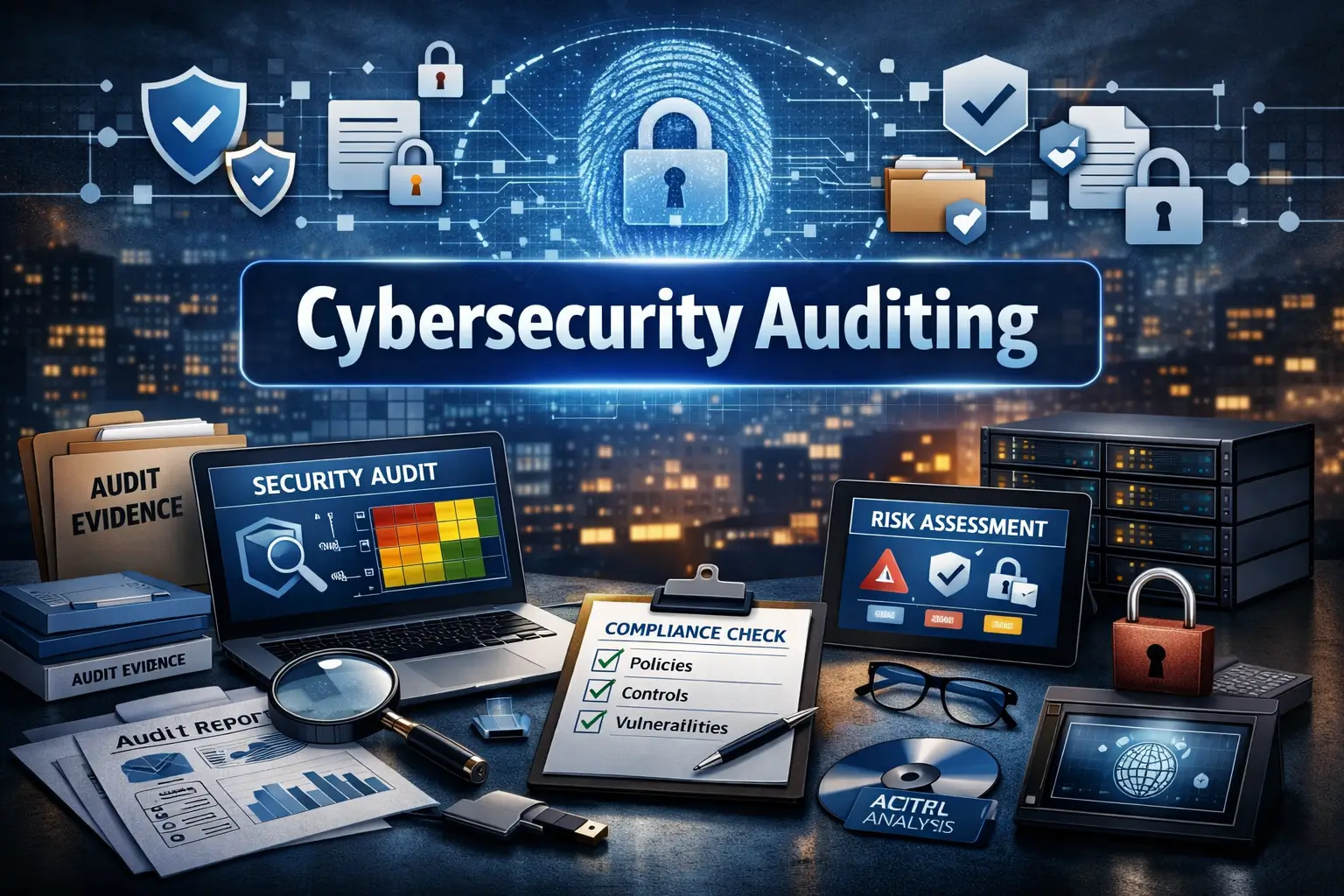
Cybersecurity Auditing Course
The Cybersecurity Auditing Course is designed to equip learners with the knowledge and practical skills required to evaluate an organization’s cybersecurity posture, assess security controls, identify risks, and ensure compliance with industry standards. As cyber threats continue to evolve, organizations increasingly rely on cybersecurity audits to verify that their systems, policies, and processes effectively protect sensitive information and critical business assets.
This course provides a comprehensive introduction to cybersecurity auditing, covering audit planning, risk assessment, security control evaluation, compliance requirements, vulnerability assessments, and audit reporting. Through practical examples and real-world case studies, learners will understand how to conduct systematic security audits that support organizational resilience and regulatory compliance.
Whether you are an aspiring cybersecurity professional, IT auditor, compliance specialist, or information security practitioner, this course offers industry-relevant knowledge to help you build a successful career in cybersecurity auditing.
Course Overview
The course introduces the principles of cybersecurity auditing and explains how organizations evaluate the effectiveness of their information security programs. Learners will explore audit methodologies, governance frameworks, compliance standards, and risk management processes used to assess and improve cybersecurity practices.
The curriculum also emphasizes documentation, reporting, continuous monitoring, and corrective actions that strengthen organizational security.
What You Will Learn
By completing this course, you will be able to:
- Understand cybersecurity auditing principles.
- Learn the cybersecurity audit lifecycle.
- Perform basic security risk assessments.
- Evaluate security controls and policies.
- Conduct internal cybersecurity audits.
- Understand external audit requirements.
- Review compliance with industry standards.
- Identify security vulnerabilities and gaps.
- Prepare professional audit documentation.
- Write effective audit reports.
- Recommend corrective security measures.
- Understand governance and risk management.
- Support continuous security improvement.
- Apply cybersecurity audit best practices.
- Strengthen organizational compliance.
Course Curriculum
The curriculum begins with cybersecurity fundamentals before introducing audit methodologies and governance concepts. Learners then study risk assessment, security control evaluation, compliance frameworks, vulnerability assessment, audit documentation, reporting techniques, continuous monitoring, and audit best practices.
Practical case studies demonstrate how cybersecurity audits are performed in real organizational environments to improve security and reduce cyber risks.
Skills You Will Gain
After completing the course, you will develop skills in:
- Cybersecurity Auditing
- IT Security Auditing
- Information Security Auditing
- Risk Assessment
- Security Control Evaluation
- Compliance Auditing
- ISO 27001 Fundamentals
- NIST Framework Basics
- Audit Documentation
- Audit Reporting
- Governance and Compliance
- Vulnerability Assessment
- Security Risk Management
- Internal Audit
- Cybersecurity Best Practices
Benefits of the Course
This course provides practical knowledge that can be applied across industries including finance, healthcare, government, manufacturing, education, and technology. You will gain the ability to evaluate cybersecurity controls, identify weaknesses, recommend improvements, and support compliance initiatives.
Employers value professionals who understand cybersecurity auditing because effective audits help reduce organizational risks, improve regulatory compliance, and strengthen information security programs.
Who Should Enroll
This course is ideal for:
- Cybersecurity Professionals
- IT Auditors
- Information Security Analysts
- Compliance Officers
- Risk Management Professionals
- Internal Auditors
- Network Administrators
- System Administrators
- IT Managers
- Governance Professionals
- Students pursuing Cybersecurity
- Business Owners
- Security Consultants
- Technology Professionals
- Anyone interested in cybersecurity auditing
Career Opportunities
After completing the Cybersecurity Auditing Course, you may pursue roles such as:
- Cybersecurity Auditor
- IT Auditor
- Information Security Auditor
- Compliance Analyst
- Governance, Risk & Compliance (GRC) Analyst
- Risk Management Analyst
- Information Security Analyst
- Security Consultant
- Internal Auditor
- Cybersecurity Compliance Specialist
These opportunities are available across financial institutions, healthcare organizations, government agencies, consulting firms, technology companies, educational institutions, and multinational corporations.
Certification Details
Upon successfully completing the course, learners receive a Certificate of Completion recognizing their knowledge of cybersecurity auditing, security control assessment, risk management, and compliance practices. This certificate demonstrates your ability to contribute to organizational cybersecurity programs and supports your professional growth in cybersecurity, auditing, and governance.
If you want to build expertise in evaluating security systems and ensuring organizational compliance, the Cybersecurity Auditing Course provides practical, career-focused training that prepares you for modern cybersecurity auditing responsibilities.
9. FAQ SECTION
1. What is the Cybersecurity Auditing Course?
This course teaches how to evaluate cybersecurity controls, identify risks, assess compliance, and perform security audits within organizations.
2. Is this course suitable for beginners?
Yes. The course starts with cybersecurity and auditing fundamentals before progressing to more advanced audit concepts.
3. What topics are covered?
The course covers cybersecurity auditing, IT audits, risk assessment, compliance standards, governance, vulnerability assessment, audit reporting, and security controls.
4. Do I need prior auditing experience?
No. Basic IT or cybersecurity knowledge is helpful but not required.
5. Is the course fully online?
Yes. It is a self-paced online course that can be accessed anytime.
6. Will I receive a certificate?
Yes. A Certificate of Completion is awarded after successfully finishing the course.
7. Who should enroll in this course?
Cybersecurity professionals, IT auditors, compliance officers, students, network administrators, business owners, and anyone interested in security auditing.
8. What skills will I gain?
You will learn cybersecurity auditing, risk assessment, compliance evaluation, audit planning, security control assessment, audit reporting, and governance fundamentals.
9. Can this course help my career?
Yes. It prepares learners for careers in cybersecurity auditing, IT auditing, compliance, governance, and information security.
10. Why is cybersecurity auditing important?
Cybersecurity auditing helps organizations identify security gaps, verify compliance, improve security controls, reduce cyber risks, and strengthen overall information security management.





Reviews
There are no reviews yet.