
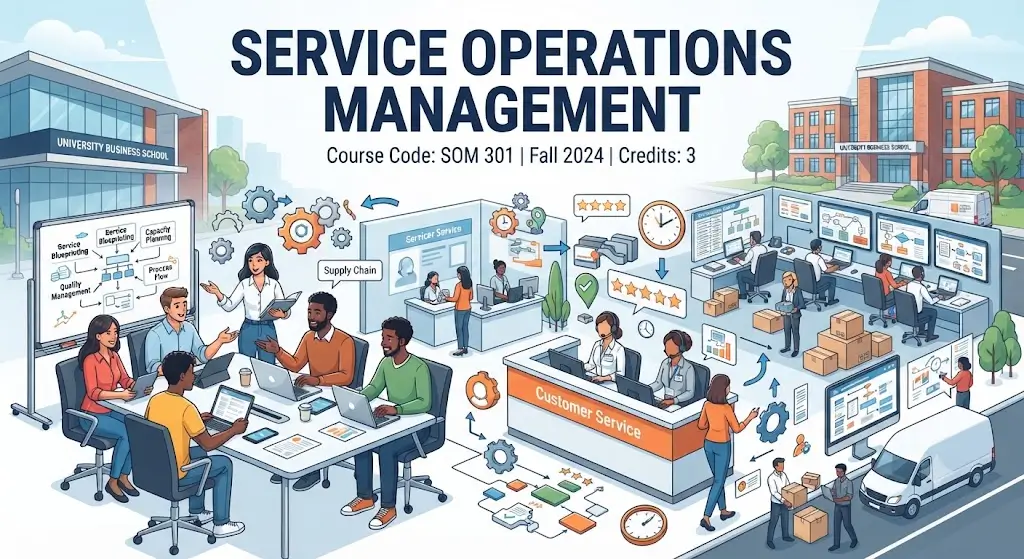
Introduction to Service Operations Management
Service Operations Management focuses on planning, managing, and improving the activities involved in delivering services to customers. Organizations depend on efficient service operations to provide consistent experiences, manage resources effectively, and achieve business objectives.
This course provides practical knowledge of service planning, operational management, customer service processes, quality improvement, and performance evaluation. Learners gain a clear understanding of how service organizations maintain efficiency while meeting customer expectations.
Understanding Service Operations
Service operations involve coordinating people, technology, processes, and resources to deliver reliable and high-quality services. Effective management ensures that every stage of service delivery contributes to customer satisfaction and organizational performance.
Key learning areas include:
- Service planning
- Workflow management
- Resource allocation
- Customer service operations
- Quality assurance
- Operational efficiency
These concepts help learners understand how successful service organizations operate.
Service Delivery and Process Improvement
Delivering consistent service requires well-designed processes and continuous improvement. Organizations regularly evaluate workflows, identify inefficiencies, and implement improvements that increase productivity while maintaining service quality.
Learners explore practical approaches to:
- Process optimization
- Service quality improvement
- Performance monitoring
- Resource utilization
- Customer satisfaction management
- Continuous improvement
Managing Performance and Quality
Performance measurement enables organizations to evaluate service outcomes and identify opportunities for improvement. Managers use operational data, customer feedback, and performance indicators to strengthen service delivery and support business goals.
The course also explains how quality management contributes to operational excellence and long-term success.
Leadership in Service Operations
Strong leadership plays an important role in managing service teams, encouraging collaboration, and improving operational performance. Effective leaders create customer-focused environments while supporting innovation and continuous learning.
Learners discover how communication, planning, and teamwork contribute to better service outcomes.
Skills You Will Develop
After completing this course, learners will understand:
- Service Operations Management principles
- Service delivery planning
- Process improvement
- Quality management
- Performance measurement
- Resource management
- Customer service operations
- Operational planning
- Team collaboration
- Continuous improvement
Who Should Enroll?
This course is suitable for:
- Students
- Business professionals
- Operations executives
- Customer service managers
- Team leaders
- Entrepreneurs
- Service industry professionals
No previous experience is required.
Career Opportunities
This course supports careers such as:
- Service Operations Executive
- Operations Manager
- Customer Service Manager
- Service Delivery Coordinator
- Business Operations Associate
- Process Improvement Executive
- Operations Analyst
FAQ Section Frequently Asked Questions
Who can enroll in this course?
This program is suitable for students, graduates, working professionals, supervisors, entrepreneurs, and anyone interested in improving service delivery and operational performance.
What will I learn during the training?
You will learn service planning, workflow improvement, quality management, resource utilization, customer experience management, and operational performance evaluation.
Is this course suitable for beginners?
Yes. The course starts with fundamental concepts and gradually introduces practical methods used by modern service organizations.
How can these skills be applied in the workplace?
The knowledge gained helps improve operational efficiency, strengthen customer support, optimize workflows, manage teams, and enhance overall service quality.
Which industries can benefit from these concepts?
Healthcare, banking, hospitality, retail, logistics, education, telecommunications, IT services, consulting, and government organizations all apply these practices.
Will practical business examples be included?
Yes. The course includes real-world scenarios that demonstrate how organizations manage service operations and improve customer satisfaction.
What professional skills will I develop?
You will build communication, analytical thinking, planning, problem-solving, leadership, resource management, quality improvement, and operational decision-making skills.
Can this training support career development?
Yes. It helps prepare learners for opportunities in operations management, customer service, service delivery, business operations, process improvement, and supervisory roles.
What job roles can benefit from this knowledge?
The course is valuable for operations executives, customer service coordinators, team leaders, service supervisors, business support professionals, and management trainees.
What can I achieve after completing this program?
After completing the course, you will understand how to improve service processes, enhance customer satisfaction, manage operational resources, and contribute to long-term organizational success.





Reviews
There are no reviews yet.