
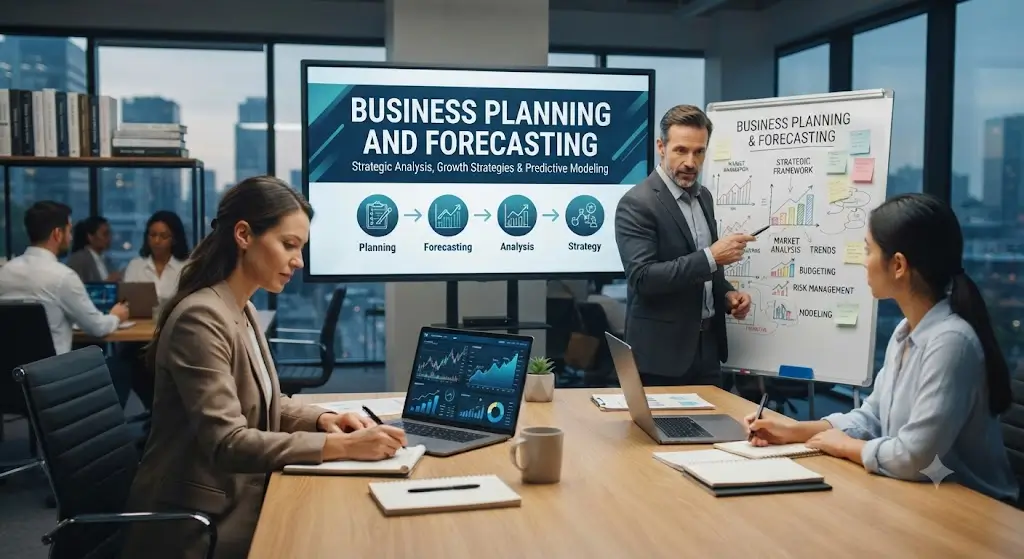
Introduction to Business Planning and Forecasting
Business Planning and Forecasting is a structured approach to setting business objectives, developing strategic plans, and predicting future business performance. Organizations use planning and forecasting to prepare for market changes, allocate resources effectively, manage risks, and achieve long-term success.
This course provides a practical understanding of business planning principles, forecasting techniques, and strategic decision-making used by modern organizations.
Understanding Business Planning
Business planning provides a clear roadmap for achieving organizational goals. It helps leaders define priorities, allocate resources, establish measurable objectives, and coordinate business activities across departments.
Learners explore important planning concepts, including:
- Strategic planning
- Operational planning
- Goal setting
- Resource allocation
- Performance planning
- Business objectives
These concepts create a strong foundation for effective business management.
Forecasting Business Performance
Forecasting enables organizations to estimate future outcomes by analyzing historical data, market conditions, and business trends. Accurate forecasting supports better planning and reduces uncertainty.
The course introduces practical forecasting methods such as:
- Sales forecasting
- Financial forecasting
- Demand forecasting
- Market trend analysis
- Budget forecasting
- Performance forecasting
Learners understand how forecasts support confident and informed business decisions.
Planning for Sustainable Growth
Organizations achieve sustainable growth when planning and forecasting work together. Business leaders evaluate opportunities, identify potential risks, and develop strategies that improve long-term performance.
The course also explains how planning supports innovation, operational efficiency, investment decisions, and organizational resilience.
Decision-Making and Performance Improvement
Business planning and forecasting provide valuable insights that improve strategic decision-making. Organizations regularly monitor results, compare forecasts with actual performance, and adjust plans to achieve business objectives.
This process helps businesses remain competitive while responding effectively to changing market conditions.
Skills You Will Develop
After completing this course, learners will understand:
- Business planning principles
- Forecasting techniques
- Strategic planning
- Financial forecasting
- Sales forecasting
- Market analysis
- Budget planning
- Business performance evaluation
- Risk assessment
- Decision-making
Who Should Enroll?
This course is suitable for:
- Students
- Entrepreneurs
- Business professionals
- Managers
- Team leaders
- Business analysts
- Operations executives
- Startup founders
No previous business experience is required.
Career Opportunities
This course supports careers such as:
- Business Planner
- Business Analyst
- Strategy Executive
- Financial Planning Associate
- Operations Manager
- Business Development Executive
- Corporate Planning Analyst
- Management Consultant
FAQ Section (Frequently Asked Questions)
Who should enroll in the Business Planning and Forecasting course?
This course is suitable for students, entrepreneurs, managers, business professionals, startup founders, business analysts, and anyone interested in strategic business planning.
What will I learn during this course?
You will learn how to prepare business plans, develop forecasts, analyze market trends, create budgets, evaluate business performance, and support strategic decision-making.
Is this course suitable for beginners?
Yes. The course starts with the fundamentals of planning and forecasting and gradually introduces practical business techniques using real-world examples.
Why are business planning and forecasting important?
They help organizations set realistic goals, allocate resources efficiently, prepare for future challenges, reduce uncertainty, and improve long-term business performance.
Which topics are included in the course?
The course covers strategic planning, operational planning, forecasting methods, budgeting, market analysis, financial forecasting, performance measurement, and business decision-making.
How are planning and forecasting applied in organizations?
Organizations use these practices to prepare business strategies, estimate future demand, manage budgets, evaluate investments, and improve operational efficiency.
What professional skills will I develop?
You will develop strategic thinking, analytical skills, forecasting techniques, financial planning knowledge, decision-making abilities, business analysis, and performance evaluation skills.
Which industries benefit from business planning and forecasting?
Planning and forecasting are widely used in manufacturing, retail, banking, healthcare, logistics, technology, consulting, education, and government organizations.
Can this course help with career growth?
Yes. The course supports careers in business planning, corporate strategy, business analysis, financial planning, operations management, consulting, and entrepreneurship.
What can I achieve after completing this course?
After completing this course, you will be able to prepare business plans, develop reliable forecasts, evaluate business opportunities, and contribute to better strategic decisions and organizational growth.


Reviews
There are no reviews yet.