
Introduction
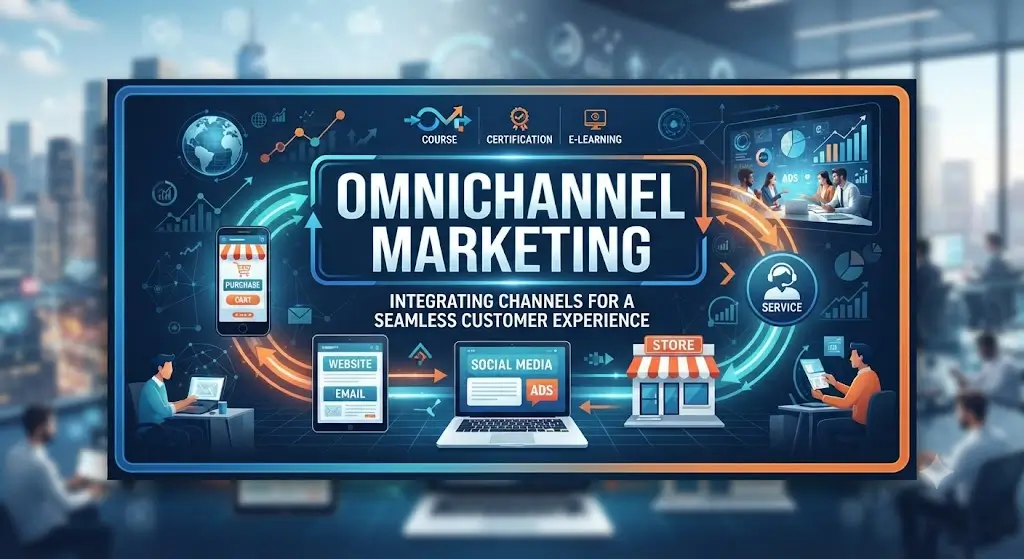
The Omnichannel Marketing Course is a comprehensive training program designed to equip learners with the knowledge and practical skills required to create integrated marketing strategies that deliver consistent customer experiences across multiple communication channels. As consumer behavior continues to evolve, customers expect seamless interactions with brands regardless of whether they engage through websites, social media platforms, mobile applications, email campaigns, retail stores, or customer service channels. Therefore, businesses increasingly rely on omnichannel marketing to strengthen customer relationships and improve overall marketing effectiveness.
Omnichannel marketing focuses on connecting every customer touchpoint into one unified experience. Unlike traditional marketing approaches that treat each channel separately, omnichannel marketing ensures that messaging, branding, customer data, and communication remain consistent across all platforms. This integrated approach helps organizations increase customer satisfaction, improve engagement, and build long-term customer loyalty.
Whether you are a student, entrepreneur, digital marketer, business owner, marketing executive, or customer experience professional, this course provides practical knowledge that prepares you for success in today’s digital marketing environment.
Why Omnichannel Marketing is Important
Modern consumers expect personalized and connected experiences throughout their interactions with businesses. Organizations that successfully integrate multiple marketing channels gain stronger customer relationships and improved business performance.
Key benefits of omnichannel marketing include:
- Creates seamless customer experiences across channels
- Improves customer engagement and satisfaction
- Strengthens brand consistency and recognition
- Increases customer retention and loyalty
- Enhances marketing campaign effectiveness
- Supports personalized customer communication
- Improves conversion rates and sales performance
- Enables better use of customer data and insights
- Increases return on marketing investment (ROI)
- Supports sustainable business growth
For example, a customer who browses products on a company’s website, receives personalized email recommendations, interacts with the brand on social media, and completes a purchase in-store experiences a connected customer journey that strengthens brand trust.
Course Overview
This course provides a structured understanding of omnichannel marketing strategies and customer engagement.
Learners will explore:
- Fundamentals of omnichannel marketing
- Customer journey mapping
- Customer experience management
- Cross-channel marketing strategies
- Integrated marketing communications (IMC)
- Digital marketing channels
- Social media marketing integration
- Email marketing fundamentals
- Mobile marketing concepts
- Marketing automation basics
- Customer personalization techniques
- CRM integration for marketing
- Marketing analytics and reporting
- Campaign performance measurement
- Omnichannel marketing best practices
What You Will Learn
By the end of this course, learners will be able to:
- Understand omnichannel marketing principles
- Create integrated marketing strategies across multiple channels
- Map customer journeys and improve customer experiences
- Develop personalized marketing campaigns
- Integrate social media, email, mobile, and website marketing
- Apply customer engagement strategies
- Use customer data to improve marketing decisions
- Measure marketing performance using key metrics
- Improve brand consistency across channels
- Support business growth through customer-focused marketing strategies
Key Components of Omnichannel Marketing
1. Customer Journey Mapping
Learn how to identify every stage of the customer journey and improve interactions across multiple touchpoints.
2. Cross-Channel Integration
Understand how websites, email, mobile apps, social media, customer support, and retail stores work together to create a unified customer experience.
3. Personalization
Explore how businesses use customer data and behavior to deliver relevant content, recommendations, and personalized marketing messages.
4. Marketing Automation
Learn how automated marketing tools improve customer engagement, campaign efficiency, and communication consistency.
5. Performance Analytics
Understand how marketing analytics help evaluate campaign performance, customer behavior, and business outcomes for continuous improvement.
Skills You Will Gain
After completing this course, learners will develop valuable professional skills, including:
- Omnichannel marketing strategy
- Customer journey mapping
- Customer experience management
- Integrated marketing communications (IMC)
- Digital marketing integration
- Social media marketing coordination
- Email marketing fundamentals
- Marketing automation awareness
- CRM integration basics
- Marketing analytics
- Customer engagement strategies
- Business communication
- Strategic thinking
- Problem-solving
- Data-driven marketing decision-making
Benefits of This Course
Completing this course offers several professional advantages, including:
- Strong understanding of omnichannel marketing principles
- Better career opportunities in digital marketing and brand management
- Improved customer engagement and communication skills
- Practical knowledge of integrated marketing strategies
- Better understanding of customer experience management
- Enhanced marketing planning and campaign management skills
- Increased employability across multiple industries
- Competitive advantage in marketing careers
- Strong foundation for advanced digital marketing and customer experience roles
Who Should Enroll?
This course is suitable for:
- Students interested in marketing and business careers
- Digital marketing professionals
- Marketing executives and coordinators
- Entrepreneurs and startup founders
- Business owners
- Brand managers
- Customer experience professionals
- CRM professionals
- Advertising and communications professionals
- Anyone interested in omnichannel marketing and customer engagement
No previous experience is required, making this course suitable for beginners and experienced professionals alike.
Career Opportunities
After completing this course, learners may pursue roles such as:
- Omnichannel Marketing Executive
- Digital Marketing Executive
- Marketing Coordinator
- Customer Experience Executive
- CRM Executive
- Marketing Automation Associate
- Brand Executive
- Customer Engagement Specialist
- Campaign Management Executive
- Marketing Analyst
- Digital Campaign Coordinator
Certification
Upon successful completion of the Omnichannel Marketing Course, learners receive a professional certificate recognizing their knowledge of omnichannel marketing strategies, customer journey mapping, integrated marketing communications, customer engagement, personalization, marketing automation, and campaign performance analysis. This certification enhances career opportunities across digital marketing agencies, corporate marketing departments, retail organizations, e-commerce companies, technology firms, advertising agencies, and customer experience teams.
Conclusion
The Omnichannel Marketing Course provides learners with practical knowledge and professional skills to design integrated marketing strategies that deliver seamless customer experiences across multiple channels. By mastering customer journey mapping, cross-channel communication, personalization, marketing automation, and performance analytics, learners will be well prepared for successful careers in digital marketing, brand management, customer experience, and marketing strategy.
Whether your goal is to become a digital marketing professional, improve customer engagement, strengthen brand consistency, or advance your career in modern marketing, this course provides a strong foundation for long-term professional success.
FAQ
1. What is the Omnichannel Marketing Course?
It is a course that teaches how to create integrated marketing strategies and deliver seamless customer experiences across multiple online and offline channels.
2. Who should enroll in this course?
Students, digital marketing professionals, entrepreneurs, business owners, marketing executives, CRM professionals, and anyone interested in modern marketing strategies.
3. Do I need prior marketing experience?
No. The course is beginner-friendly and suitable for both new learners and experienced professionals.
4. What topics are covered in this course?
The course covers omnichannel marketing, customer journey mapping, integrated marketing communications, customer engagement, personalization, marketing automation, CRM integration, digital marketing channels, and marketing analytics.
5. Will I learn customer journey mapping?
Yes. The course explains how to map customer journeys and optimize customer interactions across multiple touchpoints.
6. Does this course include digital marketing concepts?
Yes. It covers websites, social media, email marketing, mobile marketing, CRM integration, and other digital marketing channels within an omnichannel strategy.
7. Will I receive a certificate after completing the course?
Yes. A professional course completion certificate is awarded upon successful completion.
8. Is Omnichannel Marketing an in-demand skill?
Yes. Organizations across retail, e-commerce, banking, healthcare, hospitality, technology, telecommunications, and many other industries actively seek professionals with omnichannel marketing expertise.
9. How does omnichannel marketing benefit businesses?
It improves customer experience, increases customer engagement, strengthens brand consistency, boosts customer retention, enhances marketing performance, and supports long-term business growth.
10. What career opportunities are available after this course?
You can pursue roles such as Omnichannel Marketing Executive, Digital Marketing Executive, Marketing Coordinator, Customer Experience Executive, CRM Executive, Marketing Automation Associate, Brand Executive, Customer Engagement Specialist, Marketing Analyst, or Digital Campaign Coordinator.





Reviews
There are no reviews yet.