
Introduction
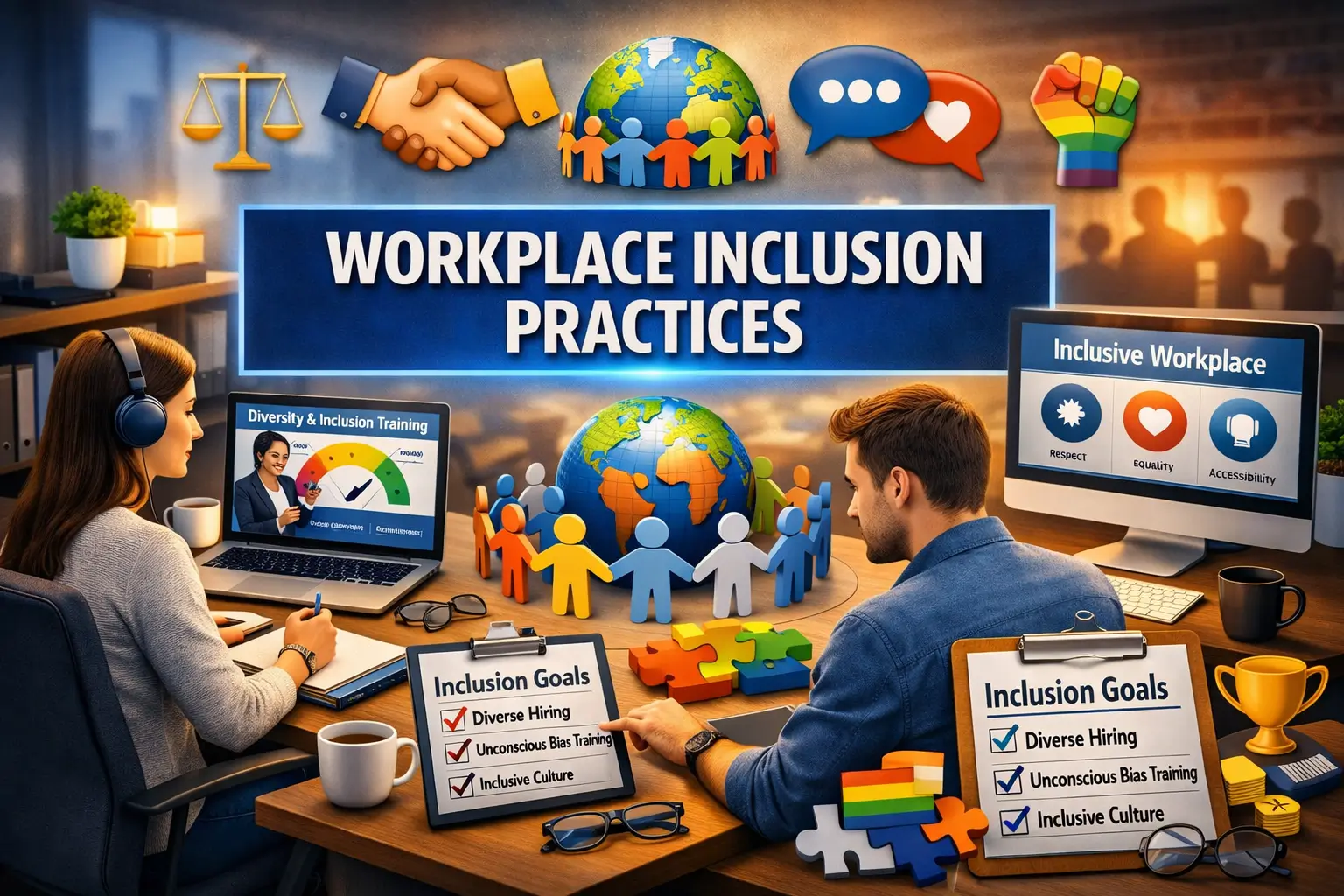
The Workplace Inclusion Practices Course is a comprehensive training program designed to equip learners with the knowledge and practical skills required to create inclusive and equitable workplace environments. In today’s global workforce, diversity is increasing rapidly. Therefore, inclusion practices are essential for organizational success.
Workplace inclusion focuses on ensuring that all employees feel respected, valued, and included regardless of background, identity, or perspective. As a result, organizations can build stronger teams and improve employee satisfaction.
Whether you are a student, HR professional, or manager, this course provides practical knowledge that supports inclusive workplace development.
Course Overview
This course provides a practical introduction to diversity, equity, and inclusion (DEI) principles in organizations.
Learners will explore:
- Fundamentals of workplace inclusion
- Diversity, equity, and inclusion (DEI) basics
- Inclusive workplace culture development
- Bias awareness and reduction techniques
- Inclusive communication strategies
- Employee belonging and engagement
- Cultural sensitivity in workplaces
- Inclusive leadership principles
- Conflict resolution in diverse teams
- Fair hiring and workplace practices
- Organizational inclusion policies
- Team collaboration across diversity
- Respectful workplace behavior
- Workplace equality strategies
Additionally, the course helps learners understand how inclusion improves organizational performance.
What You Will Learn
Throughout this course, learners will develop practical inclusion and workplace culture skills.
You will learn how to:
- Build inclusive workplace environments
- Recognize and reduce unconscious bias
- Promote diversity and equity at work
- Improve communication across diverse teams
- Support inclusive leadership practices
- Strengthen employee belonging
- Handle workplace diversity challenges
- Create fair and respectful policies
- Encourage collaboration among employees
- Improve workplace culture and morale
By the end of the course, learners will understand how workplace inclusion practices improve organizational success.
Skills You Will Gain
After completing this course, learners will develop skills including:
- Workplace inclusion strategies
- Diversity and equity awareness
- Inclusive leadership
- Communication skills
- Cultural intelligence
- Conflict resolution
- Emotional intelligence
- Problem-solving
- Team collaboration
- Decision-making
- Bias recognition and reduction
- Organizational behavior understanding
- HR inclusion practices
- Workplace ethics
- Interpersonal skills
These transferable skills are valuable across corporate organizations, HR departments, NGOs, educational institutions, government offices, and multinational companies.
Benefits of the Course
This course offers numerous professional advantages.
Some major benefits include:
- Strong understanding of workplace diversity and inclusion
- Improved communication and collaboration skills
- Better workplace culture awareness
- Enhanced leadership capabilities
- Increased employee engagement understanding
- Reduced workplace bias and discrimination awareness
- Strong foundation for HR and management roles
- Improved organizational harmony
- Better team performance
- Career readiness in HR and DEI roles
Furthermore, inclusive workplaces lead to higher productivity, innovation, and employee satisfaction.
Who Should Enroll?
This course is ideal for:
- HR professionals
- Managers and team leaders
- Students
- Corporate employees
- Trainers and consultants
- Organizational development professionals
- Anyone interested in workplace culture
No prior experience is required. Therefore, beginners can confidently enroll.
Career Opportunities
After completing this course, learners may pursue or support careers in roles such as:
- DEI Assistant (Diversity, Equity & Inclusion)
- HR Inclusion Coordinator
- Employee Engagement Assistant
- Workplace Culture Assistant
- HR Support Executive
- Organizational Development Assistant
- Training Coordinator Assistant
- Corporate HR Assistant
- Diversity Program Assistant
- Workplace Relations Assistant
- Talent Management Support Staff
- HR Operations Assistant
- Entry-level HR roles
- Administrative HR support roles
- Culture and Engagement Assistant
These skills are valuable across corporate companies, startups, NGOs, government organizations, and multinational corporations.
Certification
Upon successful completion of the Workplace Inclusion Practices Course, learners receive a professional certification recognizing their skills in diversity, equity, inclusion, and workplace culture development.
The certification demonstrates your ability to contribute to inclusive and fair workplace environments.
Conclusion
The Workplace Inclusion Practices Course equips learners with essential skills required to build respectful, diverse, and inclusive workplaces.
Throughout the course, learners develop expertise in DEI principles, inclusive leadership, and workplace communication. These capabilities help improve organizational culture and employee satisfaction.
Whether you are starting a career in HR or improving workplace culture knowledge, this course provides valuable skills and practical techniques that support long-term professional growth.
FAQ
1. What is the Workplace Inclusion Practices Course?
It is a professional course that teaches diversity, equity, inclusion, and workplace culture development.
2. Who should take this course?
HR professionals, managers, and students interested in workplace culture should take this course.
3. Do I need HR experience?
No. It is designed for beginners.
4. What will I learn in this course?
You will learn inclusion strategies, DEI principles, and inclusive leadership.
5. How does this course help in career growth?
It prepares you for HR, DEI, and organizational development roles.
6. Is this course useful for companies?
Yes. It helps improve workplace culture and employee engagement.
7. Will I get a certificate after completion?
Yes. A professional course completion certificate is provided.
8. Does this course include bias training?
Yes. It covers unconscious bias awareness and reduction techniques.
9. Can students take this course?
Yes. Students interested in HR and management can also join.
10. Why is workplace inclusion important?
Because it improves fairness, teamwork, employee satisfaction, and organizational performance.


Reviews
There are no reviews yet.