
Introduction
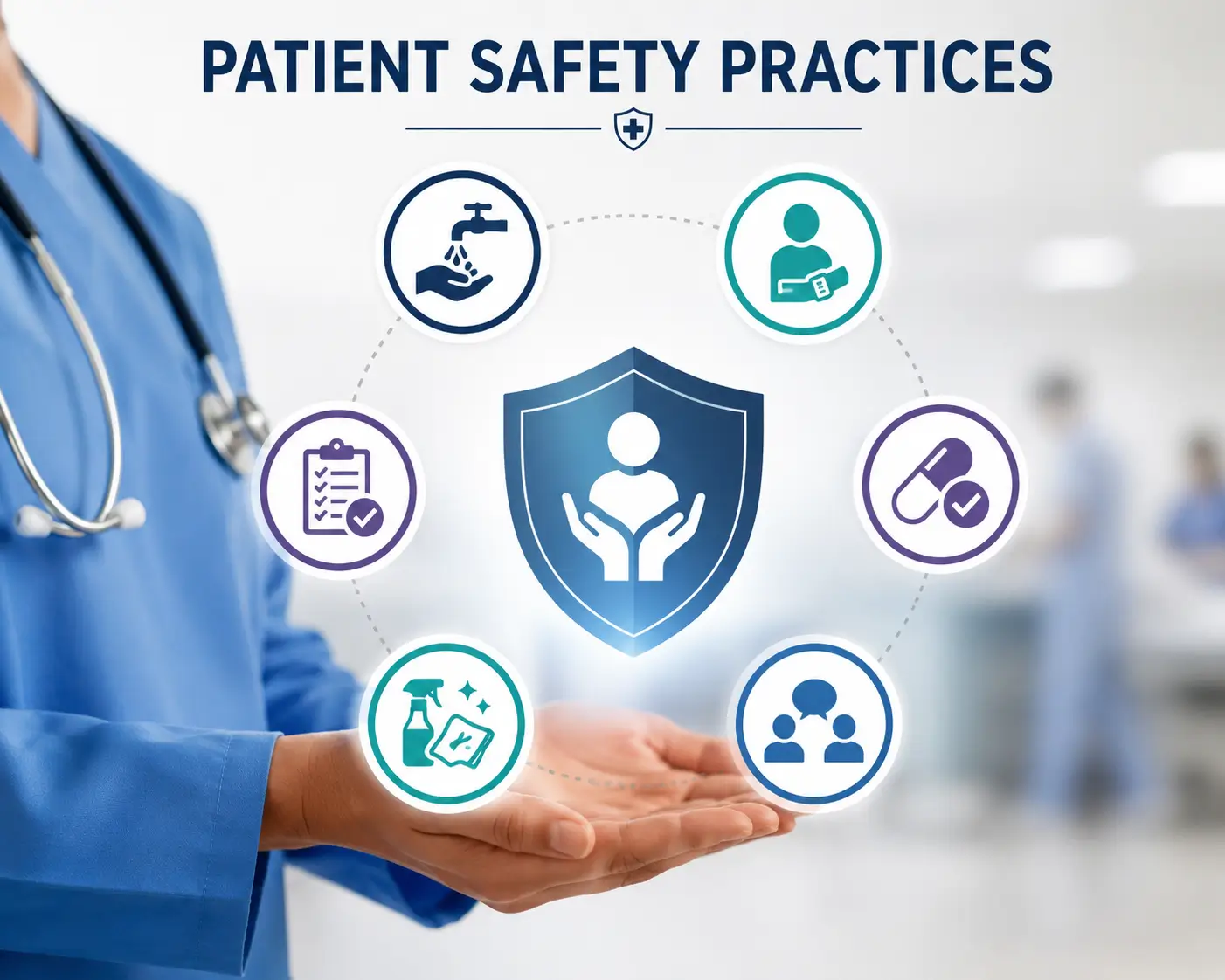
The Patient Safety Practices Course is a comprehensive training program designed to equip learners with the knowledge and practical skills required to ensure patient safety in healthcare settings. In modern healthcare systems, safety is a top priority. Therefore, patient safety practices are essential for quality care delivery.
Patient safety involves preventing errors, reducing risks, and ensuring safe healthcare environments. As a result, hospitals and clinics can provide better care and improve patient trust.
Whether you are a student, nurse, doctor, or healthcare assistant, this course provides practical knowledge that supports safety-focused healthcare practices.
Course Overview
This course provides a practical introduction to patient safety and healthcare risk management systems.
Learners will explore:
- Fundamentals of patient safety practices
- Medical error prevention techniques
- Infection control and hygiene standards
- Healthcare risk management basics
- Patient safety protocols in hospitals
- Reporting and incident management systems
- Communication in safety procedures
- Healthcare quality standards
- Medication safety basics
- Emergency response procedures
- Patient identification systems
- Workplace safety in healthcare
- Ethical responsibilities in patient care
- Introduction to safety audits
Additionally, the course helps learners understand how safety systems protect patients and healthcare workers.
What You Will Learn
Throughout this course, learners will develop practical healthcare safety skills.
You will learn how to:
- Identify and prevent medical errors
- Follow patient safety protocols
- Maintain hygiene and infection control standards
- Improve communication for safer care
- Support risk management systems
- Handle safety incidents effectively
- Ensure accurate patient identification
- Promote safe medication practices
- Contribute to healthcare safety audits
- Improve overall patient care quality
By the end of the course, learners will understand how patient safety practices improve healthcare systems.
Skills You Will Gain
After completing this course, learners will develop skills including:
- Patient safety management
- Healthcare risk assessment
- Infection control awareness
- Problem-solving
- Attention to detail
- Communication skills
- Emergency response understanding
- Compliance awareness
- Analytical thinking
- Decision-making
- Team coordination
- Critical thinking
- Observation skills
- Ethical responsibility
- Healthcare quality improvement
These transferable skills are valuable across hospitals, clinics, nursing homes, diagnostic centers, and healthcare organizations.
Benefits of the Course
This course offers numerous professional advantages.
Some major benefits include:
- Strong understanding of patient safety systems
- Reduced risk of medical errors awareness
- Improved infection control knowledge
- Enhanced career opportunities in healthcare sector
- Better compliance with healthcare standards
- Strong foundation for nursing and hospital roles
- Improved emergency handling awareness
- Better communication in healthcare settings
- Increased patient trust and satisfaction
- Professional healthcare safety knowledge
Furthermore, patient safety practices are essential for building reliable and high-quality healthcare systems.
Who Should Enroll?
This course is ideal for:
- Healthcare students
- Nurses and doctors
- Hospital staff
- Medical assistants
- Clinic employees
- Healthcare administrators
- Anyone interested in patient care safety
No prior experience is required. Therefore, beginners can confidently enroll.
Career Opportunities
After completing this course, learners may pursue or support careers in roles such as:
- Patient Safety Assistant
- Healthcare Quality Support Executive
- Hospital Safety Coordinator
- Infection Control Assistant
- Medical Safety Officer (Entry Level)
- Healthcare Compliance Assistant
- Nursing Support Staff
- Clinical Safety Assistant
- Hospital Operations Support Staff
- Patient Care Coordinator
- Healthcare Risk Management Assistant
- Entry-level hospital roles
- Healthcare administration assistant
- Diagnostic center safety assistant
- Clinic support staff
These skills are valuable across hospitals, clinics, diagnostic centers, nursing homes, and healthcare organizations.
Certification
Upon successful completion of the Patient Safety Practices Course, learners receive a professional certification recognizing their skills in healthcare safety, risk management, and patient care standards.
The certification demonstrates your ability to support safe and high-quality healthcare environments.
Conclusion
The Patient Safety Practices Course equips learners with essential skills required to maintain safe healthcare environments and reduce medical risks.
Throughout the course, learners develop expertise in safety protocols, infection control, and risk prevention. These capabilities help improve patient outcomes and healthcare quality.
Whether you are entering the healthcare field or improving safety knowledge, this course provides valuable knowledge and practical techniques that support long-term professional growth.
FAQ
1. What is the Patient Safety Practices Course?
It is a professional course that teaches healthcare safety, risk management, and patient protection practices.
2. Who should take this course?
Healthcare students, nurses, doctors, and hospital staff should take this course.
3. Do I need medical experience?
No. It is suitable for beginners.
4. What will I learn in this course?
You will learn infection control, error prevention, and patient safety protocols.
5. How does this course help in career growth?
It prepares you for healthcare safety, nursing, and hospital support roles.
6. Is this course useful for hospital jobs?
Yes. It is highly useful for safety and clinical support roles.
7. Will I get a certificate after completion?
Yes. A professional course completion certificate is provided.
8. Does this course include infection control training?
Yes. It includes hygiene and infection prevention practices.
9. Can I work in clinics after this course?
Yes. It is useful for hospitals, clinics, and healthcare centers.
10. Why is patient safety important?
Because it prevents errors, reduces risks, and improves healthcare outcomes.





Reviews
There are no reviews yet.