
Introduction
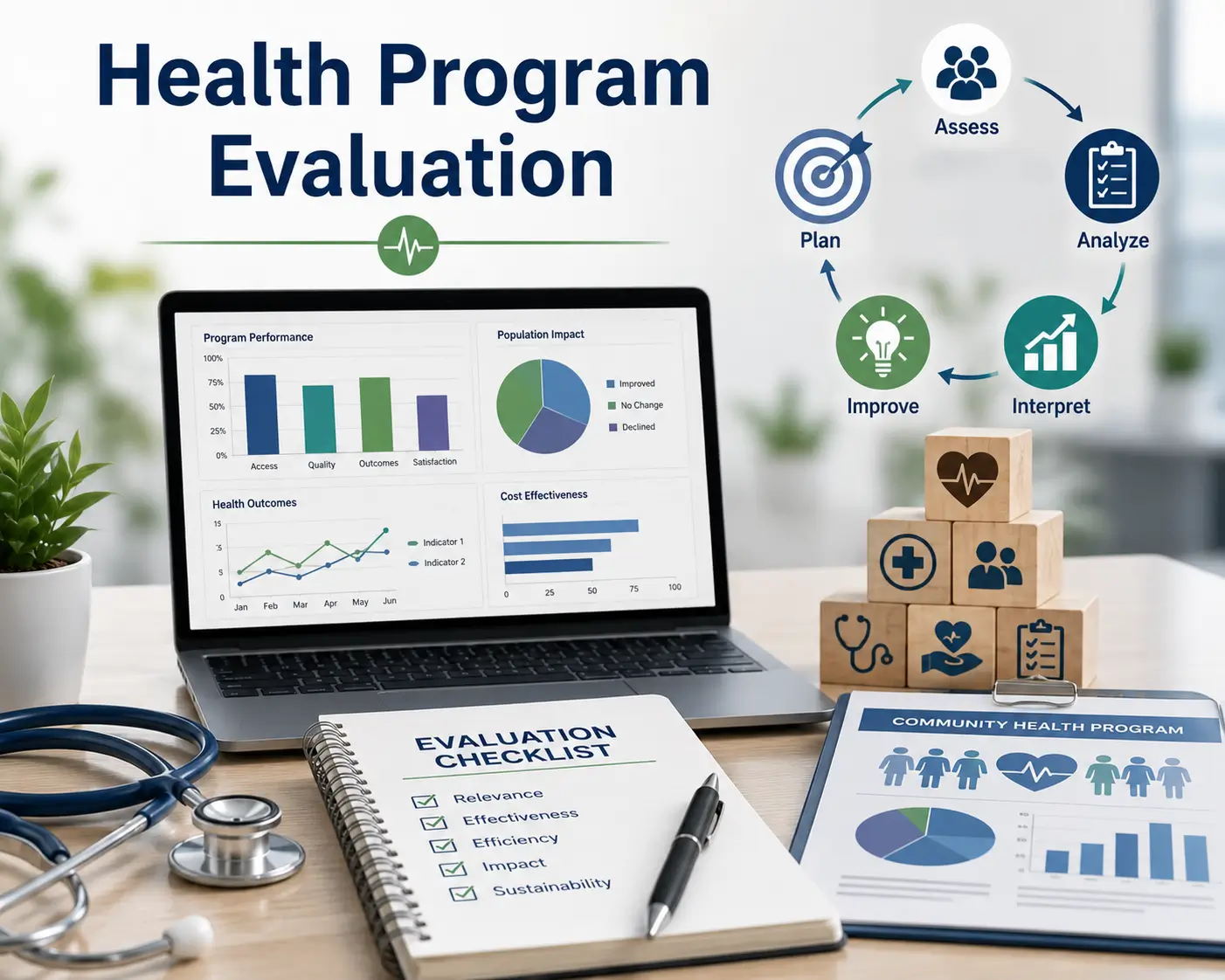
The Health Program Evaluation Course is a comprehensive training program designed to equip learners with the knowledge and practical skills required to evaluate healthcare and public health programs effectively. As healthcare organizations, government agencies, non-profit organizations, and international health institutions invest significant resources into health initiatives, evaluating the effectiveness of these programs has become essential for improving health outcomes, ensuring accountability, and supporting evidence-based decision-making.
Health program evaluation helps organizations determine whether a program is achieving its intended objectives, identify areas for improvement, optimize resource utilization, and measure overall impact on patients and communities. Professionals with expertise in program evaluation play a vital role in strengthening healthcare systems and improving public health policies.
Whether you are a healthcare professional, public health practitioner, researcher, program coordinator, healthcare administrator, or student, this course provides valuable knowledge and practical evaluation skills that support career growth across healthcare and public health sectors.
Course Overview
Health programs are developed to address a wide range of healthcare challenges, including disease prevention, health promotion, maternal and child health, vaccination campaigns, chronic disease management, nutrition initiatives, and community health improvement. However, implementing a program is only the beginning. Organizations must evaluate whether these initiatives produce meaningful and measurable results.
This course provides a structured understanding of health program evaluation frameworks, planning methods, monitoring strategies, performance indicators, data collection techniques, and impact assessment. Learners explore the complete evaluation process, from defining evaluation objectives to interpreting results and communicating findings to stakeholders.
The curriculum combines theoretical concepts with practical applications, enabling participants to evaluate healthcare programs using systematic, evidence-based approaches.
What You Will Learn
The Health Program Evaluation Course covers a broad range of evaluation concepts and methodologies relevant to healthcare and public health organizations.
Learners begin by understanding the purpose and importance of program evaluation in healthcare. They explore different types of evaluations, including formative, process, outcome, impact, and summative evaluations.
The course explains how to develop evaluation plans by defining program goals, identifying measurable objectives, selecting evaluation questions, and choosing appropriate performance indicators.
Participants learn both qualitative and quantitative data collection methods, including surveys, interviews, focus groups, observations, health records, and statistical analysis.
A major component focuses on monitoring and evaluation frameworks, logic models, theory of change, key performance indicators (KPIs), and outcome measurement techniques.
The course also introduces data analysis, interpretation of evaluation findings, report writing, visualization of results, and effective communication of recommendations to healthcare leaders and stakeholders.
Learners gain knowledge of ethical considerations in health program evaluation, including confidentiality, informed consent, cultural sensitivity, and responsible data management.
Additionally, the course explores quality improvement methodologies, evidence-based healthcare practices, community engagement, policy evaluation, and continuous improvement strategies that help strengthen healthcare programs over time.
Finally, participants examine real-world healthcare evaluation case studies to understand how evaluation findings support better decision-making, policy development, and resource allocation.
Skills You Will Gain
Upon successful completion of the course, learners will develop valuable professional skills, including:
- Health program evaluation
- Monitoring and evaluation (M&E)
- Evaluation planning
- Outcome measurement
- Performance indicator development
- Qualitative research methods
- Quantitative data analysis
- Data collection and reporting
- Healthcare quality assessment
- Evidence-based decision-making
- Stakeholder engagement
- Program performance monitoring
- Research and analytical skills
- Report writing and presentation
- Continuous quality improvement
These skills are highly valued in healthcare organizations, public health agencies, NGOs, research institutions, government departments, and international development organizations.
Benefits of the Course
The Health Program Evaluation Course provides learners with practical knowledge and analytical skills required to measure the success and effectiveness of healthcare programs.
Participants learn systematic evaluation techniques that improve healthcare planning, strengthen accountability, and support evidence-based improvements.
The course also develops critical thinking, research, communication, and data interpretation skills that are valuable across healthcare management, public health, policy development, and research careers.
As governments and healthcare organizations increasingly rely on measurable outcomes to guide funding and strategic decisions, professionals skilled in health program evaluation continue to be in high demand.
Who Should Enroll?
This course is ideal for:
- Public health professionals
- Healthcare administrators
- Program managers
- Monitoring and evaluation officers
- Healthcare consultants
- NGO professionals
- Researchers
- Policy analysts
- Healthcare quality professionals
- Medical and public health students
- Community health workers
- Government health officials
- Anyone interested in healthcare evaluation
No prior evaluation experience is required. Beginners can confidently enroll and build practical evaluation skills.
Career Opportunities
After completing the course, learners may pursue opportunities such as:
- Health Program Evaluator
- Monitoring and Evaluation Officer
- Public Health Program Manager
- Healthcare Quality Analyst
- Healthcare Research Associate
- Health Policy Analyst
- Evaluation Consultant
- Community Health Program Coordinator
- Healthcare Data Analyst
- NGO Program Officer
- Healthcare Improvement Specialist
- Public Health Consultant
- Program Performance Analyst
- Healthcare Project Officer
- Research and Evaluation Specialist
Certification
Upon successful completion of the Health Program Evaluation Course, participants receive a certification recognizing their understanding of health program planning, monitoring, evaluation methodologies, data analysis, performance measurement, and evidence-based decision-making. This certification enhances professional credibility and supports career advancement across healthcare, public health, research, and development organizations.
Why Choose This Course?
The Health Program Evaluation Course combines healthcare evaluation principles with practical monitoring and assessment techniques to provide a comprehensive learning experience. The curriculum focuses on planning, data collection, outcome measurement, quality improvement, reporting, and evidence-based decision-making.
Whether your goal is to improve healthcare programs, support public health initiatives, conduct research, or build a career in monitoring and evaluation, this course provides the knowledge, practical skills, and confidence needed to succeed.
Enroll today and build a strong foundation in health program evaluation, performance measurement, healthcare quality improvement, and evidence-based healthcare management.
FAQ Section
1. What is the Health Program Evaluation Course?
The course teaches learners how to evaluate healthcare and public health programs by measuring their effectiveness, outcomes, and overall impact.
2. Is this course suitable for beginners?
Yes. The course is designed for beginners as well as professionals who want to develop evaluation and monitoring skills.
3. What topics are covered in this course?
Topics include evaluation planning, monitoring frameworks, data collection, outcome assessment, performance indicators, data analysis, reporting, and quality improvement.
4. Will I receive a certificate after completing the course?
Yes. Participants receive a certificate upon successful completion of the course.
5. Do I need prior healthcare or research experience?
No. The course introduces evaluation concepts in a beginner-friendly manner.
6. Who should enroll in this course?
Healthcare professionals, public health practitioners, researchers, NGO staff, program managers, policy professionals, and students can benefit from this course.
7. Is the course fully online?
Yes. The course is designed for flexible online learning.
8. What skills will I gain?
You will gain skills in health program evaluation, monitoring, data analysis, reporting, stakeholder engagement, and evidence-based decision-making.
9. Can this course improve my career opportunities?
Yes. Evaluation and monitoring skills are highly valued across healthcare organizations, NGOs, research institutions, and government agencies.
10. Why is health program evaluation important?
Health program evaluation helps organizations measure program effectiveness, improve healthcare quality, optimize resource utilization, strengthen accountability, and support better healthcare decisions.





Reviews
There are no reviews yet.