
Introduction
The Digital Learning Strategy Course is a comprehensive professional development program designed to equip learners with the knowledge and practical skills required to develop, implement, and optimize digital learning initiatives. The rapid growth of online education, hybrid learning, educational technology, and workplace training has transformed how knowledge is delivered and consumed. Organizations now require strategic approaches to digital learning that enhance learner engagement, improve accessibility, support personalized learning, and achieve measurable educational outcomes.
Digital learning is no longer limited to online courses. It includes virtual classrooms, blended learning environments, mobile learning, interactive multimedia, learning management systems, collaborative platforms, and data-driven learning experiences. Educational institutions, businesses, government agencies, and nonprofit organizations increasingly rely on digital learning strategies to deliver flexible, scalable, and effective education and training.
This course provides learners with a practical understanding of digital learning strategy while integrating instructional design, educational technology, learner engagement, assessment, and performance improvement. Whether you are an educator, instructional designer, corporate trainer, academic administrator, learning and development professional, or education consultant, this course offers valuable knowledge and practical skills for building successful digital learning programs.
Course Overview
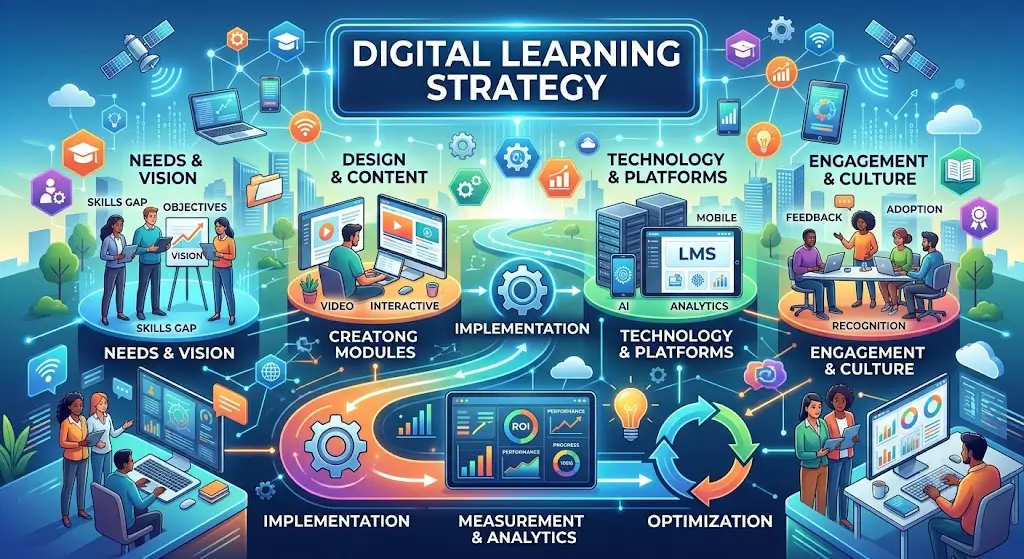
A successful digital learning strategy aligns educational goals with technology, instructional design, learner needs, and organizational objectives. Rather than simply delivering content online, digital learning strategy focuses on creating engaging, accessible, and measurable learning experiences that improve learner performance and organizational success.
This course introduces learners to digital learning frameworks, online course planning, instructional design models, educational technology selection, learner experience design, content development, digital assessment, and continuous improvement processes. Participants gain practical insights into designing digital learning ecosystems that support learners in both educational and workplace settings.
The curriculum combines learning science with modern educational technology to help learners develop strategies that promote effective digital learning and long-term learner success.
What You Will Learn
The Digital Learning Strategy Course covers a broad range of concepts related to planning, designing, implementing, and evaluating digital learning initiatives.
Learners begin by understanding the principles of digital learning and how technology is transforming education and professional development. They explore digital learning models, including online learning, blended learning, hybrid learning, flipped classrooms, mobile learning, and self-paced learning.
The course introduces instructional design principles, learning objectives, curriculum alignment, learner analysis, content planning, and learning experience design. Participants learn how to develop learner-centered strategies that improve engagement and knowledge retention.
A major focus of the course is educational technology integration. Learners explore Learning Management Systems (LMS), virtual classrooms, video conferencing tools, collaborative platforms, content authoring tools, digital libraries, cloud-based learning environments, and emerging educational technologies.
Participants study digital content development, including multimedia learning, interactive videos, simulations, gamification, microlearning, podcasts, infographics, and digital assessments. They learn how different content formats support various learning styles and instructional goals.
The course also examines learner engagement strategies, online collaboration, discussion facilitation, motivation techniques, personalized learning, adaptive learning technologies, and learner support systems that improve participation and course completion rates.
Additionally, learners gain practical knowledge of learning analytics, educational data collection, learner performance monitoring, dashboard reporting, assessment strategies, feedback mechanisms, and evidence-based decision-making.
The curriculum emphasizes accessibility and inclusive design, covering Universal Design for Learning (UDL), accessibility standards, culturally responsive instruction, and digital content design that supports diverse learner needs.
Participants also explore quality assurance, project management, stakeholder communication, budgeting, technology planning, risk management, and change management for successful digital learning implementation.
Finally, learners examine future trends in digital education, including artificial intelligence, virtual reality (VR), augmented reality (AR), adaptive learning, automation, and lifelong learning strategies.
Skills You Will Gain
Upon successful completion of the course, learners will develop valuable professional skills, including:
- Digital learning strategy
- Instructional design
- Online learning program planning
- Learning Management System (LMS) implementation
- Educational technology integration
- Blended learning design
- Learning experience design
- Multimedia content development
- Gamification strategies
- Learning analytics
- Digital assessment design
- Learner engagement techniques
- Accessibility and inclusive learning design
- Project management for digital learning
- Continuous improvement and evaluation
These skills are highly valued in schools, universities, corporate training departments, edtech companies, government organizations, nonprofits, and online education providers.
Benefits of the Course
The Digital Learning Strategy Course provides learners with practical knowledge to design, implement, and manage successful digital learning initiatives.
Participants develop expertise in online learning design, educational technology integration, learner engagement, digital assessment, and continuous improvement. These competencies help organizations create flexible and effective learning experiences while improving learner satisfaction and educational outcomes.
The course also strengthens leadership, communication, analytical thinking, instructional design, and technology management skills that are valuable across education and corporate learning roles.
As digital transformation continues to reshape education and workplace training, professionals with digital learning strategy expertise remain in high demand across industries.
Learners also gain the ability to evaluate digital learning programs using analytics and learner feedback to support long-term success.
Who Should Enroll?
This course is ideal for:
- Teachers
- University faculty
- Instructional designers
- Curriculum developers
- Corporate trainers
- Learning and development professionals
- Academic administrators
- E-learning specialists
- Educational technology professionals
- Online course creators
- Education consultants
- School leaders
- HR and training managers
- Digital education coordinators
- Anyone interested in digital learning and instructional innovation
No prior experience in instructional design or digital learning is required. The course is suitable for beginners as well as experienced education and training professionals.
Career Opportunities
After completing the course, learners may pursue opportunities such as:
- Digital Learning Strategist
- Instructional Designer
- Learning Experience Designer
- E-learning Specialist
- Learning and Development Manager
- Digital Education Consultant
- Corporate Trainer
- LMS Administrator
- Online Program Manager
- Educational Technology Specialist
- Curriculum Developer
- Academic Technology Coordinator
- Digital Learning Coordinator
- Educational Innovation Manager
- Training Program Manager
Professionals with digital learning strategy expertise are employed by schools, colleges, universities, edtech companies, corporate training organizations, government agencies, nonprofit organizations, and online education providers.
Certification
Upon successful completion of the Digital Learning Strategy Course, participants receive a certification recognizing their knowledge of digital learning strategy, instructional design, educational technology integration, online learning development, learner engagement, learning analytics, and digital education management. This certification enhances professional credibility and supports career advancement in education, instructional design, and learning and development.
Why Choose This Course?
The Digital Learning Strategy Course combines instructional design principles with modern educational technology to provide a comprehensive learning experience.
The curriculum focuses on digital learning models, educational technology, learner engagement, content development, assessment, accessibility, learning analytics, and continuous improvement. Learners gain practical skills that help them create scalable, engaging, and effective digital learning experiences.
Whether your goal is to develop online courses, implement digital learning initiatives, improve corporate training programs, or build a career in instructional design and educational technology, this course provides the knowledge, practical skills, and confidence needed to succeed.
Enroll today and build a strong foundation in digital learning strategy, instructional design, educational technology, and learner-centered digital education.
FAQ Section
1. What is the Digital Learning Strategy Course?
The course teaches learners how to plan, implement, and manage digital learning initiatives using instructional design, educational technology, learner engagement strategies, and performance evaluation.
2. Is this course suitable for beginners?
Yes. The course is designed for beginners as well as educators, trainers, and learning professionals seeking to build digital learning expertise.
3. What topics are covered in this course?
Topics include digital learning strategy, instructional design, online learning, blended learning, LMS implementation, educational technology, learning analytics, accessibility, gamification, and digital assessment.
4. Will I receive a certificate after completing the course?
Yes. Participants receive a certificate upon successful completion of the course.
5. Do I need prior experience in digital learning or instructional design?
No. The course introduces all concepts in a beginner-friendly and practical manner.
6. Who should enroll in this course?
Teachers, instructional designers, corporate trainers, learning and development professionals, education consultants, academic administrators, online course creators, and educational technology specialists can benefit from this course.
7. Is the course fully online?
Yes. The course offers flexible online learning, allowing participants to study at their own pace.
8. What skills will I gain?
You will gain skills in digital learning strategy, instructional design, educational technology integration, learner engagement, LMS management, digital assessment, learning analytics, and online course planning.
9. Can this course improve my career opportunities?
Yes. Digital learning strategy professionals are in demand across educational institutions, corporate training departments, edtech companies, government organizations, and online learning platforms.
10. Why is a digital learning strategy important?
A digital learning strategy helps organizations deliver engaging, accessible, scalable, and measurable learning experiences while improving learner performance, supporting digital transformation, and achieving educational and business goals.




Reviews
There are no reviews yet.