
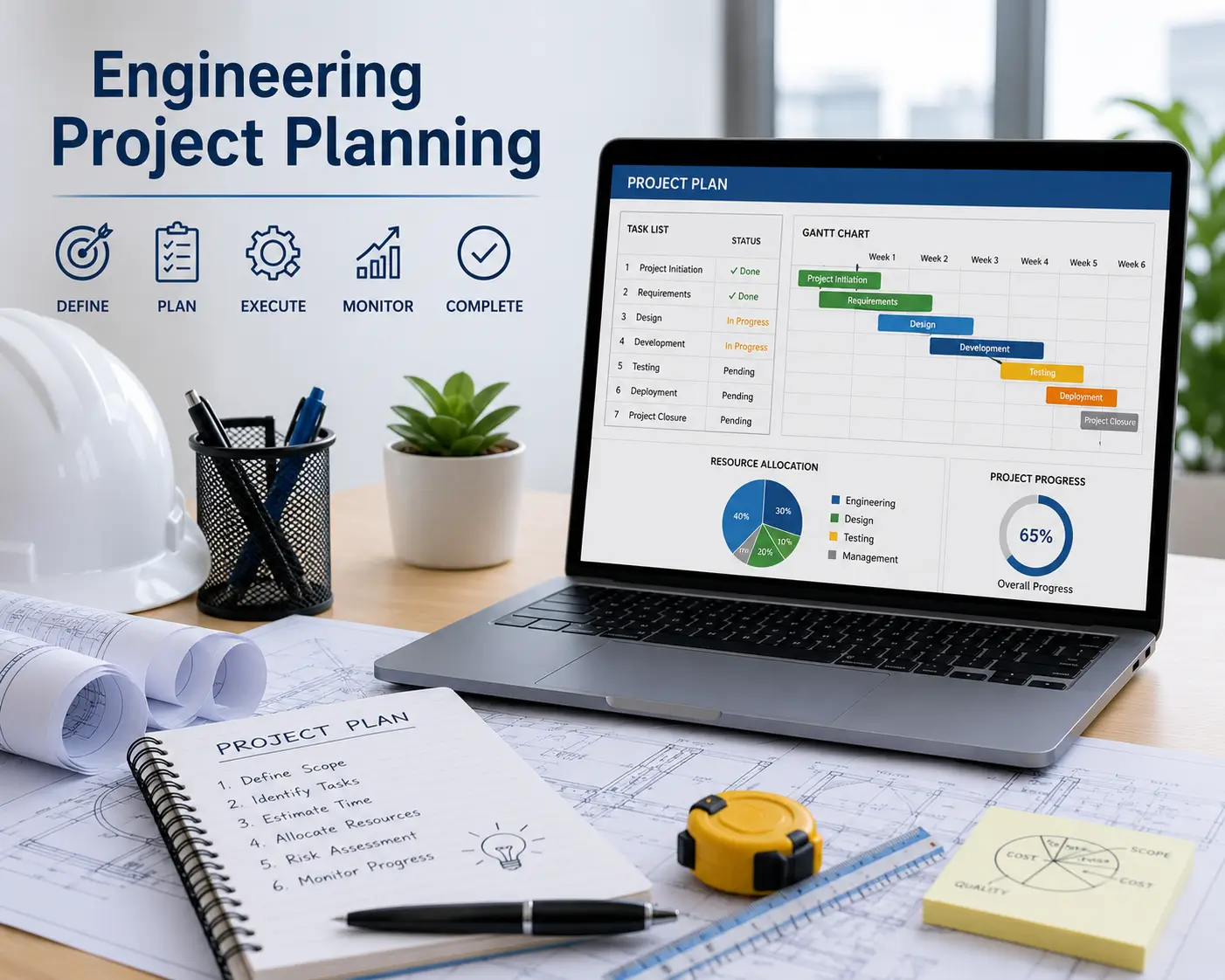
Introduction to Engineering Project Planning
Engineering Project Planning focuses on developing structured plans that guide engineering projects from concept through execution and completion. Successful engineering projects require careful planning, effective coordination, resource optimization, and continuous monitoring to achieve quality, safety, budget, and schedule objectives.
This course provides practical knowledge of engineering project planning, scheduling techniques, resource allocation, budgeting, project coordination, risk management, quality assurance, and project performance evaluation.
Understanding Engineering Project Planning
Project planning is one of the most important stages of any engineering project. Organizations prepare detailed plans to define project objectives, allocate resources, establish schedules, identify risks, and coordinate project activities.
Learners explore key concepts, including:
- Project planning
- Engineering scheduling
- Resource management
- Cost estimation
- Risk assessment
- Project coordination
These concepts provide the foundation for effective engineering project management.
Planning, Scheduling, and Resource Management
Engineering projects involve multiple teams, technical activities, equipment, materials, and deadlines. Effective scheduling and resource planning help organizations improve productivity while reducing delays and unnecessary costs.
Learners study practical approaches for:
- Work breakdown planning
- Activity scheduling
- Resource allocation
- Budget planning
- Project documentation
- Progress tracking
These practices improve project efficiency and operational performance.
Risk Management and Quality Control
Every engineering project faces technical, financial, environmental, and operational risks. Organizations identify potential risks early and implement strategies that reduce uncertainty while maintaining project quality and safety.
The course explains how quality assurance, inspections, and performance monitoring contribute to successful project outcomes.
Project Leadership and Team Collaboration
Engineering projects require strong communication and collaboration among engineers, contractors, suppliers, project managers, and stakeholders. Effective leadership helps teams solve problems, manage changes, and deliver projects successfully.
Learners understand how teamwork and communication improve project execution and organizational performance.
Skills You Will Develop
After completing this course, learners will understand:
- Engineering project planning
- Project scheduling
- Resource management
- Budget planning
- Risk management
- Project coordination
- Quality assurance
- Stakeholder communication
- Project monitoring
- Engineering documentation
Who Should Enroll?
This course is suitable for:
- Engineering students
- Civil engineers
- Mechanical engineers
- Electrical engineers
- Project coordinators
- Construction professionals
- Manufacturing professionals
- Operations managers
No previous project planning experience is required.
Career Opportunities
This course supports careers such as:
- Engineering Project Planner
- Project Engineer
- Project Coordinator
- Construction Planner
- Project Scheduler
- Site Engineer
- Engineering Operations Executive
- Project Management Professional
FAQ Section
1. What is the Engineering Project Planning Course?
The course teaches how to plan, organize, schedule, and manage engineering projects efficiently from initiation through successful completion.
2. Is this course suitable for beginners?
Yes. The course is designed for beginners as well as professionals who want to improve their engineering project planning skills.
3. What topics are covered?
Topics include project scope, scheduling, Work Breakdown Structures (WBS), Gantt charts, Critical Path Method (CPM), budgeting, resource allocation, procurement, risk management, quality planning, and stakeholder communication.
4. Will I receive a certificate?
Yes. Participants receive a certificate after successfully completing the course.
5. Do I need prior project management experience?
No. The course introduces engineering project planning concepts in a clear and beginner-friendly format.
6. Who should enroll in this course?
Engineers, project coordinators, construction professionals, supervisors, operations managers, engineering students, planners, and technical professionals can benefit from this course.
7. Is the course fully online?
Yes. The course offers flexible online learning, allowing participants to study at their own pace.
8. What skills will I gain?
You will gain skills in project planning, scheduling, budgeting, resource allocation, risk management, procurement planning, project documentation, and stakeholder communication.
9. Can this course help my career?
Yes. Engineering project planning skills are highly valued across engineering, construction, manufacturing, infrastructure, energy, transportation, and industrial sectors.
10. Why is engineering project planning important?
Engineering project planning helps organizations improve project efficiency, control costs, optimize resources, reduce risks, maintain quality, enhance communication, and successfully deliver engineering projects on time.





Reviews
There are no reviews yet.