
Introduction
The Engineering Materials Applications Course is a comprehensive training program designed to help learners develop a strong understanding of engineering materials and their practical applications across various industries. Engineering materials form the foundation of modern technology, infrastructure, manufacturing, transportation, healthcare, electronics, aerospace, and energy systems. Therefore, selecting the right material for a specific application is essential for achieving product quality, structural integrity, operational efficiency, and long-term performance.
Engineering materials are selected based on their physical, mechanical, thermal, chemical, and electrical properties. Different industries require different material characteristics depending on operating conditions, environmental factors, manufacturing processes, safety requirements, and cost considerations. As a result, engineers and technical professionals must understand material behavior to make informed engineering decisions.
This course provides learners with practical knowledge of engineering materials by combining material science principles, material selection techniques, manufacturing processes, quality assurance, testing methods, failure analysis, sustainability practices, and engineering design considerations. Whether you are an engineer, technician, manufacturing professional, product designer, student, researcher, or industrial specialist, this course provides valuable knowledge that supports technical excellence and professional growth.
Course Overview
Engineering materials play a critical role in determining the strength, durability, safety, efficiency, and reliability of engineering products and systems. Every engineering project depends on selecting materials that meet performance requirements while balancing cost, manufacturability, sustainability, and operational demands.
First, learners explore the importance of engineering materials in product design, manufacturing, construction, transportation, energy, healthcare, and industrial applications. Next, they understand how material selection directly affects product quality, lifecycle performance, maintenance requirements, and environmental impact.
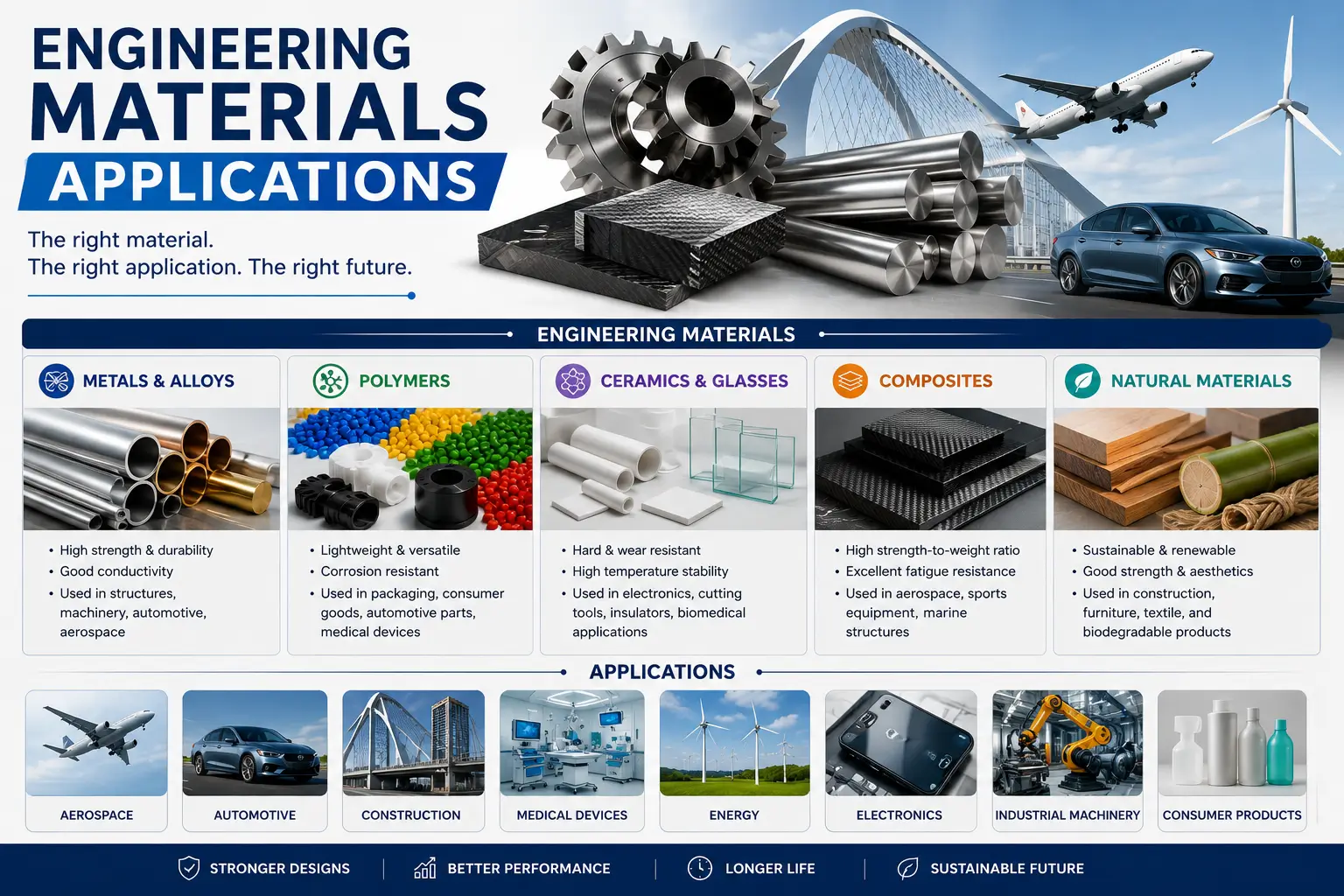
Additionally, the course explains different categories of engineering materials, including metals, alloys, polymers, ceramics, composites, smart materials, and advanced materials. Learners also gain practical knowledge of material properties, manufacturing techniques, heat treatment processes, corrosion protection, material testing, quality standards, sustainability, and material performance evaluation.
Furthermore, the curriculum combines engineering theory with practical industrial applications, helping learners confidently select and apply engineering materials across various engineering disciplines.
What You Will Learn
The Engineering Materials Applications Course covers a broad range of topics related to engineering materials and their practical industrial uses.
First, learners study the fundamentals of engineering materials and understand how different materials are classified based on their physical, chemical, thermal, electrical, and mechanical properties. They also explore the role of engineering materials in modern industrial development.
Next, participants learn about metallic materials. They understand the characteristics of ferrous and non-ferrous metals, alloys, stainless steel, aluminum, copper, titanium, and specialty metals commonly used in engineering applications.
Additionally, the course introduces polymers and plastics. Learners discover thermoplastics, thermosetting plastics, elastomers, engineering polymers, polymer processing techniques, and industrial applications where lightweight and corrosion-resistant materials provide significant advantages.
Furthermore, participants study ceramic materials. They learn about advanced ceramics, refractory materials, wear-resistant materials, insulating materials, heat-resistant applications, and specialized industrial uses.
The course also explains composite materials, including fiber-reinforced composites, carbon fiber, glass fiber, laminated materials, hybrid composites, and lightweight structural applications in aerospace, automotive, marine, and construction industries.
Moreover, learners gain knowledge of smart materials and advanced engineering materials. They understand shape memory alloys, piezoelectric materials, nanomaterials, biomaterials, high-performance alloys, and innovative materials that support emerging technologies.
In addition, the curriculum covers material properties such as strength, hardness, ductility, toughness, elasticity, fatigue resistance, creep resistance, corrosion resistance, thermal conductivity, electrical conductivity, and wear resistance.
Participants also study material testing methods, including tensile testing, compression testing, impact testing, hardness testing, fatigue testing, non-destructive testing (NDT), metallography, and quality inspection procedures.
Additionally, the course explains manufacturing processes such as casting, forging, machining, welding, additive manufacturing, powder metallurgy, forming, molding, extrusion, and surface treatment techniques.
The curriculum also introduces corrosion mechanisms, corrosion prevention methods, protective coatings, lubrication, heat treatment, surface engineering, and material life extension strategies.
Furthermore, learners explore material selection techniques, engineering design considerations, cost analysis, environmental sustainability, recycling practices, circular economy principles, quality assurance, and compliance with engineering standards.
Finally, participants study failure analysis, root cause investigation, reliability improvement, maintenance considerations, product optimization, innovation, and continuous improvement strategies that support engineering excellence.
Skills You Will Gain
Upon successful completion of the course, learners will develop valuable professional skills, including:
- Engineering material selection
- Material property analysis
- Metals and alloys applications
- Polymer and composite applications
- Ceramic material applications
- Material testing techniques
- Failure analysis
- Corrosion prevention
- Heat treatment fundamentals
- Manufacturing process knowledge
- Quality assurance
- Material performance evaluation
- Sustainability practices
- Engineering problem-solving
- Continuous improvement
These skills are highly valued across manufacturing companies, automotive industries, aerospace organizations, construction firms, energy companies, electronics manufacturers, engineering consultancies, research institutions, healthcare equipment manufacturers, and industrial production facilities.
Benefits of the Course
The Engineering Materials Applications Course provides learners with practical knowledge and technical skills that support informed material selection and engineering decision-making.
First, the course helps learners understand how engineering materials influence product performance, safety, durability, manufacturability, and sustainability.
Additionally, participants strengthen their ability to evaluate material properties, compare engineering materials, assess performance requirements, and select suitable materials for various industrial applications.
Furthermore, learners develop practical skills in material testing, quality assurance, failure analysis, corrosion prevention, manufacturing processes, and engineering design support.
The course also enhances analytical thinking, technical problem-solving, communication, collaboration, innovation, and decision-making skills that support engineering careers.
As industries continue developing advanced products and sustainable technologies, professionals with engineering materials expertise remain in strong demand.
Finally, learners gain the confidence to contribute to engineering projects that require reliable material selection, efficient manufacturing, and long-term product performance.
Who Should Enroll?
This course is ideal for:
- Mechanical engineers
- Materials engineers
- Manufacturing engineers
- Industrial engineers
- Product designers
- Production supervisors
- Quality engineers
- Research and development professionals
- Engineering technicians
- Construction professionals
- Aerospace professionals
- Automotive professionals
- Engineering students
- Technical consultants
- Anyone interested in engineering materials
No prior materials engineering experience is required. Therefore, beginners and experienced professionals can both benefit from this course.
Career Opportunities
After completing the course, learners may pursue opportunities such as:
- Materials Engineer
- Manufacturing Engineer
- Product Development Engineer
- Mechanical Engineer
- Quality Engineer
- Process Engineer
- Materials Testing Engineer
- Metallurgical Engineer
- Research Engineer
- Design Engineer
- Production Engineer
- Technical Consultant
- Product Quality Specialist
- Industrial Engineer
- Engineering Materials Specialist
Additionally, learners can apply these skills across manufacturing, automotive, aerospace, construction, energy, electronics, healthcare, mining, metallurgy, and engineering consulting organizations.
Certification
Upon successful completion of the Engineering Materials Applications Course, participants receive a certification recognizing their understanding of engineering materials, material selection, material testing, manufacturing processes, failure analysis, quality assurance, corrosion prevention, and engineering applications. This certification strengthens professional credibility and supports career advancement in engineering, manufacturing, product development, quality management, and industrial operations.
Why Choose This Course?
The Engineering Materials Applications Course combines material science principles with practical industrial applications to provide a comprehensive learning experience.
First, learners develop a strong understanding of metals, polymers, ceramics, composites, advanced materials, and engineering design considerations.
Additionally, the curriculum focuses on material selection, testing methods, manufacturing processes, corrosion prevention, heat treatment, quality assurance, sustainability, and continuous improvement.
Furthermore, participants gain industry-relevant knowledge that supports career development in manufacturing, engineering, aerospace, automotive, construction, research, product development, and industrial operations.
Whether your goal is to become a materials engineer, manufacturing engineer, quality engineer, product designer, research professional, or technical consultant, this course provides the knowledge, practical skills, and confidence needed to succeed.
Enroll today and build a strong foundation in engineering materials, material selection, manufacturing processes, and industrial engineering applications.
FAQ Section
1. What is the Engineering Materials Applications Course?
The course teaches how engineering materials are selected, tested, processed, and applied across manufacturing, construction, automotive, aerospace, and other engineering industries.
2. Is this course suitable for beginners?
Yes. The course is designed for beginners as well as professionals who want to strengthen their understanding of engineering materials and their applications.
3. What topics are covered?
Topics include metals, polymers, ceramics, composites, material properties, material testing, manufacturing processes, corrosion prevention, heat treatment, quality assurance, and material selection.
4. Will I receive a certificate?
Yes. Participants receive a certificate upon successfully completing the course.
5. Do I need prior materials engineering experience?
No. The course introduces engineering materials concepts in a clear and beginner-friendly format.
6. Who should enroll in this course?
Engineers, manufacturing professionals, technicians, product designers, quality engineers, engineering students, researchers, and industrial professionals can benefit from this course.
7. Is the course fully online?
Yes. The course offers flexible online learning, allowing participants to study at their own pace.
8. What skills will I gain?
You will gain skills in material selection, material testing, manufacturing processes, failure analysis, corrosion prevention, quality assurance, engineering problem-solving, and performance evaluation.
9. Can this course help my career?
Yes. Engineering materials expertise is highly valued across manufacturing, aerospace, automotive, construction, energy, electronics, healthcare, research, and engineering consulting industries.
10. Why are engineering materials important?
Engineering materials determine the strength, durability, safety, performance, cost, and sustainability of products and structures, making material selection a critical part of successful engineering design and manufacturing.





Reviews
There are no reviews yet.