
Introduction
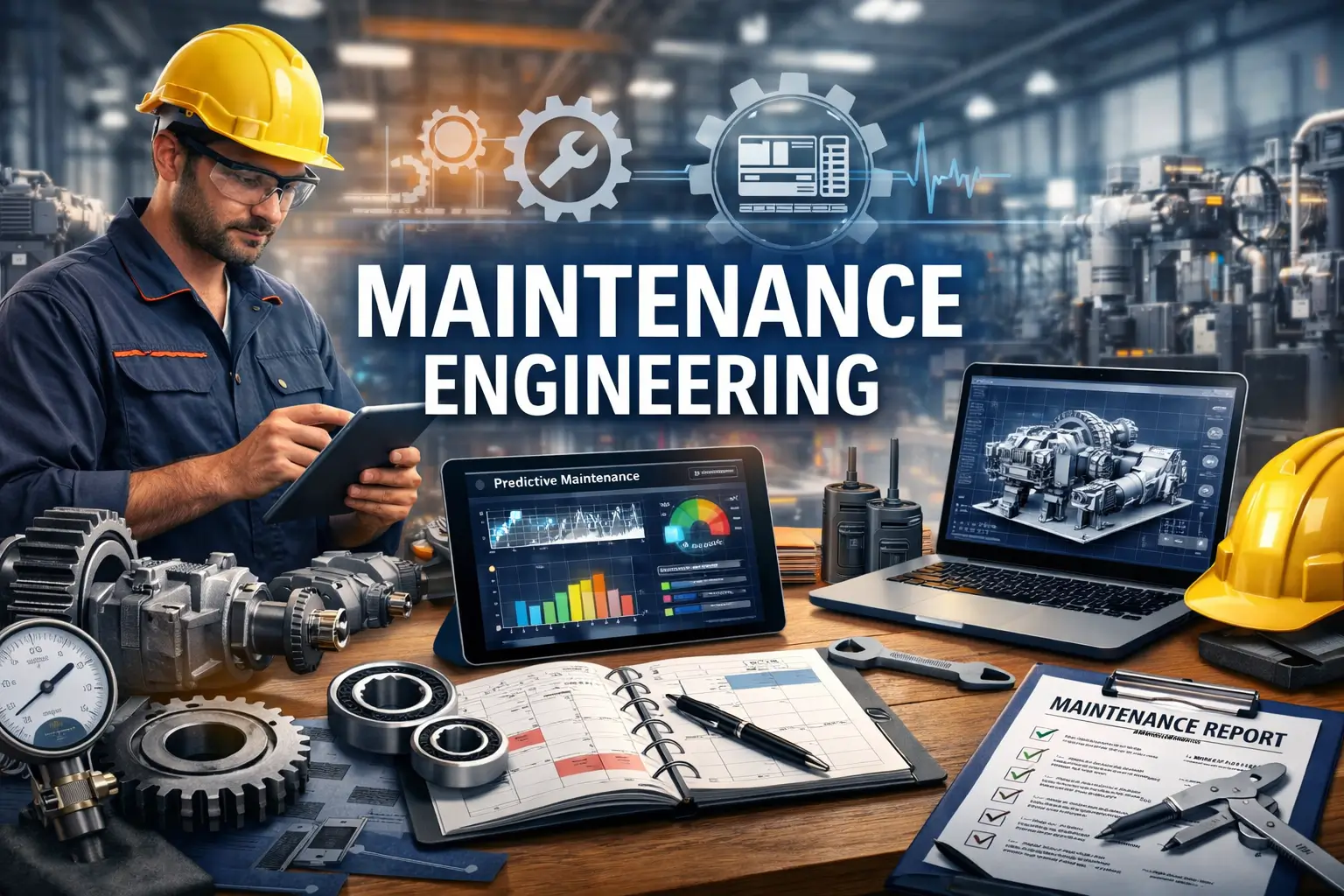
The Maintenance Engineering Course is a comprehensive training program designed to help learners develop the knowledge and practical skills required to maintain industrial equipment, machinery, and engineering systems efficiently throughout their operational lifecycle. As industries continue to rely on advanced manufacturing systems, automated production lines, and complex industrial equipment, effective maintenance engineering has become essential for ensuring reliability, productivity, safety, and cost efficiency. Therefore, organizations increasingly seek professionals who understand modern maintenance strategies and asset management principles.
Maintenance engineering focuses on preventing equipment failures, minimizing unplanned downtime, improving system reliability, extending asset life, and supporting continuous production. Rather than reacting only after equipment failures occur, modern maintenance engineering emphasizes proactive planning, preventive maintenance, predictive maintenance, condition monitoring, and continuous improvement to maximize operational performance.
This course provides learners with a practical understanding of maintenance engineering by combining maintenance planning, equipment reliability, inspection techniques, maintenance scheduling, root cause analysis, reliability-centered maintenance, total productive maintenance, safety management, and asset optimization. Whether you are an engineer, maintenance technician, plant supervisor, operations manager, student, or industrial professional, this course provides valuable knowledge that supports career growth and operational excellence.
Course Overview
Maintenance engineering focuses on ensuring that machinery, equipment, and production systems operate safely, efficiently, and reliably throughout their service life. Effective maintenance programs help organizations reduce equipment failures, improve productivity, lower maintenance costs, and enhance workplace safety.
First, learners explore the role of maintenance engineering in manufacturing, energy, utilities, construction, transportation, process industries, and infrastructure projects. Next, they understand how planned maintenance strategies improve equipment availability, operational efficiency, and long-term business performance.
Additionally, the course explains preventive maintenance, predictive maintenance, corrective maintenance, reliability-centered maintenance (RCM), total productive maintenance (TPM), maintenance scheduling, equipment inspection, condition monitoring, spare parts management, and maintenance documentation. Learners also gain practical knowledge of root cause analysis, asset management, maintenance performance indicators, safety management, digital maintenance technologies, and continuous improvement.
Furthermore, the curriculum combines engineering theory with practical industrial applications, helping learners confidently manage maintenance activities across different industries.
What You Will Learn
The Maintenance Engineering Course covers a broad range of topics related to maintaining industrial equipment, machinery, and engineering systems.
First, learners study the fundamentals of maintenance engineering and understand the importance of equipment reliability, operational efficiency, safety, and cost-effective maintenance practices. They also explore the responsibilities of maintenance engineers and maintenance teams.
Next, participants learn about different maintenance strategies. They understand preventive maintenance, predictive maintenance, corrective maintenance, breakdown maintenance, condition-based maintenance, and reliability-centered maintenance, along with their practical applications.
Additionally, the course introduces equipment inspection techniques. Learners discover how routine inspections, visual examinations, performance testing, lubrication practices, vibration analysis, thermal monitoring, and condition assessments help identify potential equipment issues before failures occur.
Furthermore, participants study maintenance planning and scheduling. They learn how maintenance activities are planned, prioritized, scheduled, coordinated, and documented to reduce production interruptions and improve maintenance efficiency.
The course also explains asset management principles. Learners explore equipment lifecycle management, asset reliability, maintenance budgeting, replacement planning, maintenance optimization, and long-term asset performance improvement.
Moreover, learners gain knowledge of root cause analysis techniques. They understand how equipment failures are investigated, underlying causes are identified, corrective actions are implemented, and preventive measures are established to reduce future failures.
In addition, the curriculum covers spare parts management, inventory control, procurement planning, maintenance documentation, work order management, and computerized maintenance management systems (CMMS).
Participants also study Total Productive Maintenance (TPM), reliability-centered maintenance (RCM), lean maintenance, continuous improvement, and performance optimization strategies that support operational excellence.
Additionally, the course explains workplace safety, maintenance risk assessment, lockout/tagout procedures, hazard identification, regulatory compliance, and safe maintenance practices.
The curriculum also introduces digital maintenance technologies, predictive analytics, Industrial Internet of Things (IIoT), smart sensors, maintenance dashboards, data analysis, and automation technologies that support modern maintenance engineering.
Furthermore, learners explore maintenance leadership, team coordination, communication, problem-solving, decision-making, performance measurement, and continuous improvement strategies that strengthen maintenance operations.
Finally, participants study maintenance audits, key performance indicators (KPIs), equipment availability, mean time between failures (MTBF), mean time to repair (MTTR), maintenance cost analysis, and maintenance reporting that help organizations improve maintenance performance.
Skills You Will Gain
Upon successful completion of the course, learners will develop valuable professional skills, including:
- Maintenance engineering
- Preventive maintenance planning
- Predictive maintenance
- Corrective maintenance
- Equipment inspection
- Maintenance scheduling
- Reliability engineering
- Root cause analysis
- Asset management
- Condition monitoring
- Spare parts management
- Maintenance documentation
- Safety management
- Performance monitoring
- Continuous improvement
These skills are highly valued across manufacturing companies, power plants, oil and gas facilities, construction organizations, transportation companies, utilities, mining operations, engineering firms, and industrial maintenance departments.
Benefits of the Course
The Maintenance Engineering Course provides learners with practical knowledge and engineering techniques that improve equipment reliability and maintenance performance.
First, the course helps learners understand how proactive maintenance strategies reduce equipment failures, minimize downtime, improve productivity, and lower maintenance costs.
Additionally, participants strengthen their ability to inspect equipment, schedule maintenance activities, manage maintenance resources, and optimize asset performance.
Furthermore, learners develop practical skills in reliability engineering, root cause analysis, predictive maintenance, safety management, maintenance planning, and digital maintenance technologies.
The course also enhances analytical thinking, communication, leadership, teamwork, decision-making, technical troubleshooting, and organizational skills that support engineering careers.
As industries continue investing in automation, digital manufacturing, and asset optimization, professionals with maintenance engineering expertise remain in strong demand.
Finally, learners gain the confidence to support safe, reliable, and efficient industrial operations while contributing to long-term organizational success.
Who Should Enroll?
This course is ideal for:
- Maintenance engineers
- Mechanical engineers
- Electrical engineers
- Industrial engineers
- Maintenance technicians
- Plant supervisors
- Maintenance managers
- Operations managers
- Manufacturing professionals
- Reliability engineers
- Asset management professionals
- Engineering students
- Production supervisors
- Industrial technicians
- Anyone interested in maintenance engineering
No prior maintenance engineering experience is required. Therefore, beginners and experienced professionals can both benefit from this course.
Career Opportunities
After completing the course, learners may pursue opportunities such as:
- Maintenance Engineer
- Reliability Engineer
- Plant Maintenance Engineer
- Maintenance Planner
- Asset Management Engineer
- Maintenance Supervisor
- Maintenance Coordinator
- Facilities Engineer
- Industrial Maintenance Technician
- Equipment Reliability Specialist
- Operations Engineer
- Production Support Engineer
- Engineering Maintenance Manager
- Technical Services Engineer
- Maintenance Consultant
Additionally, learners can apply these skills across manufacturing, oil and gas, power generation, utilities, mining, transportation, construction, pharmaceuticals, food processing, and heavy engineering industries.
Certification
Upon successful completion of the Maintenance Engineering Course, participants receive a certification recognizing their understanding of maintenance planning, preventive maintenance, predictive maintenance, reliability engineering, asset management, equipment inspection, maintenance safety, and maintenance performance improvement. This certification strengthens professional credibility and supports career advancement in engineering, manufacturing, industrial operations, and maintenance management.
Why Choose This Course?
The Maintenance Engineering Course combines engineering principles with modern maintenance management practices to provide a practical and comprehensive learning experience.
First, learners develop a strong understanding of maintenance planning, equipment reliability, asset management, preventive maintenance, and predictive maintenance.
Additionally, the curriculum focuses on maintenance scheduling, root cause analysis, Total Productive Maintenance (TPM), reliability-centered maintenance (RCM), maintenance safety, digital maintenance technologies, and continuous improvement.
Furthermore, participants gain industry-relevant knowledge that supports career development in manufacturing, engineering, utilities, energy, mining, transportation, construction, and industrial maintenance.
Whether your goal is to become a maintenance engineer, reliability engineer, maintenance supervisor, plant engineer, asset management specialist, or industrial operations professional, this course provides the knowledge, practical skills, and confidence needed to succeed.
Enroll today and build a strong foundation in maintenance engineering, equipment reliability, maintenance planning, and industrial asset management.
FAQ Section
1. What is the Maintenance Engineering Course?
The course teaches how to plan, implement, and manage maintenance strategies that improve equipment reliability, operational efficiency, and workplace safety.
2. Is this course suitable for beginners?
Yes. The course is designed for beginners as well as professionals who want to strengthen their maintenance engineering knowledge.
3. What topics are covered?
Topics include preventive maintenance, predictive maintenance, corrective maintenance, reliability engineering, maintenance planning, asset management, root cause analysis, maintenance scheduling, safety practices, and maintenance documentation.
4. Will I receive a certificate?
Yes. Participants receive a certificate upon successfully completing the course.
5. Do I need prior maintenance experience?
No. The course introduces maintenance engineering concepts in a simple and beginner-friendly format.
6. Who should enroll in this course?
Engineers, technicians, plant supervisors, maintenance managers, manufacturing professionals, engineering students, operations managers, and industrial maintenance personnel can benefit from this course.
7. Is the course fully online?
Yes. The course offers flexible online learning, allowing participants to study at their own pace.
8. What skills will I gain?
You will gain skills in maintenance planning, equipment inspection, predictive maintenance, reliability engineering, root cause analysis, maintenance scheduling, asset management, and safety management.
9. Can this course help my career?
Yes. Maintenance engineering skills are highly valued across manufacturing, energy, utilities, construction, transportation, oil and gas, mining, pharmaceuticals, and engineering industries.
10. Why is maintenance engineering important?
Maintenance engineering helps organizations improve equipment reliability, reduce downtime, lower maintenance costs, enhance workplace safety, extend asset life, and maintain consistent production performance.





Reviews
There are no reviews yet.