
Introduction
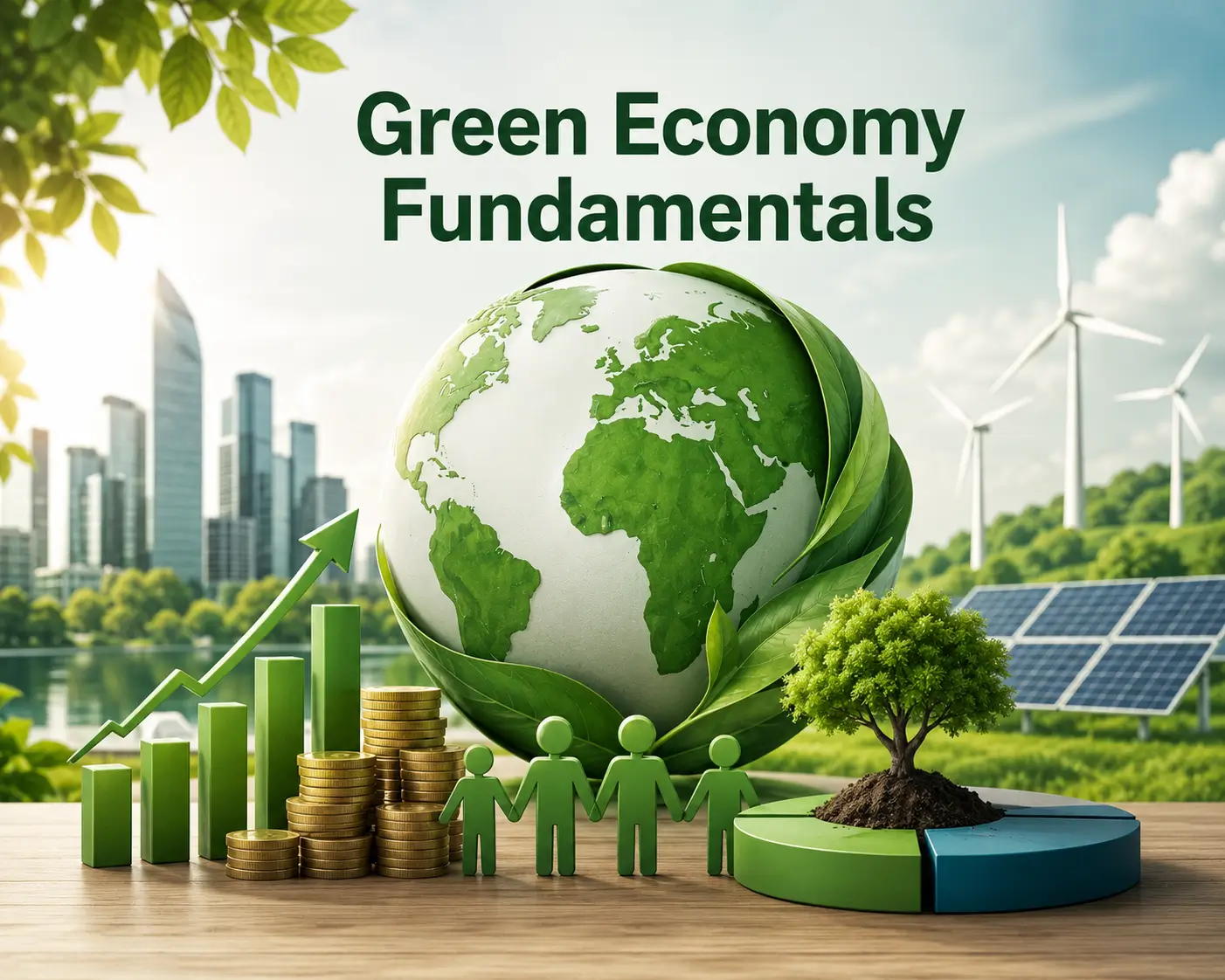
The Green Economy Fundamentals Course is a comprehensive program designed to introduce learners to the concepts, principles, and applications of a sustainable economic system that prioritizes environmental protection and resource efficiency. As global challenges such as climate change, pollution, and resource depletion continue to rise, countries and organizations are increasingly shifting toward green economic models that support long-term sustainability.
A green economy is one that aims to improve human well-being and social equity while significantly reducing environmental risks and ecological scarcities. It emphasizes low-carbon development, renewable energy adoption, sustainable consumption, and responsible production practices.
This course provides learners with practical knowledge of green economy fundamentals by combining environmental science, economic principles, sustainability strategies, policy frameworks, and real-world applications. Whether you are a student, policymaker, business professional, or sustainability enthusiast, this course provides essential knowledge for understanding the future of global economic systems.
Course Overview
The green economy represents a transformation of traditional economic systems toward more sustainable and environmentally friendly models. It integrates economic growth with environmental protection and social inclusion.
First, learners explore the importance of transitioning from traditional high-carbon economies to green and sustainable economic systems. Next, they understand global environmental challenges such as climate change, biodiversity loss, and resource depletion.
Additionally, the course explains green economy principles, sustainable development goals (SDGs), circular economy models, renewable energy systems, green finance, and environmental policy frameworks. Learners also gain knowledge of sustainable industries, eco-friendly technologies, and resource efficiency strategies.
Furthermore, the curriculum combines theoretical concepts with real-world examples and global case studies, helping learners understand how green economies are implemented in different countries and industries.
What You Will Learn
The Green Economy Fundamentals Course covers a wide range of sustainability, economic, and environmental topics.
First, learners study the fundamentals of the green economy and understand its role in promoting sustainable development and environmental protection.
Next, participants learn green economy principles such as resource efficiency, low-carbon development, and sustainable production and consumption patterns.
Additionally, the course introduces sustainable development concepts and the United Nations Sustainable Development Goals (SDGs), explaining how they connect to economic systems.
Furthermore, participants study circular economy models and learn how waste reduction, reuse, and recycling contribute to sustainable growth.
The course also explains renewable energy integration, including solar, wind, and other clean energy systems within economic frameworks.
Moreover, learners gain knowledge of environmental policies and regulations that support green economic transitions at national and global levels.
In addition, the curriculum covers ESG (Environmental, Social, and Governance) frameworks and their role in responsible business practices.
Participants also study green finance fundamentals, including sustainable investments, carbon markets, and funding mechanisms for green projects.
Additionally, learners explore sustainable industries such as renewable energy, green construction, sustainable agriculture, and eco-friendly manufacturing.
Furthermore, the course explains climate change mitigation strategies and environmental impact reduction techniques.
Finally, participants analyze real-world case studies of countries and organizations successfully implementing green economy practices.
Skills You Will Gain
Upon successful completion of the course, learners will develop valuable professional skills, including:
- Green economy fundamentals
- Sustainability analysis
- Environmental policy understanding
- Circular economy knowledge
- ESG framework awareness
- Renewable energy integration concepts
- Green finance basics
- Climate change awareness
- Resource efficiency analysis
- Sustainable development understanding
- Environmental impact assessment
- Policy and economic analysis
- Strategic thinking
- Problem-solving skills
- Sustainability planning
These skills are highly valuable across government agencies, environmental organizations, consulting firms, energy companies, NGOs, financial institutions, and multinational corporations.
Benefits of the Course
The Green Economy Fundamentals Course provides learners with a strong foundation in sustainability-focused economic systems.
First, the course helps learners understand how economic growth can be achieved while protecting the environment.
Additionally, participants gain awareness of global sustainability challenges and solutions used by governments and organizations.
Furthermore, learners develop analytical skills to evaluate green policies, projects, and economic strategies.
The course also enhances environmental awareness, policy understanding, and strategic thinking abilities.
As global economies shift toward sustainability, professionals with green economy expertise are increasingly in demand.
Finally, learners gain the knowledge needed to contribute to environmental protection and sustainable development initiatives.
Who Should Enroll?
This course is ideal for:
- Students of economics and environmental studies
- Sustainability professionals
- Policy makers
- Government employees
- Business professionals
- NGO workers
- Environmental consultants
- Energy sector professionals
- Researchers and analysts
- Anyone interested in green economy systems
No prior experience is required. Beginners can easily understand the concepts.
Career Opportunities
After completing the course, learners may pursue opportunities such as:
- Sustainability Analyst
- Environmental Policy Analyst
- Green Finance Analyst
- ESG Analyst
- Climate Change Analyst
- Sustainability Consultant
- Environmental Economist
- Renewable Energy Policy Advisor
- CSR Specialist
- Development Program Officer
- Research Analyst (Sustainability)
- Government Sustainability Officer
- Green Project Coordinator
- Environmental Data Analyst
- NGO Program Manager
Additionally, learners can work across government bodies, international organizations, consulting firms, financial institutions, energy companies, and environmental agencies.
Certification
Upon successful completion of the Green Economy Fundamentals Course, participants receive a certification recognizing their understanding of green economy principles, sustainable development, ESG frameworks, circular economy models, green finance, and environmental policy. This certification enhances career opportunities in sustainability, economics, and environmental sectors.
Why Choose This Course?
The Green Economy Fundamentals Course combines economics and environmental sustainability to prepare learners for the future of global development.
First, learners develop a strong understanding of how green economies function and why they are important.
Additionally, the curriculum focuses on sustainable development, renewable energy, ESG, and circular economy principles.
Furthermore, participants gain practical insights into global sustainability transitions and policies.
Whether your goal is to work in policy, sustainability, finance, or environmental management, this course provides the knowledge, skills, and confidence needed to succeed.
Enroll today and build a strong foundation in green economy and sustainable development.
FAQ Section
1. What is the Green Economy Fundamentals Course?
It teaches how economies can grow while reducing environmental impact and promoting sustainability.
2. Is this course suitable for beginners?
Yes. It is designed for students, professionals, and beginners.
3. What topics are covered?
Topics include green economy principles, ESG, circular economy, renewable energy, and green finance.
4. Will I receive a certificate?
Yes. A certificate is provided upon completion.
5. Do I need prior economics knowledge?
No. The course starts from basic concepts.
6. Who should enroll in this course?
Students, policymakers, professionals, and sustainability enthusiasts.
7. Is the course online?
Yes. It is available online with flexible learning.
8. What skills will I gain?
You will gain knowledge in sustainability, environmental economics, and policy analysis.
9. Can this course help my career?
Yes. Green economy skills are in high demand globally.
10. Why is the green economy important?
It ensures sustainable growth while protecting natural resources and reducing environmental risks.




Reviews
There are no reviews yet.