
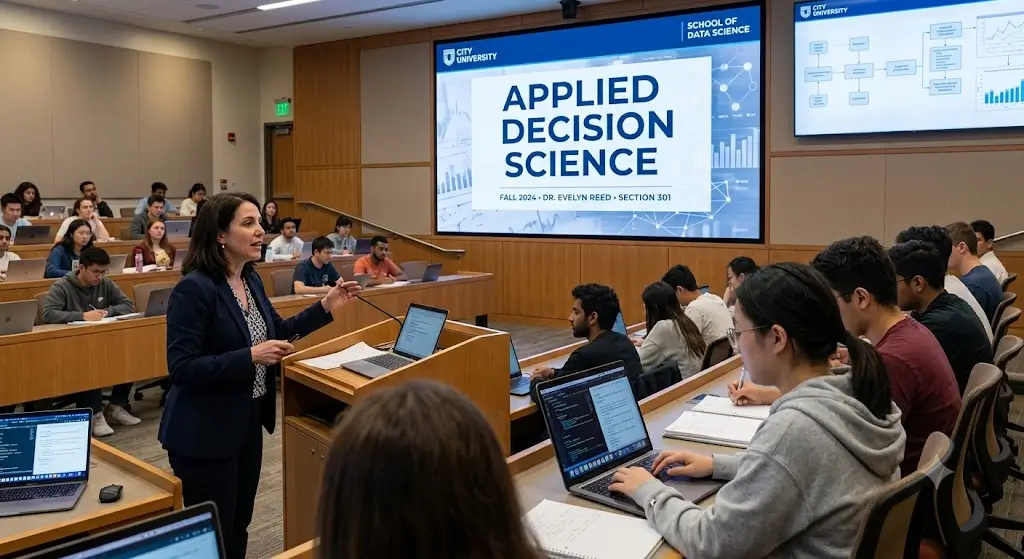
Introduction to Applied Decision Science
Applied Decision Science is a beginner-friendly course designed to introduce learners to the principles of structured decision-making and analytical problem-solving. Every organization relies on informed decisions to improve business performance, manage resources, reduce uncertainty, and achieve strategic objectives. This course explains how logical thinking, evidence, and systematic analysis support better decisions in professional environments.
Learners gain practical knowledge of critical thinking, business analysis, data interpretation, communication, strategic planning, performance evaluation, and organizational improvement. The course provides an accessible introduction to decision science without requiring previous technical or analytical experience.
Why Learn Decision Science?
Better decisions improve productivity, efficiency, and long-term organizational success.
Topics covered include:
- Critical thinking
- Analytical reasoning
- Business analysis
- Problem-solving
- Strategic planning
- Performance evaluation
- Risk awareness
- Continuous improvement
Decision-Making Frameworks
Structured methods help individuals make informed choices.
Problem Identification
Learn how to clearly define challenges before selecting solutions.
Information Gathering
Understand the importance of collecting reliable information.
Evaluating Alternatives
Compare different options using logical analysis.
Selecting Solutions
Choose practical solutions based on evidence and objectives.
Data Interpretation and Business Analysis
Good decisions rely on accurate information.
Learners explore:
Data Awareness
Understanding the value of reliable business information.
Business Analysis
Evaluating processes and performance to support planning.
Performance Measurement
Using indicators to assess progress and outcomes.
Evidence-Based Thinking
Making decisions supported by facts rather than assumptions.
Strategic Thinking and Risk Awareness
Organizations often face uncertainty while making important decisions.
Topics include:
- Strategic planning
- Risk identification
- Opportunity evaluation
- Decision confidence
- Business forecasting awareness
- Continuous learning
These concepts help improve long-term planning.
Communication and Collaboration
Effective decision-making requires teamwork and clear communication.
Learners understand:
- Professional communication
- Team collaboration
- Stakeholder engagement
- Leadership awareness
- Workplace discussions
- Organizational effectiveness
Collaboration supports stronger decisions and better outcomes.
Skills You Will Develop
After completing this course, learners will develop knowledge of:
- Applied decision science
- Critical thinking
- Business analysis
- Problem-solving
- Strategic planning
- Communication
- Data interpretation
- Decision-making
- Risk awareness
- Organizational improvement
Who Should Enroll?
This course is suitable for:
- Students
- Beginners
- Entrepreneurs
- Supervisors
- Managers
- Business professionals
- Analysts
- Corporate employees
No previous analytical or management experience is required.
Career Opportunities
After completing this course, learners may explore roles such as:
- Business Analyst (Entry Level)
- Operations Executive
- Strategy Associate
- Project Coordinator
- Management Trainee
- Business Development Executive
- Process Improvement Associate
- Administrative Executive
Frequently Asked Questions
What is Applied Decision Science?
Applied Decision Science is a beginner-friendly course that teaches structured decision-making, analytical thinking, business analysis, and practical problem-solving.
Who can enroll in this course?
Students, beginners, entrepreneurs, supervisors, managers, analysts, and business professionals can join.
Do I need previous analytical experience?
No. The course is designed specifically for beginners.
What topics are covered?
The course covers critical thinking, business analysis, data interpretation, decision-making frameworks, strategic planning, communication, and risk awareness.
Does the course include business analysis?
Yes. Learners gain introductory knowledge of business analysis, performance measurement, and evidence-based decision-making.
What skills will I develop?
You will develop analytical thinking, communication, problem-solving, business analysis, strategic planning, decision-making, and organizational improvement skills.
Is this course suitable for entrepreneurs?
Yes. Entrepreneurs can use structured decision-making to support business planning and growth.
Can this course improve career opportunities?
Yes. Decision-making and analytical skills are valuable in business operations, project coordination, administration, strategy, and management roles.
Is the course beginner-friendly?
Yes. No previous business analysis or management experience is required.
What will I achieve after completing this course?
You will gain a strong foundation in applied decision science, analytical reasoning, business analysis, strategic planning, communication, and informed decision-making for professional success.




Reviews
There are no reviews yet.