
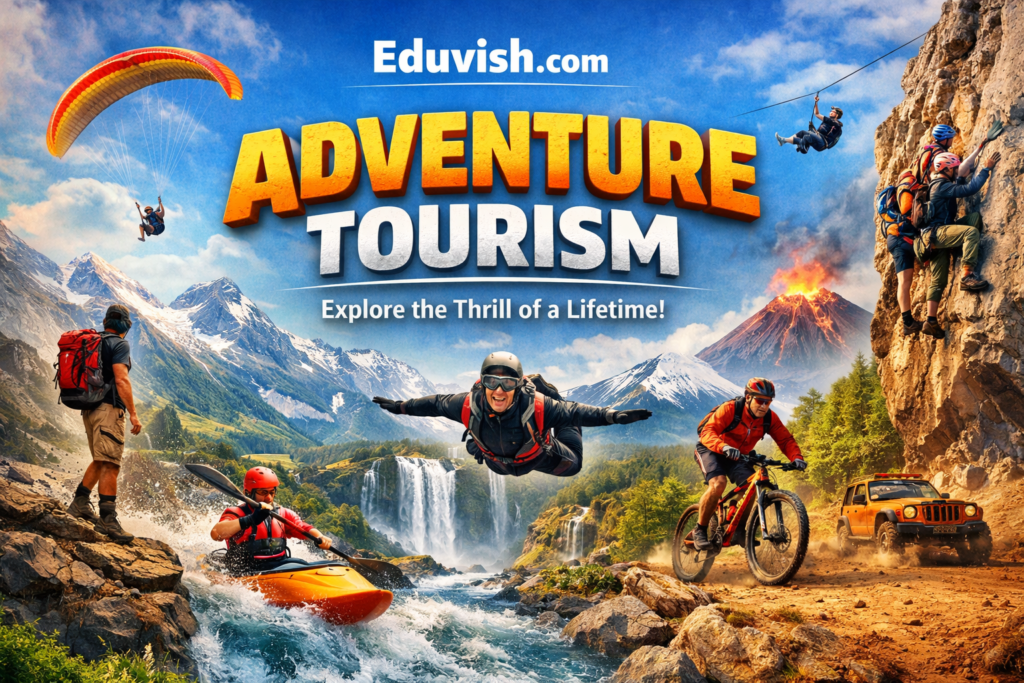
Adventure Tourism: Explore the Thrill of a Lifetime
Adventure tourism is not just about travel—it’s about pushing boundaries, embracing challenges, and discovering the world in its rawest form. Whether it’s scaling mountains, diving into oceans, or trekking through jungles, adventure tourism invites you to live life beyond the ordinary
What Is Adventure Tourism?
Adventure tourism combines exploration with physical activity and cultural immersion. It’s designed for travelers seeking excitement, adrenaline, and authentic experiences.
Key aspects include:
- Outdoor exploration: Hiking, climbing, rafting, and camping.
- Cultural connection: Engaging with local communities and traditions.
- Sustainability: Protecting nature while enjoying it.
- Personal growth: Building confidence and resilience.
Types of Adventure Tourism
1. Mountain Adventures
From the Himalayas to the Andes, mountain tourism offers trekking, rock climbing, and skiing. Popular spots: Nepal’s Everest Base Camp, Switzerland’s Alps, and India’s Ladakh region. Keywords: mountain trekking, adventure travel, hiking destinations, alpine tourism.
2. Water Adventures
Dive into oceans, rivers, and lakes for thrilling experiences. Activities: Scuba diving, whitewater rafting, kayaking, surfing. Top destinations: Great Barrier Reef (Australia), Rishikesh (India), and Bali (Indonesia). Keywords: water sports tourism, scuba diving trips, rafting adventures.
3. Aerial Adventures
Experience the world from above—skydiving, paragliding, and zip‑lining. Hotspots: Interlaken (Switzerland), Queenstown (New Zealand), and Dubai (UAE). Keywords: skydiving tourism, paragliding destinations, aerial adventure travel.
4. Wildlife and Jungle Adventures
Explore dense forests and encounter wildlife in their natural habitat. Destinations: Amazon Rainforest, African safaris, Jim Corbett National Park (India). Keywords: jungle trekking, wildlife tourism, eco‑adventure travel.
5. Desert Adventures
Ride camels, dune‑bash, and camp under starry skies. Best places: Sahara Desert, Dubai Desert, Rajasthan’s Thar Desert. Keywords: desert safari, off‑road adventure, camping tourism.
Why Adventure Tourism Is Growing
1. Health and Fitness Benefits
Adventure travel promotes physical activity and mental well‑being.
2. Social Media Influence
Platforms like Instagram and YouTube inspire travelers to seek unique experiences.
3. Sustainability Awareness
Eco‑friendly travel is becoming a global priority.
4. Economic Impact
Adventure tourism supports local economies and creates jobs.
Top Adventure Tourism Destinations
| Destination | Adventure Type | Highlights |
|---|---|---|
| Nepal | Mountain Trekking | Everest Base Camp, Annapurna Circuit |
| New Zealand | Extreme Sports | Bungee jumping, skydiving, jet boating |
| Costa Rica | Eco‑Adventure | Rainforests, volcanoes, zip‑lining |
| India | Diverse Adventures | Rishikesh rafting, Ladakh biking, Goa surfing |
| Switzerland | Alpine Adventures | Skiing, paragliding, glacier hiking |
| South Africa | Wildlife Safaris | Kruger National Park, shark diving |
| Peru | Historical Trekking | Machu Picchu, Inca Trail |
| Australia | Ocean Adventures | Great Barrier Reef diving, surfing |
| Morocco | Desert Exploration | Camel rides, dune camping |
| Canada | Winter Sports | Snowboarding, ice climbing |
How to Prepare for Adventure Travel
- Research destinations: Understand climate, terrain, and local regulations.
- Train physically: Build stamina and strength.
- Pack essentials: Safety gear, first‑aid kit, and proper clothing.
- Travel insurance: Always secure coverage for high‑risk activities.
- Respect nature: Leave no trace behind.
SEO Strategy for Eduvish.com
- Use long‑tail keywords like “best adventure tourism destinations in Asia” and “eco‑friendly adventure travel tips.”
- Optimize meta tags and image alt text for search engines.
- Include internal links to related Eduvish.com articles.
- Ensure mobile‑friendly layout and fast loading speed.
- Add engaging visuals like the banner image above.
Understanding Adventure Tourism
Adventure tourism combines physical activity, cultural exchange, and interaction with nature. It’s designed for travelers who crave excitement and authenticity.
Core elements include:
- Outdoor exploration: Trekking, climbing, rafting, and camping.
- Cultural immersion: Learning from local communities and traditions.
- Sustainability: Traveling responsibly to protect ecosystems.
- Personal growth: Building confidence and resilience through challenges.
Adventure tourism can be soft (low‑risk activities like hiking or kayaking) or hard (high‑risk experiences like mountaineering or skydiving). Both offer unforgettable memories and a deeper connection with the planet.

