
Introduction
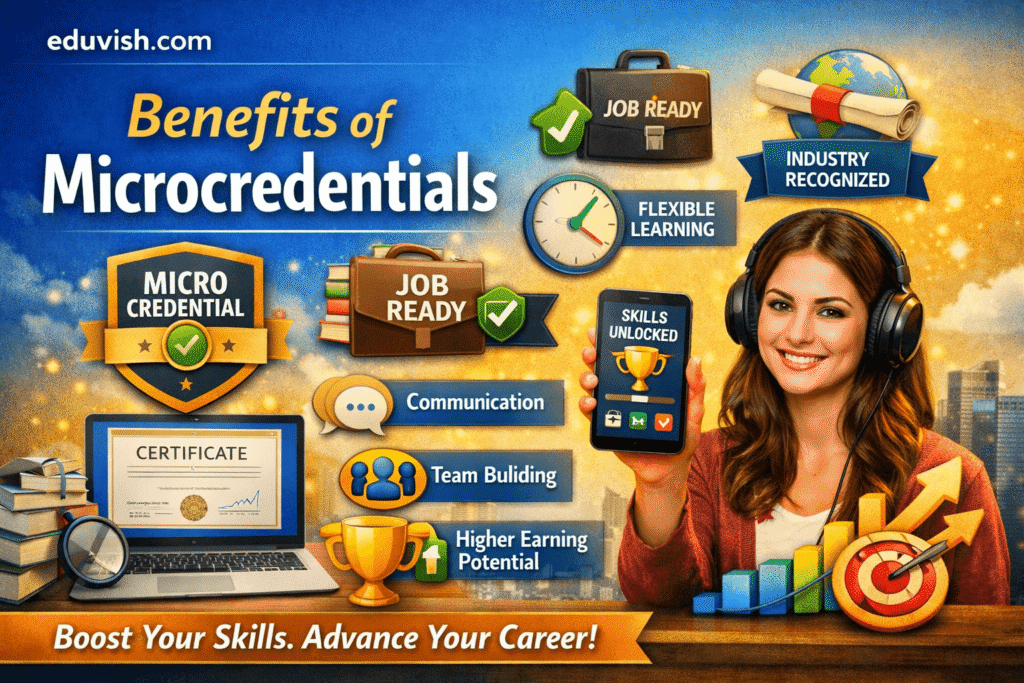
In today’s fast‑changing world, traditional degrees are no longer the only path to success. Microcredentials — short, focused certifications — are revolutionizing education and career development. They allow learners to gain specific skills quickly, show verified expertise, and stay competitive in the job market. This guide explores how microcredentials work, their benefits, and why they’re becoming essential for lifelong learning.
What Are Micro credentials?
- Definition: Microcredentials are short, skill‑based certifications that validate your proficiency in a specific area.
- Format: Usually online, flexible, and self‑paced.
- Examples: Digital marketing, data analytics, project management, coding, and leadership
Why Micro credentials Matter
- Industry relevance: Designed with input from employers and industry experts.
- Skill validation: Provides proof of competency through digital badges or certificates.
- Career flexibility: Ideal for career changers or professionals seeking advancement.
Key Benefits of Micro credentials
a. Career Advancement
Microcredentials help professionals climb the career ladder by showcasing specialized skills that employers value.
b. Faster Learning
Unlike traditional degrees, microcredentials focus on specific topics, allowing learners to gain expertise in weeks instead of years.
c. Cost‑Effective Education
They are affordable compared to full‑time programs, making quality education accessible to everyone.
d. Flexibility and Accessibility
Online learning platforms enable learners to study anytime, anywhere — perfect for working professionals.
e. Recognition and Credibility
Digital badges and certificates are recognized globally, often backed by universities or industry leaders.
Micro credentials vs. Traditional Degrees
| Aspect | Microcredentials | Traditional Degrees |
|---|---|---|
| Duration | Weeks or months | 2–4 years |
| Cost | Low | High |
| Focus | Specific skills | Broad knowledge |
| Flexibility | High | Limited |
| Recognition | Growing rapidly | Established |
How Micro credentials Enhance Employability
- Skill alignment: Matches current job market demands.
- Portfolio building: Adds verified achievements to resumes and LinkedIn profiles.
- Networking opportunities: Connects learners with professionals and mentors.
Popular Platforms Offering Micro credentials
- Coursera
- edX
- LinkedIn Learning
- Udemy
- FutureLearn
Micro credentials for Different Career Paths
- Technology: Coding, AI, cybersecurity.
- Business: Leadership, project management, marketing.
- Education: Online teaching, curriculum design.
- Healthcare: Data management, patient care analytics.
- Creative Fields: Graphic design, content creation, UX/UI.
The Role of Employers
Forward‑thinking companies now recognize microcredentials as proof of continuous learning and skill mastery. Many organizations even sponsor employees to earn them.
Future of Micro credentials
The future of education is modular and personalized. Microcredentials will integrate with traditional degrees, allowing learners to stack certifications and build custom learning paths.
How to Choose the Right Micro credential
- Identify career goals.
- Check accreditation.
- Evaluate course content.
- Look for industry partnerships.
- Read learner reviews.
Conclusion
Microcredentials empower learners to stay relevant, adaptable, and employable in a fast‑paced world. They bridge the gap between education and industry, offering a flexible, affordable, and credible way to grow professionally. Whether you’re starting your career or upgrading your skills, microcredentials are your gateway to success.

