
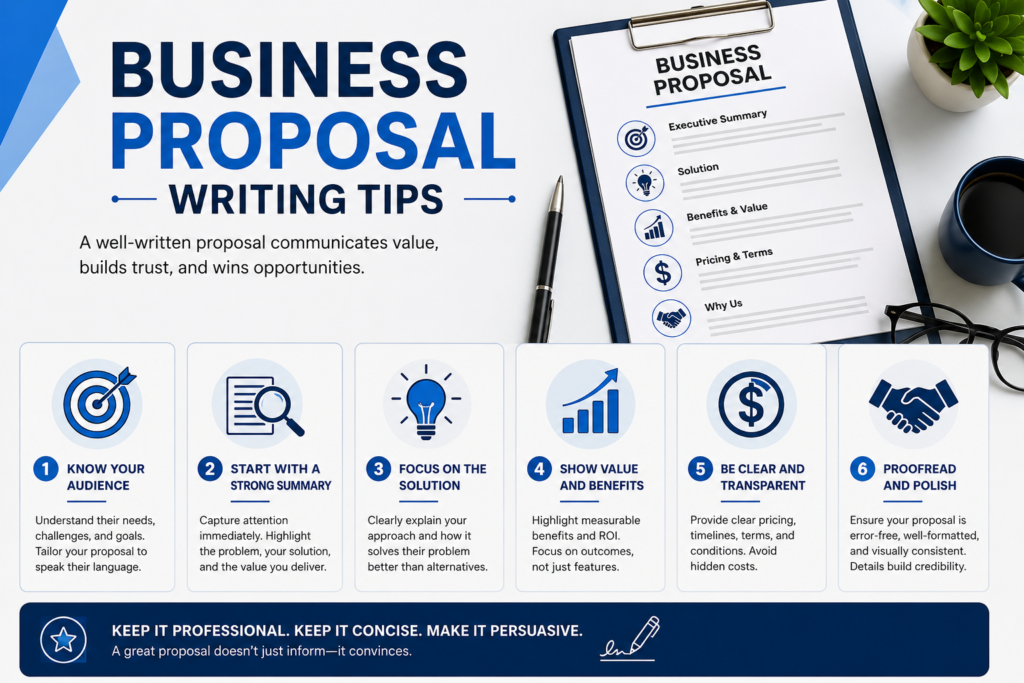
Introduction
A business proposal is more than a document—it’s a persuasive tool that can secure funding, partnerships, or new clients. Writing an effective proposal requires clarity, structure, and strategy. Many proposals fail not because the idea is weak, but because the writing doesn’t communicate value. These tips will help you craft proposals that stand out and succeed.
Key Business Proposal Writing Tips
1. Define Clear Objectives
Start with a clear purpose. What problem are you solving? What outcome do you want?
2. Know Your Audience
Tailor your proposal to the reader’s needs, priorities, and expectations.
3. Structure Logically
Organize into sections: introduction, problem statement, solution, benefits, budget, and conclusion.
4. Highlight Value Proposition
Show how your solution benefits the client or investor. Focus on ROI and impact.
5. Use Clear Language
Avoid jargon. Write in simple, persuasive language that anyone can understand.
6. Support with Data
Include statistics, case studies, or testimonials to strengthen credibility.
7. Plan Realistic Budgets
Provide transparent cost breakdowns. Avoid vague or inflated numbers.
8. Proofread Thoroughly
Errors in grammar or formatting reduce professionalism. Edit carefully.
9. Add a Strong Conclusion
End with a persuasive summary and clear call to action.
6. Support with Data
Include statistics, case studies, or testimonials to strengthen credibility.
7. Plan Realistic Budgets
Provide transparent cost breakdowns. Avoid vague or inflated numbers.
8. Proofread Thoroughly
Errors in grammar or formatting reduce professionalism. Edit carefully.
9. Add a Strong Conclusion
End with a persuasive summary and clear call to action.
6. Support with Data
Include statistics, case studies, or testimonials to strengthen credibility.
7. Plan Realistic Budgets
Provide transparent cost breakdowns. Avoid vague or inflated numbers.
8. Proofread Thoroughly
Errors in grammar or formatting reduce professionalism. Edit carefully.
9. Add a Strong Conclusion
End with a persuasive summary and clear call to action.
Comparison Table
| Tip | Why It Matters | Outcome |
|---|---|---|
| Define objectives | Sets direction | Clear focus |
| Know audience | Builds relevance | Stronger persuasion |
| Structure logically | Easy to follow | Professional flow |
| Highlight value | Shows benefits | Client confidence |
| Use clear language | Improves readability | Wider appeal |
| Support with data | Adds credibility | Stronger trust |
| Plan budgets | Ensures feasibility | Financial clarity |
| Proofread | Avoids errors | Professional polish |
| Strong conclusion | Persuades reader | Higher success rate |
Advanced Tips
- Customize proposals for each client.
- Use visuals like charts and infographics.
- Leverage technology with templates and collaboration tools.
- Follow submission guidelines strictly to avoid rejection.

