
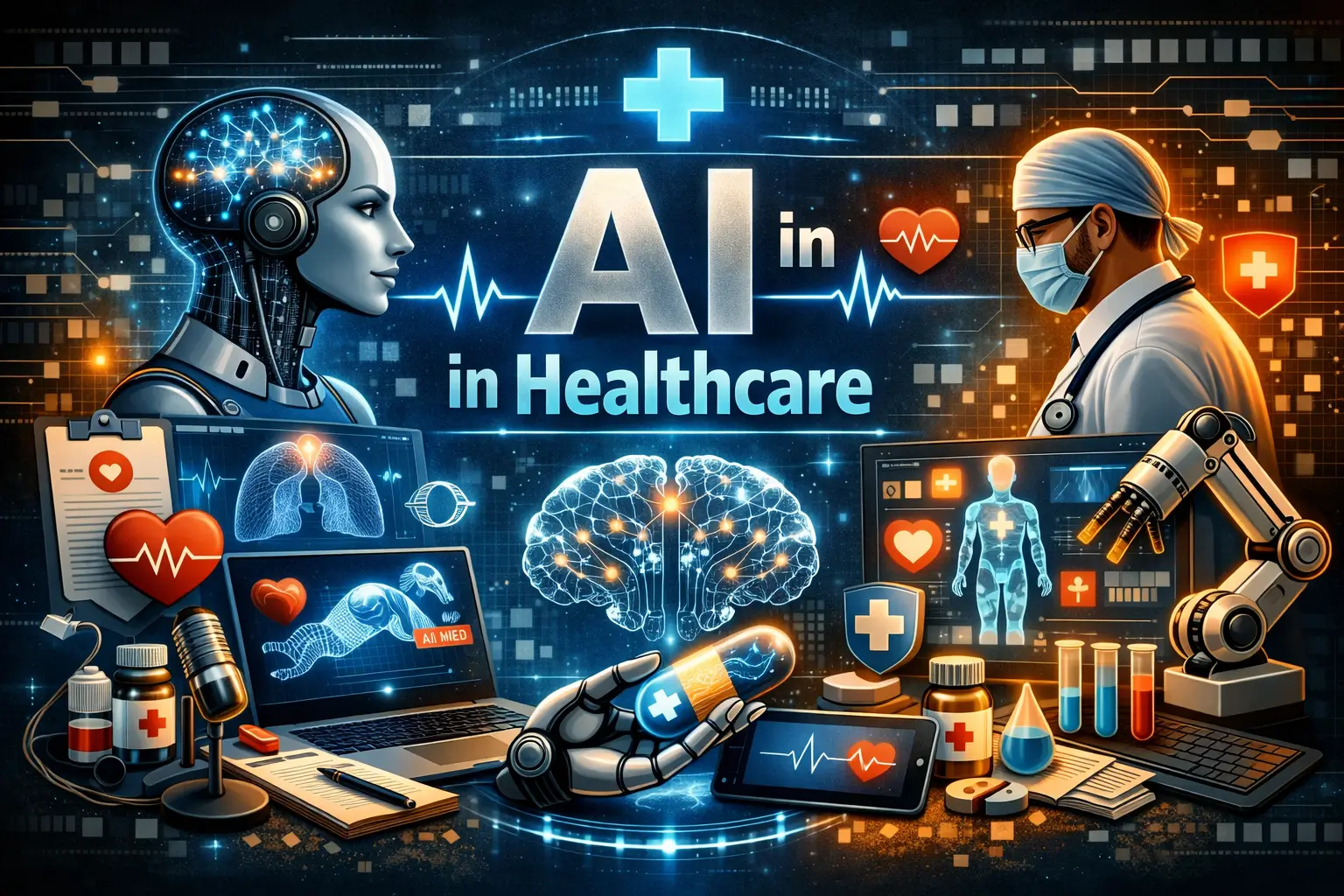
AI in Healthcare: Transforming Patient Care with Intelligent Solutions
Artificial Intelligence (AI) is reshaping the healthcare industry, offering innovative solutions that improve patient outcomes, streamline operations, and reduce costs. From diagnostic imaging and predictive analytics to personalized treatment plans and robotic surgery, AI is revolutionizing how healthcare professionals deliver care. The AI in Healthcare course provides a comprehensive introduction to the applications, benefits, and challenges of integrating AI into medical practice.
Introduction to AI in Healthcare
AI in healthcare involves using machine learning, deep learning, and natural language processing to analyze medical data, assist in diagnosis, and support clinical decision‑making. This course introduces you to the core principles of AI in healthcare, explaining how technology is transforming patient care and medical research.
Why AI in Healthcare Matters
- Improved Diagnostics: AI enhances accuracy in detecting diseases such as cancer, heart conditions, and neurological disorders.
- Personalized Medicine: Algorithms tailor treatments to individual genetic profiles and health histories.
- Operational Efficiency: Automates administrative tasks, reducing workload for healthcare staff.
- Predictive Analytics: Identifies health risks early, enabling preventive care.
- Enhanced Patient Experience: Supports telemedicine, chatbots, and virtual assistants for better communication.
Key Learning Outcomes
By enrolling in AI in Healthcare, you will gain practical insights into:
- Medical Imaging Analysis: Learn how AI detects anomalies in X‑rays, MRIs, and CT scans.
- Predictive Healthcare Models: Explore how AI forecasts disease progression and patient outcomes.
- Electronic Health Records (EHR): Understand how AI improves data management and patient monitoring.
- Drug Discovery: Discover how AI accelerates pharmaceutical research and clinical trials.
- Robotics in Surgery: Study how robotic systems assist surgeons with precision.
- Telemedicine & Virtual Care: Learn how AI supports remote consultations and patient engagement.
- Ethical & Regulatory Considerations: Examine privacy, bias, and compliance challenges in medical AI.
Benefits of Taking This Course
- Gain confidence in understanding AI’s role in modern healthcare.
- Acquire knowledge of cutting‑edge tools and applications.
- Learn to evaluate the ethical implications of AI in medicine.
- Build skills that enhance employability in healthcare, technology, and research.
- Position yourself as a professional capable of bridging the gap between medicine and AI innovation.
Target Audience
This course is ideal for:
- Healthcare Professionals: Doctors, nurses, and administrators seeking to integrate AI into practice.
- Data Scientists & Engineers: Professionals interested in applying AI to healthcare challenges.
- Students & Researchers: Exploring careers in medical technology and AI.
- Entrepreneurs & Innovators: Developing AI‑driven healthcare solutions.
Career Opportunities
Completing this course opens doors to roles such as:
- Healthcare Data Scientist
- AI Medical Researcher
- Clinical Informatics Specialist
- Health Tech Product Manager
- AI Ethics & Compliance Consultant
FAQ SECTION
What is an AI in Healthcare Course?
An AI in Healthcare Course teaches how artificial intelligence is used in medical diagnostics, healthcare analytics, and clinical decision-making.
Who can enroll in this course?
Doctors, healthcare professionals, data scientists, AI engineers, and students can enroll.
Do I need medical knowledge?
Basic healthcare or data science knowledge is helpful but not required.
Is the course available online?
Yes, many institutes offer online, offline, and hybrid learning options.
How long does the course take?
The duration usually ranges from 2 months to 6 months.
Will I receive a certificate after completing the course?
Yes, students receive a professional certification upon completion.
What topics are covered in this course?
Topics include medical AI, predictive analytics, healthcare data science, and clinical decision systems.
What career opportunities are available after completing this course?
You can work as a Healthcare Data Analyst, Medical AI Specialist, or Health Informatics Expert.
Is AI in Healthcare a good career in India?
Yes, healthcare AI is rapidly growing due to digital transformation in hospitals and medical research.
Can beginners join this course?
Yes, beginners with interest in healthcare or AI can enroll.


Reviews
There are no reviews yet.