
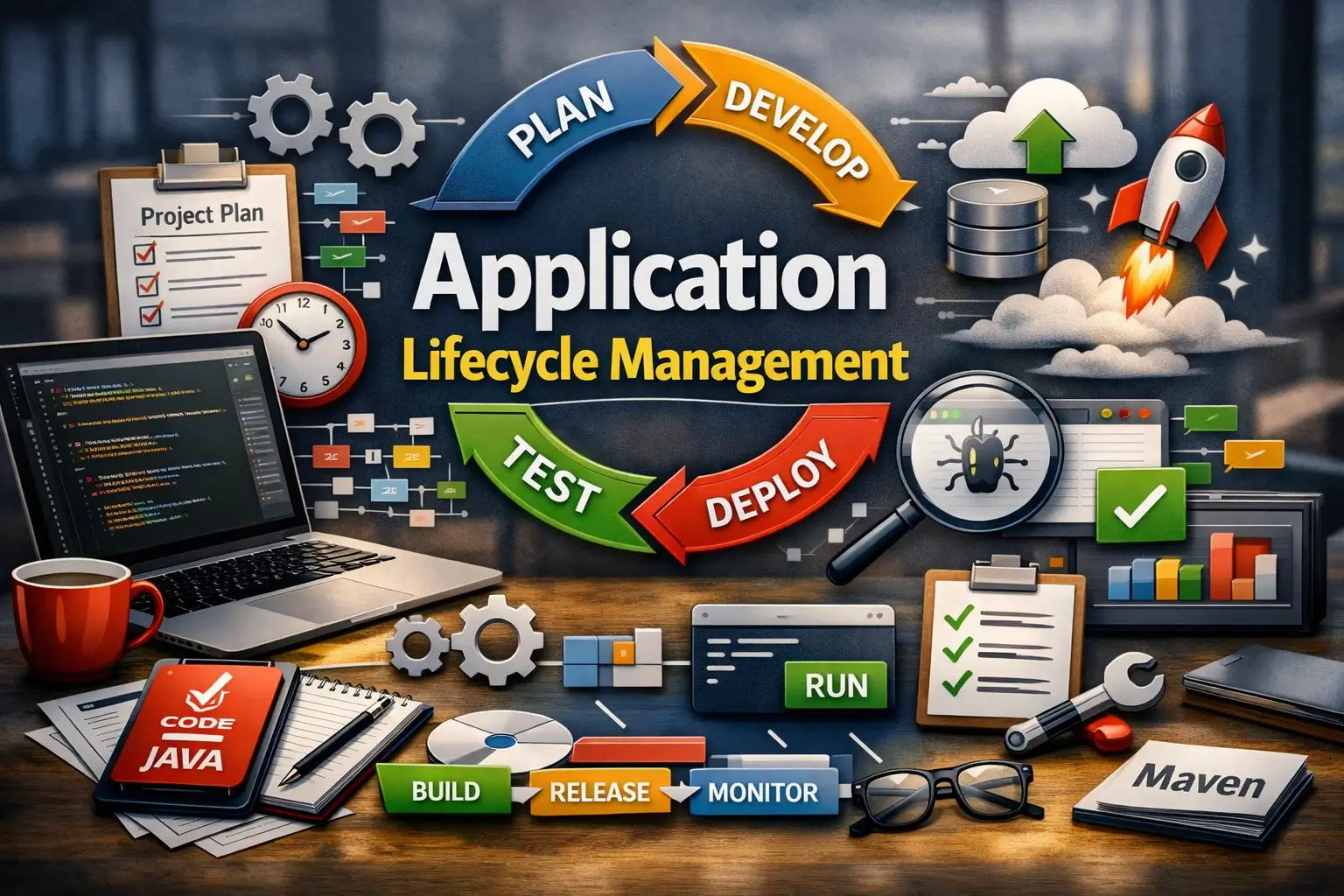
Application Lifecycle Management Course
The Application Lifecycle Management Course is designed to help learners understand and manage the complete lifecycle of software applications, from initial planning and development to testing, deployment, maintenance, and continuous improvement. Application Lifecycle Management (ALM) provides a structured approach to delivering high-quality software while improving collaboration, productivity, and project success.
This course introduces learners to ALM fundamentals, software development lifecycle (SDLC), requirements management, project planning, version control, collaboration tools, testing strategies, quality assurance, release management, DevOps integration, continuous integration and continuous delivery (CI/CD), application monitoring, maintenance, and lifecycle best practices. Through practical examples and real-world case studies, participants will gain the knowledge needed to manage software projects effectively.
Whether you are a student, software developer, project manager, QA engineer, DevOps engineer, business analyst, IT professional, or technology enthusiast, this course provides a comprehensive foundation in Application Lifecycle Management.
Why Learn Application Lifecycle Management?
Application Lifecycle Management helps organizations streamline software development, improve collaboration between teams, reduce project risks, enhance software quality, and accelerate software delivery through well-defined processes and modern development practices.
What You Will Learn
This course covers:
- Introduction to Application Lifecycle Management
- Software Development Lifecycle (SDLC)
- Requirements management
- Project planning and tracking
- Version control systems
- Team collaboration
- Software development workflows
- Testing and quality assurance
- Release management
- DevOps integration
- Continuous Integration and Continuous Delivery (CI/CD)
- Application monitoring
- Maintenance and support
- Risk management
- ALM best practices
Practical Learning Experience
Learners will explore software lifecycle workflows, manage project requirements, coordinate development activities, implement version control, understand release planning, monitor application performance, and improve software delivery through practical exercises and real-world scenarios.
The course emphasizes practical learning suitable for beginners and professionals involved in software development and project management.
Skills You Will Gain
- Application Lifecycle Management
- Software lifecycle management
- Requirements management
- Project planning
- Version control
- Software testing
- Release management
- DevOps collaboration
- CI/CD fundamentals
- Problem-solving
Benefits of the Course
After completing this course, learners will:
- Manage software projects effectively
- Improve software quality
- Enhance collaboration between development teams
- Understand modern software delivery practices
- Strengthen project management skills
- Enhance career opportunities
- Build professional knowledge
- Earn a recognized certification
Who Should Enroll?
This course is suitable for:
- Students
- Software developers
- Project managers
- QA engineers
- DevOps engineers
- Business analysts
- IT professionals
- Product managers
- Software architects
- Anyone interested in software lifecycle management
Basic knowledge of software development concepts is recommended.
Career Opportunities
Upon completing the Application Lifecycle Management Course, learners can pursue or strengthen careers such as:
- Application Lifecycle Manager
- Software Project Manager
- DevOps Engineer
- Software Developer
- QA Engineer
- Release Manager
- Product Manager
- Business Analyst
- IT Project Coordinator
- Software Delivery Manager
These skills are valuable across software companies, enterprise IT departments, cloud service providers, consulting firms, fintech organizations, healthcare technology companies, government agencies, manufacturing companies, and digital transformation organizations.
Certification
Learners receive a professional certificate demonstrating their knowledge of Application Lifecycle Management, software delivery processes, and modern software development practices.
Conclusion
The Application Lifecycle Management Course equips learners with practical knowledge to manage the complete software lifecycle, improve collaboration, and deliver high-quality applications efficiently. Whether you want to enhance your software development expertise, improve project management skills, or support enterprise software delivery, this course provides a comprehensive foundation in Application Lifecycle Management.
FAQ SECTION
Q1. What is the Application Lifecycle Management Course?
It is a beginner-friendly course that teaches how to manage software applications throughout their entire lifecycle, from planning to maintenance.
Q2. Who should enroll in this course?
Students, software developers, project managers, QA engineers, DevOps engineers, business analysts, product managers, and IT professionals.
Q3. Do I need programming experience?
Basic knowledge of software development concepts is recommended but not mandatory.
Q4. What topics are covered?
ALM fundamentals, SDLC, requirements management, version control, testing, DevOps integration, CI/CD, release management, and application maintenance.
Q5. Why is Application Lifecycle Management important?
ALM improves collaboration, software quality, project efficiency, and software delivery while reducing development risks.
Q6. Will I learn about DevOps and CI/CD?
Yes. The course introduces DevOps principles and Continuous Integration/Continuous Delivery as part of the application lifecycle.
Q7. Does the course include practical examples?
Yes. Learners work through real-world software lifecycle scenarios, planning activities, and release management exercises.
Q8. Can this course improve my career opportunities?
Yes. ALM knowledge is valuable for software development, project management, DevOps, quality assurance, and IT management roles.
Q9. Will I receive a certificate?
Yes. A certificate is awarded after successful completion.
Q10. Is the course suitable for beginners?
Yes. It is designed for beginners while also providing valuable insights for experienced professionals.


Reviews
There are no reviews yet.