
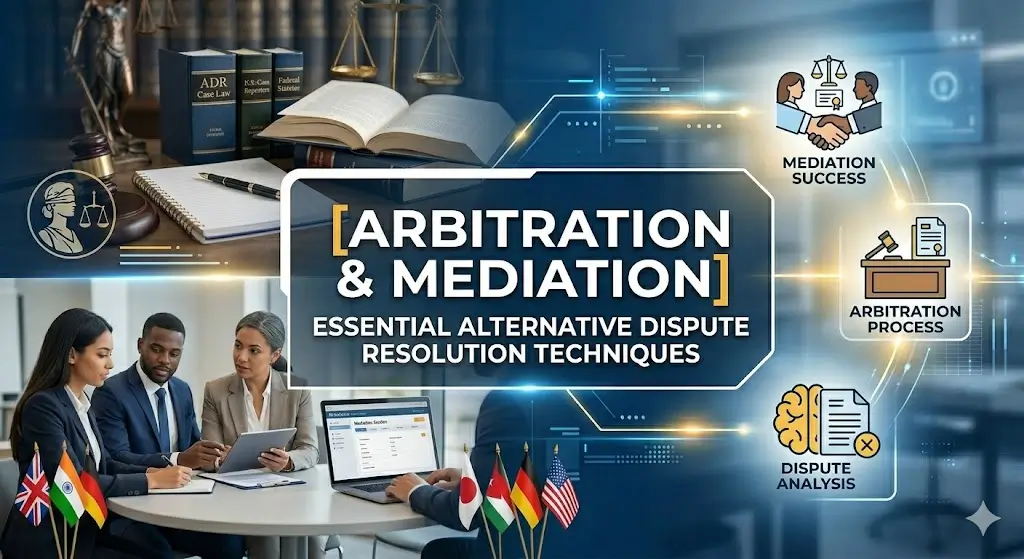
Arbitration and Mediation Course
The Arbitration and Mediation Course is designed to provide learners with a comprehensive understanding of alternative dispute resolution (ADR) methods used to resolve conflicts outside traditional court proceedings. As legal systems and businesses increasingly seek efficient and cost-effective dispute resolution mechanisms, arbitration and mediation have become valuable tools for resolving disagreements professionally and effectively.
This course introduces participants to the principles, procedures, and practical applications of arbitration and mediation. Moreover, learners gain insights into negotiation strategies, conflict management techniques, and the legal framework governing ADR processes. Whether you are a law student, legal professional, business manager, HR specialist, or aspiring mediator, this course provides essential knowledge and practical skills.
Course Overview
Alternative dispute resolution methods help parties settle disputes without lengthy litigation. Therefore, organizations and individuals often prefer arbitration and mediation because they offer flexibility, confidentiality, and faster outcomes.
In this course, learners explore the differences between arbitration and mediation, understand when each method is appropriate, and develop the skills needed to facilitate successful dispute resolution. Additionally, participants examine real-world examples and case studies to understand ADR practices in various industries.
What You Will Learn
The Arbitration and Mediation Course covers the fundamental concepts of ADR and their application in legal and business environments. Learners begin by understanding dispute resolution processes and the role of ADR in modern legal systems.
Furthermore, the course explains arbitration procedures, mediation techniques, negotiation methods, settlement agreements, and ethical considerations. Students also learn how mediators and arbitrators facilitate communication and assist parties in reaching mutually acceptable solutions.
Skills You Will Gain
Upon completion of the course, learners will acquire valuable professional skills, including:
- Arbitration process management
- Mediation techniques
- Conflict resolution strategies
- Negotiation and communication skills
- Problem-solving abilities
- Legal dispute analysis
- Settlement agreement drafting
- Professional decision-making
Additionally, these skills are applicable across legal, corporate, government, and community settings.
Benefits of the Course
The Arbitration and Mediation Course offers numerous advantages for learners seeking expertise in dispute resolution. First, it provides practical knowledge of ADR methods that are increasingly used worldwide. Moreover, participants learn techniques that can reduce conflict, improve communication, and support effective decision-making.
The course also helps professionals strengthen their leadership and negotiation capabilities. As a result, learners can enhance their professional profiles and increase their career opportunities in legal and business sectors.
Who Should Enroll?
This course is ideal for:
- Law students
- Legal practitioners
- Advocates and consultants
- Human resource professionals
- Business managers
- Corporate executives
- Government officials
- Compliance officers
- Conflict resolution practitioners
- Individuals interested in ADR
Even beginners can successfully complete this course and gain valuable dispute resolution skills.
Career Opportunities
Knowledge of arbitration and mediation can support a wide range of professional roles. After completing the course, learners may pursue opportunities such as:
- Mediator
- Arbitration Assistant
- Legal Consultant
- Dispute Resolution Specialist
- HR Manager
- Compliance Officer
- Corporate Negotiator
- Conflict Resolution Advisor
- Legal Research Associate
Furthermore, the course serves as an excellent foundation for advanced studies in alternative dispute resolution and legal practice.
Certification
Upon successful completion of the Arbitration and Mediation Course, participants receive a certification recognizing their understanding of ADR principles, arbitration procedures, and mediation techniques. This credential can enhance professional credibility and support career advancement.
Why Choose This Course?
The Arbitration and Mediation Course combines theoretical concepts with practical applications. Additionally, it equips learners with the communication, negotiation, and conflict management skills required in today’s professional environment.
Whether your goal is professional development, legal education, or career growth, this course provides the knowledge needed to navigate and resolve disputes effectively.
Enroll today and begin building expertise in arbitration, mediation, and alternative dispute resolution.
9. FAQ SECTION
1. What is the Arbitration and Mediation Course?
This course teaches alternative dispute resolution methods, including arbitration, mediation, and negotiation techniques.
2. Is this course suitable for beginners?
Yes, the course is designed for beginners and professionals alike.
3. What is ADR?
ADR stands for Alternative Dispute Resolution, which includes methods such as arbitration and mediation.
4. Will I receive a certificate?
Yes, learners receive a certificate upon successful completion.
5. What skills will I gain?
You will learn mediation, arbitration, negotiation, communication, and conflict resolution skills.
6. Who should enroll in this course?
Law students, legal professionals, managers, HR personnel, and anyone interested in dispute resolution.
7. Is the course fully online?
Yes, the course is delivered online for flexible learning.
8. Are there any prerequisites?
No prior experience is required.
9. How can arbitration and mediation skills help my career?
These skills are valuable in legal, corporate, government, and human resource roles.
10. What is the difference between arbitration and mediation?
Arbitration involves a neutral decision-maker, while mediation helps parties reach a mutually acceptable agreement.




Reviews
There are no reviews yet.