
Introduction
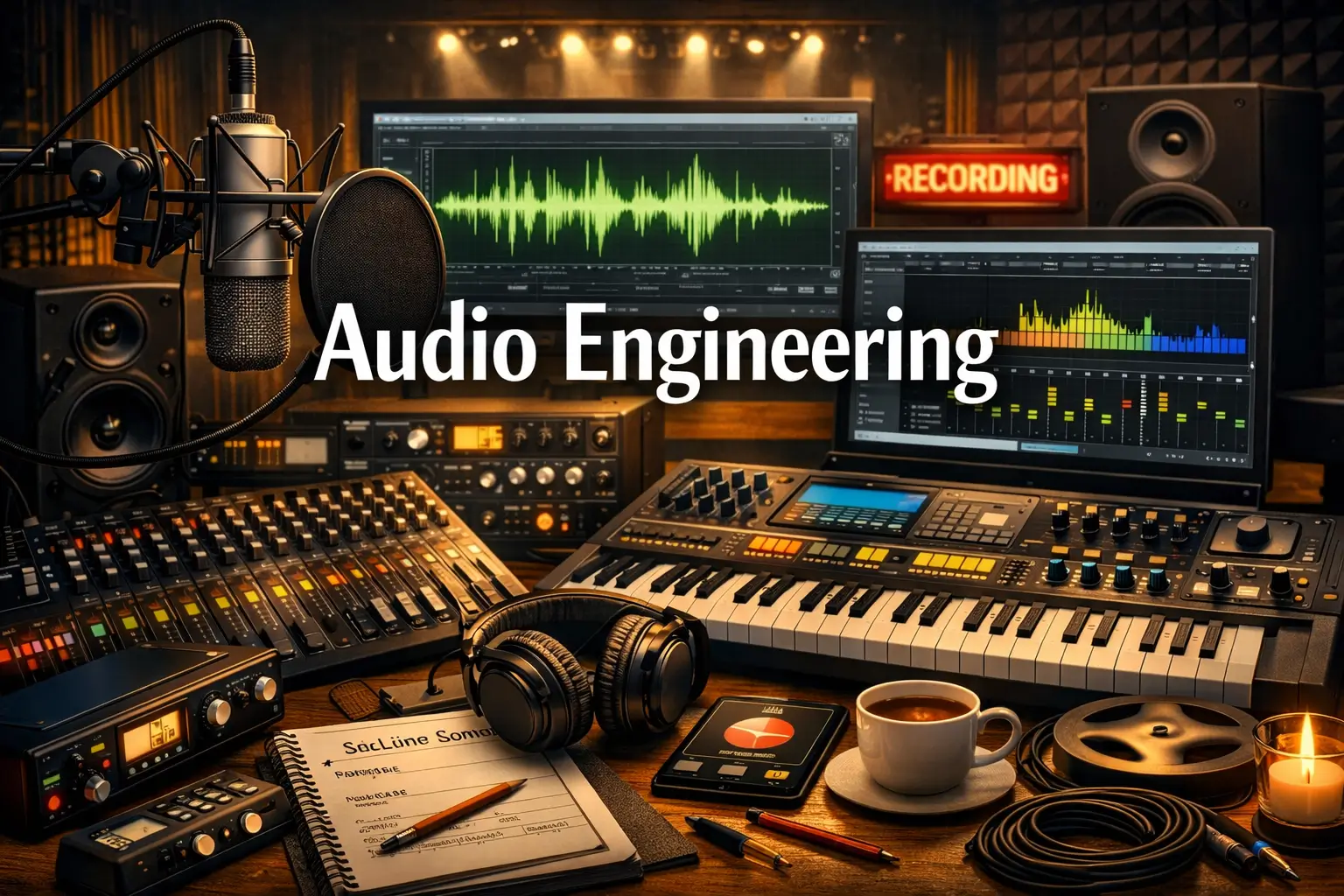
The Audio Engineering Course is a professional skill development program designed to train learners in the art and science of sound recording, mixing, mastering, and audio production. Audio engineering plays a crucial role in the music, film, television, podcasting, and digital media industries.
In today’s digital era, high-quality sound is essential for engaging content creation and professional media production. Whether it is music, films, advertisements, or online content, audio quality significantly impacts audience experience.
This course introduces learners to the fundamentals of sound, studio equipment, recording techniques, and modern digital audio production tools. Moreover, it provides hands-on training in industry-standard practices used by professional audio engineers.
Whether you are a beginner or someone passionate about music production, this Audio Engineering Course helps you build strong technical and creative skills in sound engineering.
Course Overview
Audio engineering is the backbone of modern music and media production. Therefore, understanding how sound works and how it is processed is essential for anyone entering this field.
In this course, learners explore how audio is captured, edited, mixed, and mastered in professional studios. Additionally, they gain knowledge about microphones, audio interfaces, mixers, and Digital Audio Workstations (DAWs).
The course combines theoretical concepts with practical studio-based learning. As a result, learners develop real-world audio production skills that are applicable in the music and entertainment industry.
What You Will Learn
The Audio Engineering Course covers essential sound production skills step by step. First, learners understand the basics of sound waves, acoustics, and audio principles. Next, they learn how recording equipment is used in professional environments.
Furthermore, learners are trained in audio recording techniques, microphone placement, and sound capturing methods. The course also includes detailed training in mixing and mastering audio tracks for professional-quality output.
In addition, participants learn sound editing, noise reduction, equalization, and audio effects processing. They also gain hands-on experience with DAW software used in modern studios.
Moreover, learners explore sound design techniques used in films, music production, and digital media. These skills help them build a strong foundation in audio engineering.
Skills You Will Gain
Upon completion of this course, learners will develop professional audio skills, including:
- Audio recording techniques
- Sound mixing and mastering
- Audio editing and processing
- Studio equipment handling
- Digital Audio Workstation (DAW) skills
- Sound design fundamentals
- Noise reduction and audio enhancement
- Music production basics
- Creative sound development
- Professional studio workflow understanding
Additionally, these skills are highly valuable in music production, film editing, podcasting, and digital content creation.
Benefits of the Course
The Audio Engineering Course offers multiple career and creative benefits. First, it provides practical knowledge of professional sound production. Additionally, it helps learners enter the growing music and media industry.
Furthermore, learners gain hands-on experience with industry tools and techniques. Because audio is a critical part of media, skilled engineers are always in demand.
The course also opens opportunities for freelancing in music production, podcast editing, and video sound design. As a result, learners can build independent careers in the creative industry.
Moreover, it enhances creativity, technical understanding, and professional audio workflow skills.
Who Should Enroll?
This course is ideal for:
- Aspiring audio engineers
- Music producers
- DJs and remix artists
- Content creators and YouTubers
- Film and video editors
- Podcast creators
- Students interested in media production
- Sound enthusiasts
- Freelancers in creative industry
- Anyone passionate about music and sound
No prior technical experience is required.
Career Opportunities
After completing the Audio Engineering Course, learners can explore roles such as:
- Audio Engineer
- Sound Designer
- Music Producer
- Studio Recording Assistant
- Live Sound Technician
- Mixing and Mastering Engineer
- Podcast Audio Editor
- Freelance Audio Editor
- Film Sound Assistant
- Media Production Technician
Additionally, learners can work in recording studios, media houses, production companies, and freelance platforms.
Certification
Upon successful completion of the Audio Engineering Course, learners receive a professional certification that validates their skills in sound engineering, audio production, and studio techniques.
This certification helps enhance career opportunities in the music and media industry.
FAQ SECTION
1. What is Audio Engineering?
It is the process of recording, mixing, and producing sound professionally.
2. Who can join this course?
Beginners, music lovers, and aspiring sound engineers can join.
3. Do I need musical knowledge?
No, basic interest in sound and music is enough.
4. What software will I learn?
You will learn Digital Audio Workstations (DAWs) used in studios.
5. Is this course practical?
Yes, it includes hands-on audio production training.
6. Can I work in music industry after this?
Yes, it helps you start a career in audio and music production.
7. Is this useful for YouTube creators?
Yes, it improves video and podcast sound quality.
8. What is mixing and mastering?
It is the process of balancing and finalizing audio tracks.
9. Do I get a certificate?
Yes, a completion certificate is provided.
10. Can I do freelancing after this course?
Yes, you can work as a freelance audio editor or producer.




Reviews
There are no reviews yet.