
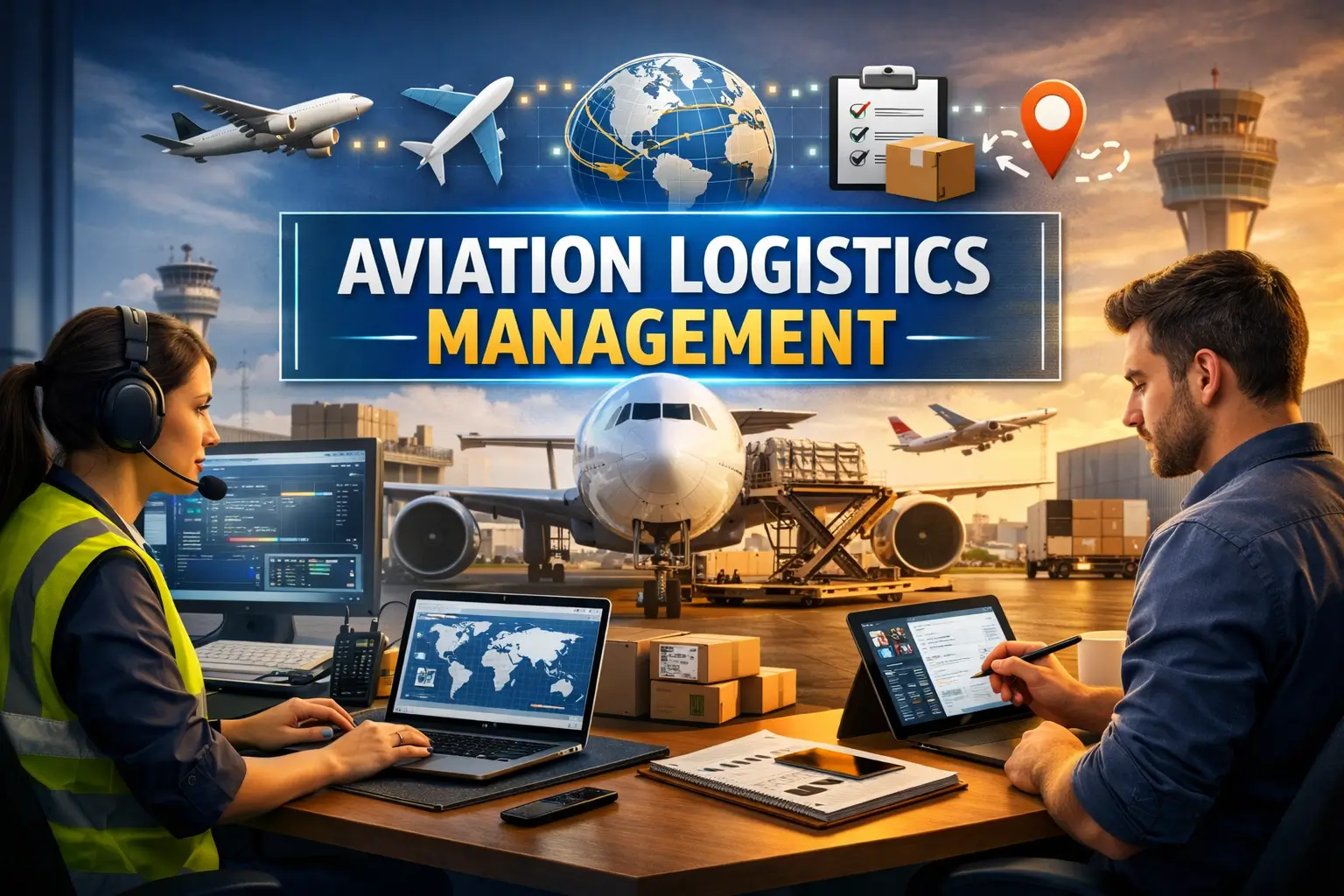
Aviation Logistics Management
Introduction to Aviation Logistics Management
Aviation Logistics Management focuses on planning, organizing, and controlling the movement of goods, materials, equipment, and information throughout the aviation supply chain. Airports and airlines rely on efficient logistics systems to ensure that cargo, baggage, aircraft components, fuel, catering supplies, and maintenance materials reach the right destination at the right time.
This course provides comprehensive knowledge of aviation logistics, air cargo operations, supply chain management, transportation planning, warehouse management, inventory control, freight documentation, regulatory compliance, and logistics technology.
Understanding Aviation Logistics Operations
Modern aviation depends on highly coordinated logistics networks that connect airlines, airports, freight companies, customs authorities, ground handling providers, and international supply chain partners. Efficient coordination improves operational performance while reducing delays and operational costs.
Learners explore key concepts such as:
- Aviation logistics management
- Air cargo operations
- Supply chain coordination
- Inventory management
- Warehouse operations
- Transportation planning
These concepts build a strong foundation for understanding aviation logistics systems.
Air Cargo and Freight Management
Air cargo plays a vital role in global commerce by transporting high-value, time-sensitive, and specialized goods. Logistics professionals coordinate shipments while ensuring compliance with international regulations and customer requirements.
Learners study practical topics including:
- Cargo handling procedures
- Freight documentation
- Shipment tracking
- Cargo scheduling
- Customs coordination
- Distribution planning
These activities improve cargo efficiency and customer satisfaction.
Supply Chain Planning and Operational Efficiency
Aviation logistics requires effective planning to maintain uninterrupted operations. Organizations optimize inventory, coordinate suppliers, manage transportation resources, and monitor logistics performance using digital technologies and data-driven decision-making.
The course explains how efficient logistics planning supports business continuity and operational excellence.
Safety, Compliance, and Risk Management
The aviation industry follows strict regulations governing cargo security, dangerous goods handling, customs procedures, and international transportation standards. Logistics professionals must ensure that every shipment complies with operational and legal requirements.
Learners understand how compliance, safety management, and risk assessment contribute to secure aviation logistics operations.
Technology and Digital Logistics
Digital transformation continues to improve aviation logistics through automated inventory systems, real-time shipment tracking, warehouse management software, predictive analytics, and integrated supply chain platforms. These technologies enhance operational visibility and improve decision-making.
Learners discover how digital logistics solutions support faster, more efficient aviation operations.
Skills You Will Develop
After completing this course, learners will understand:
- Aviation logistics management
- Air cargo operations
- Aviation supply chain management
- Freight management
- Inventory control
- Warehouse management
- Transportation planning
- Cargo documentation
- Logistics technology
- Regulatory compliance
Who Should Enroll?
This course is suitable for:
- Students
- Aviation professionals
- Cargo operations staff
- Logistics professionals
- Supply chain managers
- Warehouse supervisors
- Freight forwarding professionals
- Anyone interested in aviation logistics
No previous logistics or aviation experience is required.
Career Opportunities
This course supports careers such as:
- Aviation Logistics Coordinator
- Air Cargo Executive
- Airport Logistics Officer
- Supply Chain Executive
- Freight Operations Coordinator
- Warehouse Operations Supervisor
- Cargo Documentation Specialist
- Aviation Supply Chain Analyst
Frequently Asked Questions (FAQ)
1. What will I learn in the Aviation Logistics Management course?
This course provides a complete understanding of aviation logistics, including air cargo operations, supply chain coordination, inventory management, warehouse operations, transportation planning, cargo documentation, customs procedures, logistics technology, and regulatory compliance.
2. Is this course suitable for beginners?
Yes. The course is designed for beginners as well as working professionals. It starts with the fundamentals of aviation logistics before introducing advanced concepts related to airport cargo operations and international supply chains.
3. Do I need previous experience in logistics or aviation?
No prior experience is required. The course is structured to help learners from different educational and professional backgrounds understand aviation logistics through practical examples and industry-focused concepts.
4. How does aviation logistics support airport and airline operations?
Efficient logistics ensures that cargo, baggage, aircraft spare parts, fuel, catering supplies, and other operational resources are delivered accurately and on time. Well-managed logistics also helps reduce delays, improve resource utilization, and enhance operational performance.
5. Which topics are included in this training program?
The curriculum covers air freight management, cargo handling procedures, warehouse management, inventory control, transportation planning, customs documentation, logistics planning, supply chain coordination, aviation regulations, and digital logistics systems.
6. What professional skills will I gain after completing the course?
You will develop practical skills in logistics planning, supply chain coordination, inventory management, cargo documentation, analytical thinking, communication, operational planning, teamwork, problem-solving, and decision-making.
7. Which industries can benefit from aviation logistics knowledge?
The concepts taught in this course are valuable for airports, airlines, air cargo companies, freight forwarding organizations, logistics providers, e-commerce companies, warehousing businesses, transportation companies, import-export firms, and government aviation agencies.
8. What career opportunities are available after completing this course?
Graduates can pursue roles such as Air Cargo Executive, Aviation Logistics Coordinator, Airport Logistics Officer, Freight Operations Executive, Cargo Documentation Specialist, Supply Chain Executive, Warehouse Operations Supervisor, Airport Cargo Coordinator, and Logistics Analyst.
9. Does this course explain aviation regulations and cargo safety requirements?
Yes. The course introduces aviation logistics regulations, cargo security procedures, customs requirements, dangerous goods awareness, documentation standards, operational compliance, and risk management practices that support safe logistics operations.
10. How will this course help my professional career?
Completing this course enhances your understanding of aviation logistics and global supply chains while improving your operational, analytical, and management skills. It can strengthen your qualifications for careers in aviation, logistics, transportation, cargo operations, airport management, and international trade.





Reviews
There are no reviews yet.