
Introduction
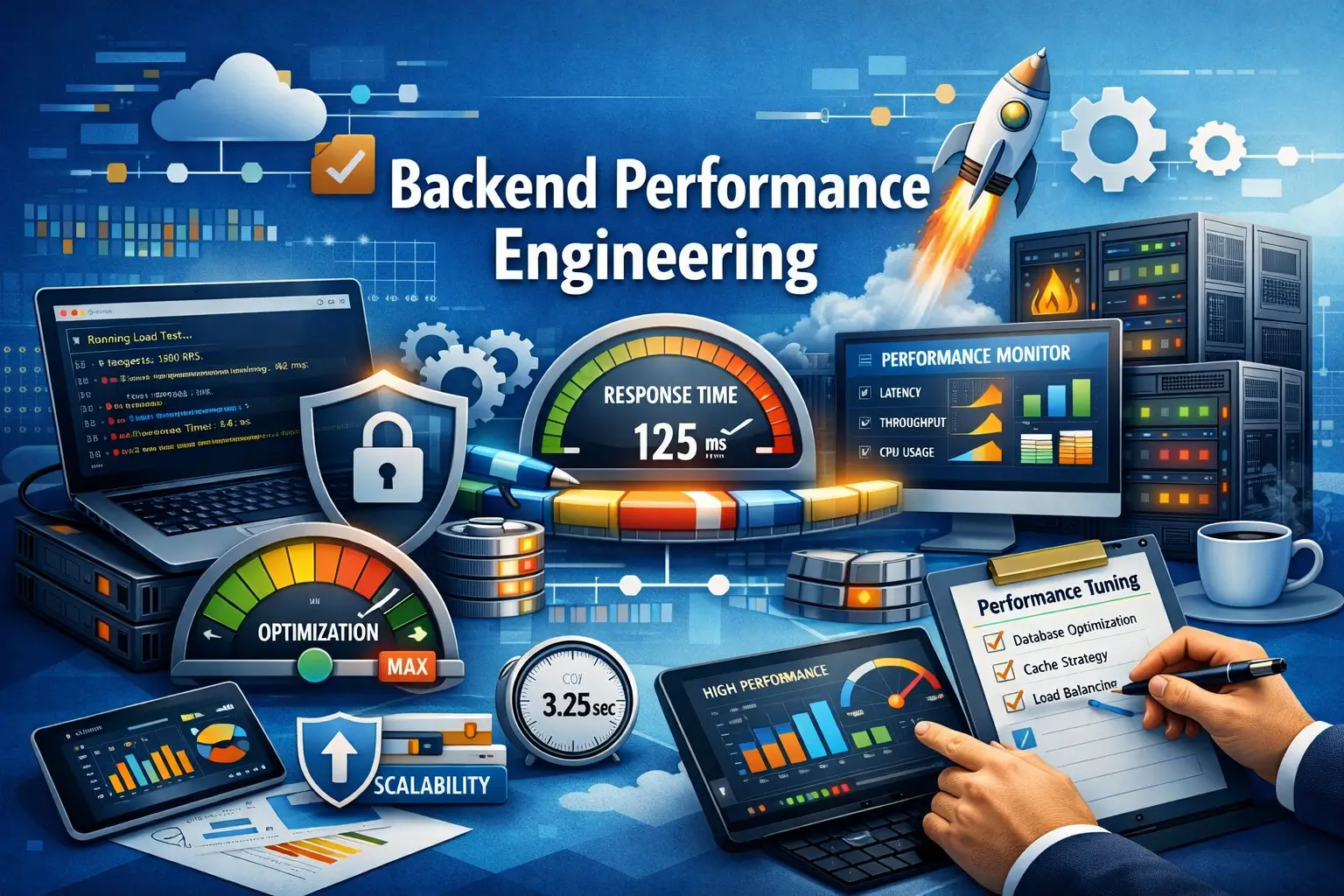
The Backend Performance Engineering Course is designed for learners who want to build high-performance backend systems capable of handling modern application workloads. As businesses rely on web platforms, mobile applications, and cloud-native services, backend performance has become a critical factor in delivering fast, reliable, and scalable digital experiences.
This course introduces learners to backend architecture, server optimization, database performance tuning, API optimization, caching strategies, load balancing, scalability planning, monitoring tools, and performance engineering best practices. Learners will understand how backend components work together to ensure efficient application performance under varying workloads.
Whether you are a backend developer, software engineer, cloud engineer, DevOps professional, system architect, or computer science student, this course provides a strong foundation in backend performance engineering.
Course Overview
The Backend Performance Engineering Course provides a comprehensive understanding of optimizing backend infrastructure and application performance. Learners explore performance bottlenecks, server optimization, caching mechanisms, API efficiency, database tuning, monitoring, and cloud performance strategies.
Additionally, the course explains how organizations improve system reliability, reduce response times, and enhance scalability using modern backend engineering techniques.
Why Learn Backend Performance Engineering?
High-performing backend systems improve application responsiveness, reduce infrastructure costs, and support seamless user experiences. Organizations require engineers who can optimize backend services to meet growing business demands.
This course helps learners understand:
- Backend performance fundamentals
- Server optimization
- API performance improvement
- Database optimization
- Load balancing
- Performance monitoring
- Scalability planning
- Cloud backend optimization
Furthermore, these skills are highly valuable for careers in backend development, cloud computing, DevOps, and software engineering.
What You Will Learn
During this course, learners will study:
- Introduction to backend performance engineering
- Backend architecture
- API optimization
- Database performance tuning
- Server optimization
- Caching strategies
- Load balancing
- Performance testing
- Monitoring and logging
- Backend engineering best practices
Moreover, learners will understand how to improve backend efficiency while maintaining system reliability and scalability.
Skills You Will Gain
After completing this course, learners can develop:
- Backend optimization skills
- API performance tuning
- Database optimization techniques
- Performance monitoring expertise
- Load balancing knowledge
- Scalability planning
- Cloud infrastructure optimization
- Technical problem-solving abilities
Benefits of the Course
Learn Backend Optimization
Understand techniques used to improve backend performance.
Improve Application Speed
Learn strategies for reducing response times and latency.
Build Scalable Systems
Develop knowledge of scalable backend architectures.
Enhance Career Opportunities
Backend performance engineering skills are highly demanded across technology companies.
Support Cloud Applications
Learn optimization techniques used in cloud-native environments.
Who Should Enroll?
This course is ideal for:
- Backend Developers
- Software Engineers
- Cloud Engineers
- DevOps Engineers
- System Architects
- Full Stack Developers
- IT Professionals
- Computer Science Students
Basic programming and backend development knowledge is recommended.
Career Opportunities
After completing this course, learners may pursue roles such as:
- Backend Performance Engineer
- Backend Developer
- Software Engineer
- Cloud Engineer
- DevOps Engineer
- Site Reliability Engineer
- Solutions Architect
Certification Details
Upon successful completion, learners can earn a certification validating their knowledge of backend optimization, API performance, server tuning, database optimization, and performance monitoring.
This certification demonstrates practical backend engineering skills valued across modern software organizations.
Conclusion
The Backend Performance Engineering Course provides comprehensive knowledge of optimizing backend systems for speed, scalability, and reliability. Learners understand how to improve APIs, databases, servers, and cloud infrastructure while supporting high-performance applications.
With practical knowledge of backend optimization, scalability planning, monitoring, caching, and performance engineering, this course prepares learners for successful careers in backend development, cloud engineering, and software architecture.
FAQ SECTION
1. What is the Backend Performance Engineering Course?
It teaches techniques for optimizing backend systems, APIs, databases, and servers to improve application performance.
2. Who should enroll?
Backend developers, software engineers, DevOps professionals, cloud engineers, IT professionals, and students.
3. Is this course beginner-friendly?
Yes. It starts with the fundamentals of backend performance engineering.
4. What topics are covered?
Backend optimization, API performance, database tuning, caching, monitoring, load balancing, and scalability.
5. Why is backend performance important?
It improves application speed, user experience, scalability, and system reliability.
6. Will I learn performance monitoring?
Yes. The course covers monitoring tools and performance analysis techniques.
7. Does the course include database optimization?
Yes. Database performance tuning is an important part of the course.
8. Is certification available?
Yes. Certification is available after successful completion.
9. What skills will I gain?
Backend optimization, API performance tuning, monitoring, scalability planning, and server optimization.
10. Which careers can I pursue?
Backend Performance Engineer, Backend Developer, Software Engineer, DevOps Engineer, Cloud Engineer, Site Reliability Engineer, and Solutions Architect.




Reviews
There are no reviews yet.