
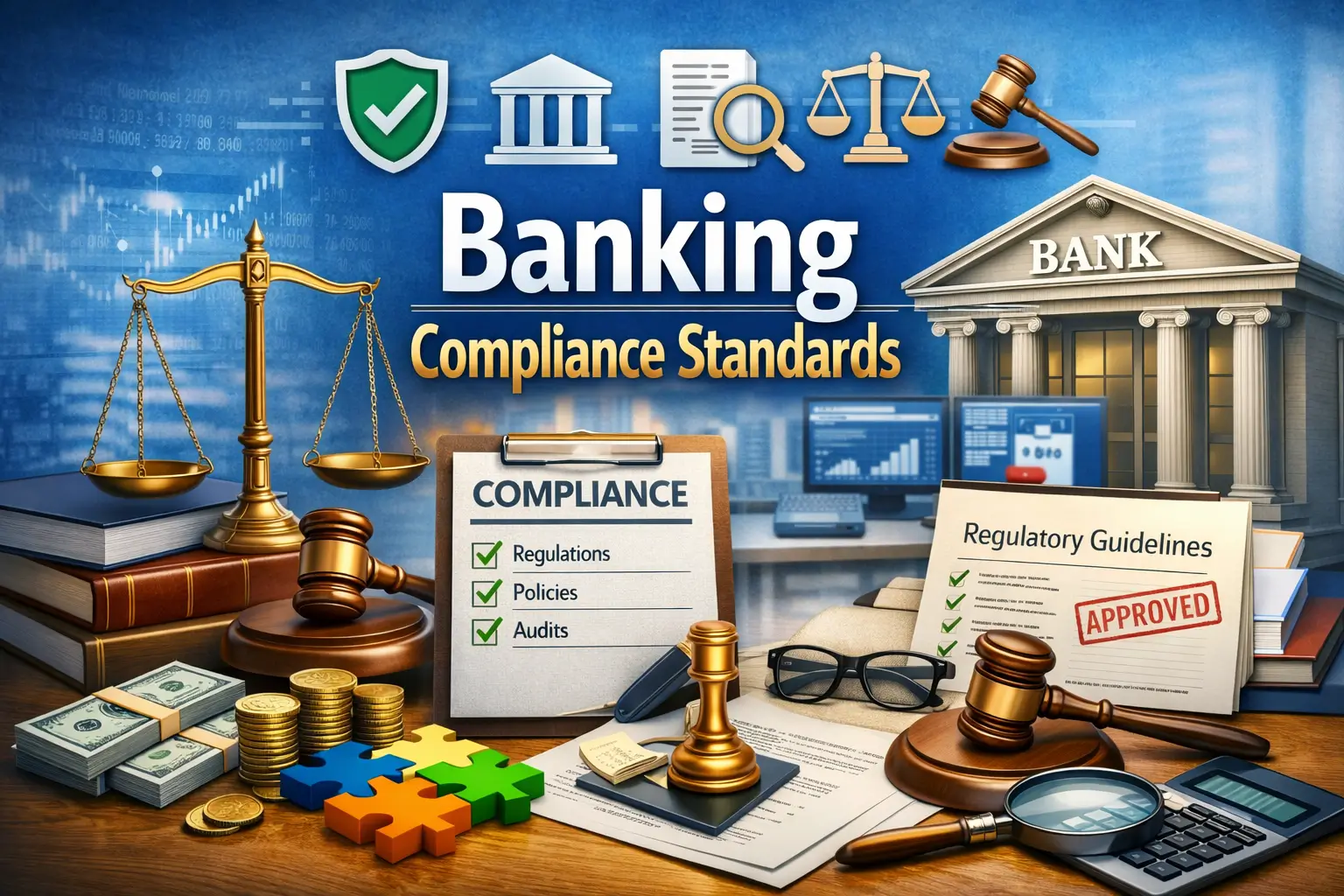
Introduction to Banking Compliance Standards
Compliance is one of the most critical functions within the banking industry. Financial institutions operate under strict regulatory frameworks designed to protect customers, maintain financial stability, prevent financial crimes, and ensure ethical business practices. Effective compliance programs help organizations reduce legal risks while maintaining transparency and operational integrity.
The Banking Compliance Standards Course introduces learners to the principles, regulations, and best practices that guide compliance management across banks, financial institutions, fintech companies, and other financial service providers.
Banking Compliance Standards Course Overview
This course provides a structured understanding of modern banking compliance systems and regulatory requirements.
Learners explore banking laws, compliance frameworks, Anti-Money Laundering (AML) regulations, Know Your Customer (KYC) procedures, fraud prevention, internal controls, risk management, regulatory reporting, compliance monitoring, and governance practices. The curriculum also explains how compliance teams work with operational departments to ensure institutions meet legal and ethical obligations.
Real-world examples demonstrate how effective compliance systems strengthen banking operations while protecting organizations from financial and reputational risks.
What You Will Learn
Throughout this course, learners will understand:
- Banking compliance principles
- Banking regulations
- AML fundamentals
- KYC procedures
- Customer due diligence
- Financial crime prevention
- Compliance monitoring
- Internal control systems
- Operational risk management
- Regulatory reporting
- Compliance audits
- Governance frameworks
- Fraud detection basics
- Sanctions screening
- Ethical banking practices
- Record management
- Regulatory documentation
- Compliance investigations
- Banking policies
- Compliance program implementation
Key Skills You Will Develop
After completing this course, learners will develop:
- Compliance management skills
- Regulatory knowledge
- Risk assessment abilities
- AML and KYC understanding
- Internal audit awareness
- Documentation management
- Analytical thinking
- Attention to detail
- Banking operations knowledge
- Governance awareness
- Ethical decision-making
- Communication skills
- Reporting abilities
- Problem-solving skills
- Professional compliance practices
Benefits of Learning Banking Compliance Standards
Understanding banking compliance helps organizations operate within legal and regulatory requirements while protecting customers and financial systems.
Professionals with compliance knowledge contribute to fraud prevention, regulatory reporting, operational risk management, and financial crime detection. As regulations continue to evolve, organizations increasingly seek professionals who understand compliance frameworks and governance standards.
These skills also support career growth across commercial banking, investment banking, insurance, fintech, payment services, and corporate finance.
Who Should Enroll?
This course is suitable for:
- Banking professionals
- Compliance officers
- Finance students
- Risk management professionals
- Internal auditors
- AML analysts
- KYC analysts
- Banking executives
- Finance graduates
- Financial analysts
- Fintech professionals
- Insurance professionals
- Corporate governance professionals
- Business owners
- Anyone interested in financial compliance
No previous compliance experience is required.
Career Opportunities
After completing this course, learners may pursue careers such as:
- Compliance Officer
- Banking Compliance Analyst
- AML Analyst
- KYC Analyst
- Risk Management Associate
- Internal Audit Associate
- Regulatory Reporting Executive
- Financial Crime Analyst
- Governance Associate
- Banking Operations Executive
- Compliance Executive
- Fraud Prevention Specialist
- Banking Risk Analyst
- Financial Services Associate
- Compliance Consultant
Why Choose This Course?
The Banking Compliance Standards Course combines regulatory knowledge with practical banking operations to help learners understand modern compliance requirements.
The curriculum emphasizes governance, operational controls, fraud prevention, AML, KYC, and regulatory reporting while providing practical knowledge that aligns with current banking industry practices. It is suitable for both beginners and experienced professionals seeking to strengthen their compliance expertise.
Certification
Upon successful completion, learners will receive a Course Completion Certificate demonstrating their knowledge of banking regulations, compliance management, AML, KYC procedures, governance, and financial risk controls. This certification can strengthen your professional profile and improve career opportunities within banking and financial services.
Conclusion
Compliance has become a strategic function within modern financial institutions. Strong compliance systems protect organizations from legal risks, strengthen customer confidence, and support responsible banking operations.
Whether you are starting your banking career, preparing for a compliance role, or expanding your financial services knowledge, this course provides the practical foundation needed to understand today’s regulatory environment and compliance standards.
FAQ Section
1. What is Banking Compliance Standards?
Banking Compliance Standards refer to the regulations, policies, and procedures that financial institutions follow to meet legal and regulatory requirements.
2. Is this course suitable for beginners?
Yes. The course is designed for beginners as well as professionals working in banking and financial services.
3. What topics are covered?
The course covers AML, KYC, banking regulations, compliance monitoring, fraud prevention, governance, internal controls, audits, and regulatory reporting.
4. Will I receive a certificate?
Yes. Learners receive a course completion certificate after successfully finishing the program.
5. Do I need previous banking experience?
No. Prior banking or compliance experience is not required.
6. Is the course completely online?
Yes. The course is available in a flexible online learning format.
7. What skills will I develop?
You will develop compliance management, regulatory knowledge, AML and KYC awareness, risk management, documentation, and governance skills.
8. What career opportunities are available after completing this course?
Career opportunities include Compliance Officer, AML Analyst, KYC Analyst, Risk Management Associate, Internal Auditor, Compliance Executive, and Banking Operations Professional.
9. Why is banking compliance important?
Banking compliance helps financial institutions prevent fraud, reduce legal risks, protect customers, maintain regulatory compliance, and strengthen operational integrity.
10. Who should enroll in this course?
Students, banking professionals, compliance officers, finance graduates, auditors, fintech professionals, and anyone interested in banking regulations and financial compliance can benefit from this course.




Reviews
There are no reviews yet.