
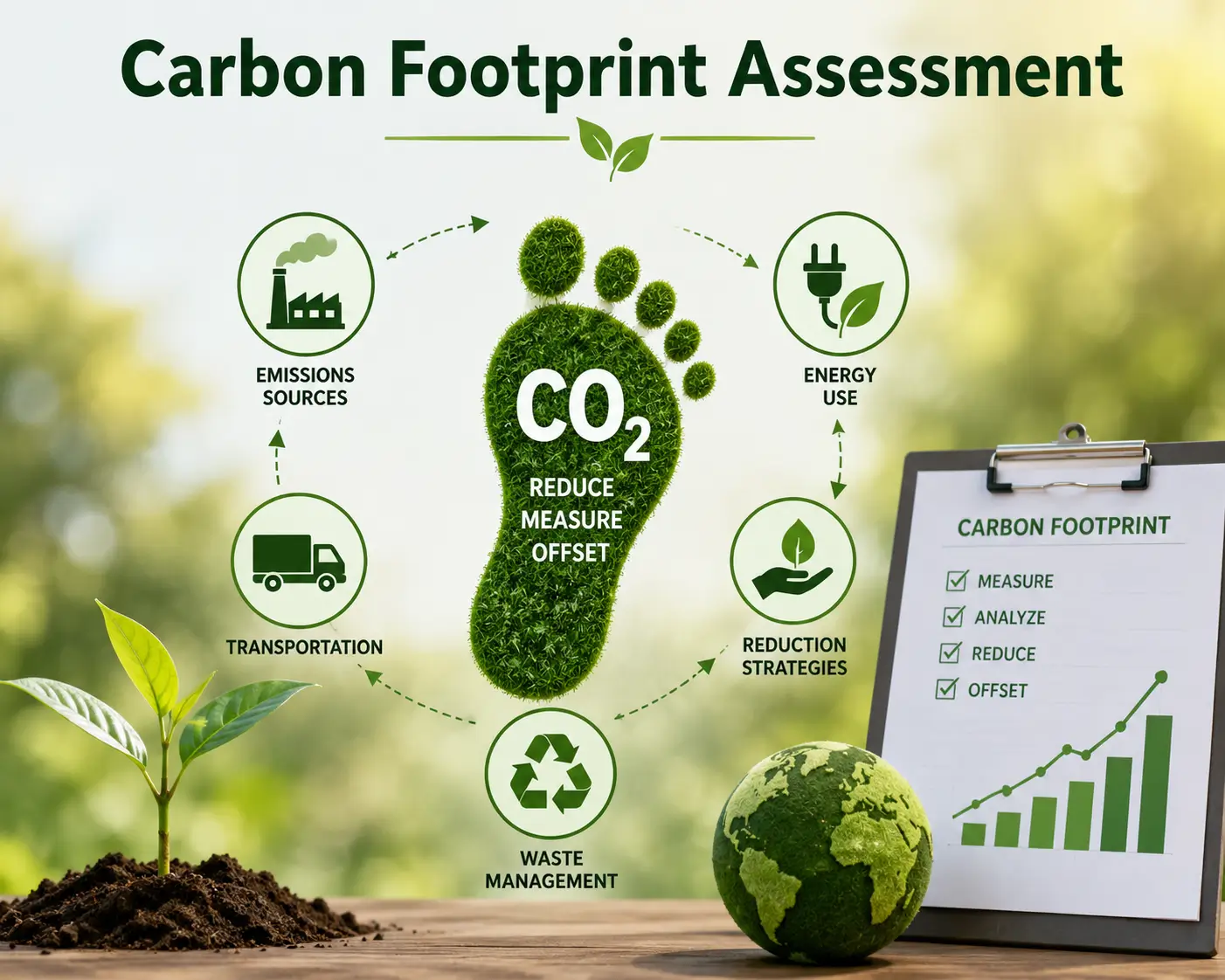
Introduction to Carbon Footprint Assessment
The Carbon Footprint Assessment Course is a professional training program designed to help learners understand how greenhouse gas emissions are measured, reported, and managed in support of climate action and sustainable development. Organizations worldwide are increasingly expected to monitor and reduce their carbon footprints to meet regulatory requirements and sustainability commitments.
Carbon footprint assessment involves identifying emission sources, collecting activity data, calculating emissions using recognized methodologies, and developing reduction strategies. Professionals in this field help organizations improve environmental performance while supporting ESG goals and climate reporting obligations.
This course combines environmental science, carbon accounting, sustainability management, climate policy, and data analysis to provide practical knowledge applicable across manufacturing, energy, transportation, construction, agriculture, retail, finance, and corporate sustainability.
Why Carbon Footprint Assessment Matters
Measuring carbon emissions is the first step toward reducing environmental impact and achieving sustainability goals. Accurate carbon footprint assessments help organizations identify emission hotspots, improve operational efficiency, and comply with environmental regulations.
Carbon assessment also supports investor confidence, customer expectations, ESG reporting, and long-term climate resilience. Professionals with expertise in carbon accounting play a vital role in helping organizations transition toward low-carbon operations.
The Carbon Footprint Assessment Course enables learners to build expertise in carbon measurement, reporting, and emission reduction planning.
Course Overview
The Carbon Footprint Assessment Course introduces learners to internationally recognized methods for greenhouse gas accounting and sustainability reporting.
Participants begin by studying climate change fundamentals, greenhouse gases, and carbon accounting principles. The course explores Scope 1, Scope 2, and Scope 3 emissions, emission factors, and data collection techniques.
Learners also study life cycle assessment (LCA), carbon inventories, emission verification, reporting standards, and carbon reduction strategies.
Practical case studies demonstrate how organizations assess emissions, prepare sustainability reports, and implement decarbonization initiatives.
Topics Covered
Throughout the Carbon Footprint Assessment Course, learners will study:
Climate Change Fundamentals
Understand climate science and greenhouse gas emissions.
Carbon Accounting Principles
Learn standardized methods for calculating carbon emissions.
Scope 1, Scope 2, and Scope 3 Emissions
Identify and classify direct and indirect emissions.
Emission Factors and Calculations
Calculate carbon emissions using accepted methodologies.
Greenhouse Gas Inventories
Prepare organizational emission inventories.
Life Cycle Assessment (LCA)
Evaluate environmental impacts across product life cycles.
Sustainability Reporting
Develop carbon and ESG reports aligned with recognized frameworks.
Carbon Reduction Strategies
Identify opportunities for emission reduction and energy efficiency.
Carbon Verification and Compliance
Understand verification processes and regulatory expectations.
Corporate Sustainability Practices
Support organizational climate goals and ESG initiatives.
Skills You Will Gain
After completing the Carbon Footprint Assessment Course, learners will develop valuable professional skills including:
- Carbon footprint calculation
- Greenhouse gas (GHG) accounting
- Scope 1, 2, and 3 emissions assessment
- Carbon inventory preparation
- Emission data analysis
- Life cycle assessment (LCA)
- Sustainability reporting
- ESG reporting support
- Carbon reduction planning
- Environmental compliance
- Climate risk awareness
- Data interpretation
- Sustainability strategy development
- Environmental auditing fundamentals
- Corporate sustainability management
These competencies are valuable across manufacturing, energy, transportation, construction, agriculture, finance, consulting, retail, government, and sustainability-focused organizations.
Benefits of the Course
The Carbon Footprint Assessment Course provides practical knowledge for measuring, reporting, and reducing greenhouse gas emissions.
Participants gain confidence in carbon accounting methodologies, sustainability reporting, emission reduction planning, and climate compliance. The course also strengthens analytical thinking, environmental management, and strategic decision-making skills.
As organizations increasingly prioritize sustainability and net-zero commitments, professionals with carbon assessment expertise are in high demand.
Who Should Enroll?
This course is suitable for:
- Sustainability professionals
- Environmental engineers
- ESG professionals
- Environmental consultants
- Corporate sustainability managers
- Energy managers
- Compliance officers
- Environmental science students
- Operations managers
- Business leaders interested in sustainability
No prior carbon accounting experience is required, though a basic understanding of environmental concepts is beneficial.
Career Opportunities
After completing the Carbon Footprint Assessment Course, learners may pursue careers such as:
- Carbon Footprint Analyst
- Sustainability Consultant
- ESG Analyst
- Environmental Consultant
- Carbon Accounting Specialist
- Sustainability Manager
- Climate Risk Analyst
- Environmental Compliance Officer
- Energy and Sustainability Manager
- Corporate Sustainability Advisor
- Environmental Auditor
- Net Zero Consultant
- ESG Reporting Specialist
- Climate Strategy Consultant
- Chief Sustainability Officer (future path)
Certification
Upon successful completion of the Carbon Footprint Assessment Course, learners receive a professional certificate recognizing their expertise in carbon accounting, greenhouse gas assessment, sustainability reporting, emission reduction strategies, and environmental management. This certification supports career advancement across sustainability, ESG, environmental consulting, and corporate climate management.
Frequently Asked Questions (FAQs)
1. What is the Carbon Footprint Assessment Course?
It teaches how to measure, calculate, analyze, and report greenhouse gas emissions for organizations and projects.
2. Who should enroll in this course?
Sustainability professionals, environmental engineers, ESG practitioners, consultants, and business leaders can benefit.
3. Do I need prior experience?
No. The course is suitable for beginners and professionals interested in sustainability and carbon accounting.
4. What topics are covered?
Carbon accounting, Scope 1, 2, and 3 emissions, LCA, ESG reporting, carbon inventories, and emission reduction strategies.
5. Is this course practical?
Yes. It includes real-world case studies, emission calculations, and sustainability reporting examples.
6. Will I learn Scope 1, Scope 2, and Scope 3 emissions?
Yes. These are core components of the course.
7. How does this help my career?
It develops high-demand sustainability and carbon management skills sought by organizations worldwide.
8. Does it include ESG and sustainability reporting?
Yes. The course covers carbon reporting and sustainability reporting practices.
9. Can this improve my job opportunities?
Yes. Carbon accounting and ESG expertise are increasingly valuable across industries.
10. What industries use carbon footprint assessment?
Manufacturing, energy, transportation, construction, agriculture, finance, consulting, retail, government, and corporate sustainability organizations.




Reviews
There are no reviews yet.