
Introduction
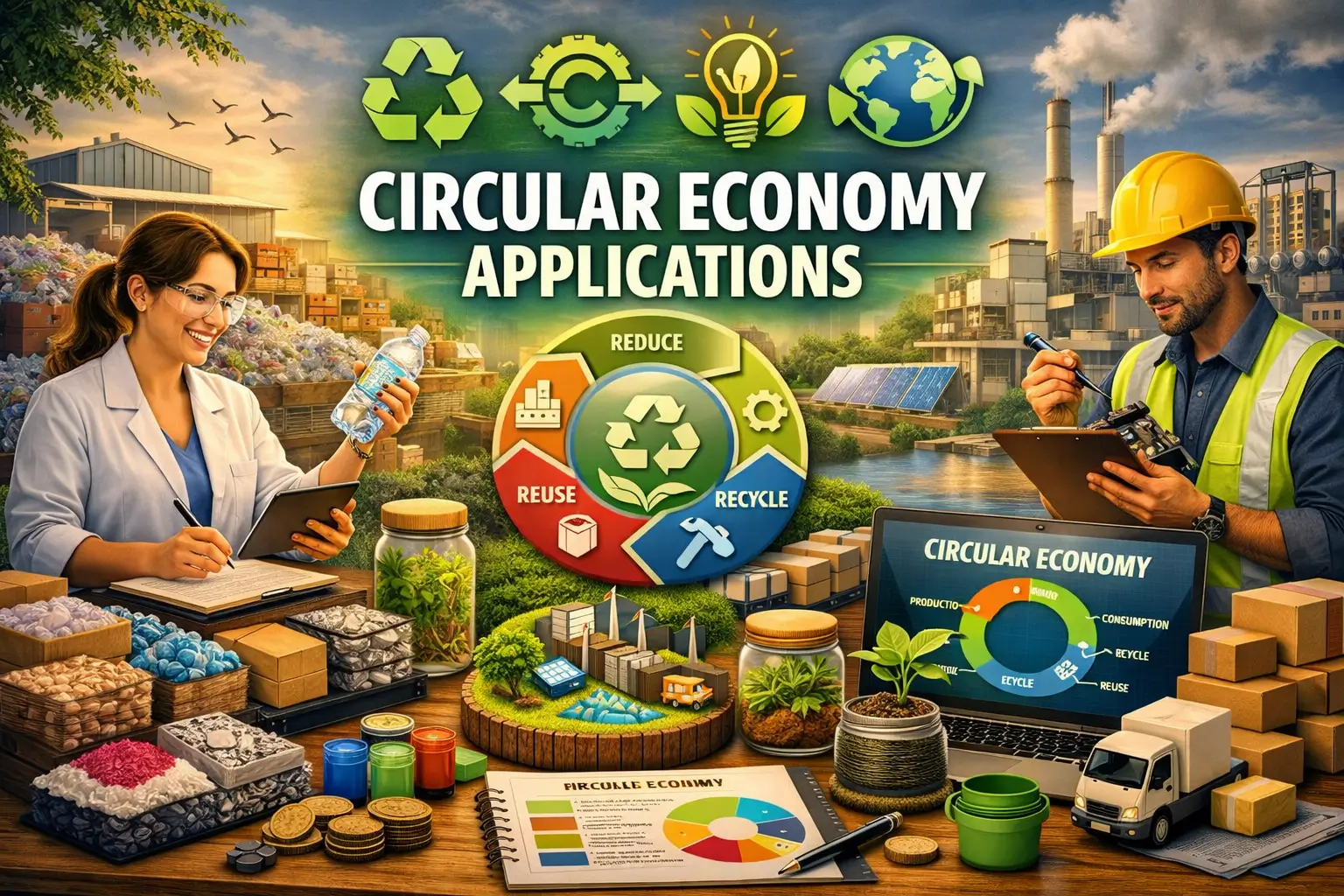
The Circular Economy Applications Course is a comprehensive training program designed to help learners develop the knowledge and practical skills needed to apply circular economy principles across industries and organizations. As global concerns about resource depletion, waste generation, climate change, and environmental sustainability continue to grow, businesses and governments are adopting circular economy strategies to create more efficient, resilient, and sustainable systems. Therefore, understanding circular economy applications has become an essential skill for professionals working in sustainability, manufacturing, engineering, supply chain management, and environmental management.
A circular economy aims to keep products, materials, and resources in use for as long as possible by reducing waste, promoting reuse, encouraging repair, supporting remanufacturing, and improving recycling processes. Unlike the traditional linear economy, which follows a “take, make, and dispose” model, the circular economy focuses on extending product lifecycles while minimizing environmental impact and maximizing resource value.
This course provides learners with a practical understanding of circular economy applications by combining sustainability principles, resource management, product lifecycle thinking, waste reduction strategies, circular business models, environmental management, and innovation. Whether you are a sustainability professional, engineer, environmental consultant, operations manager, policymaker, student, or business leader, this course provides valuable knowledge that supports sustainable development and organizational success.
Course Overview
Circular economy applications focus on designing systems that reduce waste, optimize resource use, and create long-term environmental, economic, and social value. Rather than relying on continuous resource extraction, organizations adopt circular strategies that improve efficiency, reduce costs, strengthen resilience, and support sustainable growth.
First, learners explore the importance of the circular economy in addressing modern environmental and economic challenges. Next, they understand how circular thinking improves resource efficiency, reduces waste, lowers emissions, and promotes responsible production and consumption.
Additionally, the course explains circular business models, sustainable product design, resource recovery, recycling systems, remanufacturing, repair strategies, life cycle assessment, sustainable procurement, and supply chain optimization. Learners also gain practical knowledge of industrial symbiosis, renewable resources, environmental reporting, ESG concepts, policy frameworks, and digital technologies supporting circular economy initiatives.
Furthermore, the curriculum combines sustainability theory with practical industry applications, helping learners understand how circular economy principles create long-term value for businesses, communities, and the environment.
What You Will Learn
The Circular Economy Applications Course covers a broad range of topics related to implementing circular economy strategies in different sectors.
First, learners study the fundamentals of the circular economy and understand how circular systems differ from traditional linear economic models. They also explore the environmental, economic, and social benefits of circular thinking.
Next, participants learn about sustainable resource management. They understand how organizations reduce material consumption, improve resource productivity, conserve natural resources, and minimize environmental impacts throughout the product lifecycle.
Additionally, the course introduces product lifecycle thinking. Learners discover how products are designed, manufactured, distributed, used, repaired, upgraded, reused, recycled, and responsibly managed at the end of their useful life.
Furthermore, participants study sustainable product design principles. They learn how product durability, modularity, repairability, recyclability, and material selection contribute to circular economy objectives.
The course also explains waste reduction strategies, including waste prevention, reuse, recycling, composting, remanufacturing, refurbishment, and resource recovery practices that reduce landfill disposal and improve material efficiency.
Moreover, learners explore circular business models such as product-as-a-service, sharing economy platforms, leasing models, take-back programs, reverse logistics, and closed-loop production systems.
In addition, the curriculum covers sustainable procurement practices, supplier collaboration, responsible sourcing, ethical supply chain management, and circular purchasing decisions that support organizational sustainability.
Participants also study life cycle assessment (LCA), environmental impact analysis, carbon footprint evaluation, resource efficiency measurement, and sustainability performance indicators used to support decision-making.
Additionally, the course explains industrial symbiosis, where organizations collaborate by using one company’s waste or by-products as valuable resources for another organization, improving both environmental and economic performance.
The curriculum also introduces environmental regulations, sustainability policies, ESG concepts, circular economy frameworks, international sustainability goals, and corporate environmental responsibility initiatives.
Furthermore, learners explore digital technologies that support circular economy applications, including the Internet of Things (IoT), artificial intelligence, blockchain, digital product passports, material tracking systems, and data analytics for resource optimization.
Finally, participants study innovation management, stakeholder engagement, leadership, organizational change, communication, performance monitoring, and continuous improvement strategies that support successful circular economy implementation.
Skills You Will Gain
Upon successful completion of the course, learners will develop valuable professional skills, including:
- Circular economy implementation
- Sustainable resource management
- Waste reduction strategies
- Product lifecycle management
- Sustainable product design
- Recycling and reuse planning
- Remanufacturing concepts
- Life cycle assessment (LCA)
- Sustainable procurement
- Circular business models
- Environmental impact assessment
- ESG fundamentals
- Supply chain sustainability
- Sustainability reporting
- Continuous improvement
These skills are highly valued across manufacturing companies, environmental consulting firms, government agencies, sustainability departments, nonprofit organizations, engineering firms, construction companies, consumer goods businesses, and circular economy initiatives.
Benefits of the Course
The Circular Economy Applications Course provides learners with practical knowledge and sustainability strategies that support responsible resource management.
First, the course helps learners understand how circular economy practices reduce waste, improve resource efficiency, and strengthen environmental sustainability.
Additionally, participants improve their ability to implement circular business models, optimize product lifecycles, and support sustainable organizational practices.
Furthermore, learners develop practical skills in life cycle assessment, sustainable procurement, environmental reporting, recycling systems, waste reduction, and circular innovation.
The course also enhances analytical thinking, communication, collaboration, leadership, problem-solving, and strategic planning skills that support sustainability careers.
As governments and organizations continue investing in sustainable development and circular economy initiatives, professionals with circular economy expertise remain in high demand.
Finally, learners gain the confidence to contribute to environmental responsibility, business resilience, and long-term sustainable growth.
Who Should Enroll?
This course is ideal for:
- Sustainability professionals
- Environmental managers
- Engineers
- Manufacturing professionals
- Supply chain managers
- Procurement specialists
- ESG professionals
- Environmental consultants
- Operations managers
- Policy professionals
- Business leaders
- Corporate sustainability teams
- Environmental science students
- Project managers
- Anyone interested in circular economy applications
No prior sustainability experience is required. Therefore, beginners and experienced professionals can both benefit from this course.
Career Opportunities
After completing the course, learners may pursue opportunities such as:
- Circular Economy Specialist
- Sustainability Manager
- Environmental Consultant
- ESG Coordinator
- Sustainable Supply Chain Analyst
- Resource Efficiency Manager
- Environmental Compliance Officer
- Sustainability Project Coordinator
- Circular Business Strategy Consultant
- Waste Management Specialist
- Product Sustainability Manager
- Environmental Program Manager
- Corporate Sustainability Officer
- Sustainability Analyst
- Circular Innovation Advisor
Additionally, learners can apply these skills across manufacturing, construction, engineering, retail, logistics, government, environmental consulting, renewable energy, consumer goods, and nonprofit organizations.
Certification
Upon successful completion of the Circular Economy Applications Course, participants receive a certification recognizing their understanding of circular economy principles, sustainable resource management, life cycle assessment, circular business models, waste reduction, environmental reporting, ESG concepts, and sustainability strategies. This certification strengthens professional credibility and supports career advancement in sustainability, environmental management, engineering, and corporate responsibility.
Why Choose This Course?
The Circular Economy Applications Course combines sustainability principles with practical business and environmental strategies to provide a comprehensive learning experience.
First, learners develop a strong understanding of circular economy concepts, resource efficiency, sustainable product design, and environmental responsibility.
Additionally, the curriculum focuses on life cycle assessment, waste reduction, circular business models, sustainable procurement, industrial symbiosis, ESG concepts, digital innovation, and continuous improvement.
Furthermore, participants gain industry-relevant knowledge that supports career development in sustainability, environmental management, engineering, manufacturing, supply chain management, and corporate sustainability.
Whether your goal is to become a sustainability professional, environmental consultant, circular economy specialist, operations manager, ESG coordinator, or corporate sustainability leader, this course provides the knowledge, practical skills, and confidence needed to succeed.
Enroll today and build a strong foundation in circular economy applications, sustainable resource management, environmental innovation, and responsible business practices.
FAQ Section
1. What is the Circular Economy Applications Course?
The course teaches how circular economy principles can be applied to reduce waste, improve resource efficiency, and support sustainable business practices.
2. Is this course suitable for beginners?
Yes. The course is designed for beginners as well as professionals who want to strengthen their sustainability knowledge.
3. What topics are covered?
Topics include circular economy principles, sustainable product design, life cycle assessment, recycling, remanufacturing, sustainable procurement, circular business models, ESG concepts, and environmental reporting.
4. Will I receive a certificate?
Yes. Participants receive a certificate upon successfully completing the course.
5. Do I need prior sustainability experience?
No. The course introduces circular economy concepts in a clear and beginner-friendly format.
6. Who should enroll in this course?
Sustainability professionals, engineers, environmental managers, supply chain specialists, project managers, business leaders, students, consultants, and policymakers can benefit from this course.
7. Is the course fully online?
Yes. The course offers flexible online learning, allowing participants to study at their own pace.
8. What skills will I gain?
You will gain skills in circular economy implementation, resource efficiency, sustainable procurement, life cycle assessment, waste reduction, environmental reporting, ESG fundamentals, and sustainability planning.
9. Can this course help my career?
Yes. Circular economy skills are highly valued across manufacturing, engineering, environmental consulting, government, construction, logistics, retail, renewable energy, and corporate sustainability sectors.
10. Why are circular economy applications important?
Circular economy applications help organizations reduce waste, conserve resources, improve environmental performance, lower operating costs, encourage innovation, strengthen sustainability, and support long-term business resilience.



Reviews
There are no reviews yet.