
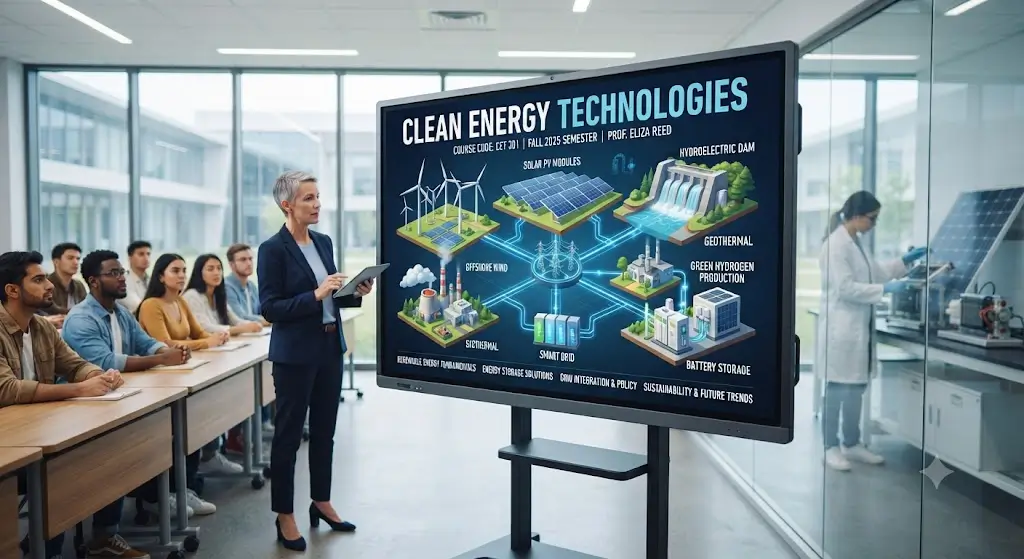
Clean Energy Technologies Course
The Clean Energy Technologies Course is designed to help engineers, energy professionals, sustainability specialists, project managers, consultants, researchers, students, entrepreneurs, and individuals interested in renewable energy develop the knowledge and practical skills needed to understand and implement modern clean energy solutions. As governments and industries accelerate the transition toward low-carbon economies, clean energy technologies are becoming essential for achieving energy security, environmental sustainability, and long-term economic growth.
This course introduces the core principles of clean energy technologies, including solar energy, wind power, hydropower, biomass, geothermal energy, hydrogen technologies, fuel cells, energy storage systems, smart grids, energy efficiency solutions, carbon reduction strategies, clean energy policies, project planning, and sustainable energy management. Learners will gain practical knowledge of selecting and implementing renewable energy technologies that improve efficiency, reduce emissions, and support sustainable development.
Whether you work in engineering, renewable energy, utilities, construction, environmental management, consulting, or policymaking, this course provides a comprehensive foundation in clean energy technologies.
Course Overview
The course explores the complete clean energy ecosystem, from understanding renewable energy resources and evaluating technology options to planning clean energy projects, integrating renewable systems into existing infrastructure, improving energy efficiency, and supporting the global transition to sustainable energy. Learners will understand how clean energy technologies reduce greenhouse gas emissions, improve energy reliability, and create new opportunities for innovation and economic development.
The curriculum combines engineering concepts with practical exercises, technology demonstrations, industry case studies, and international best practices to prepare learners for careers in the rapidly growing renewable energy sector.
What You Will Learn
By completing this course, you will be able to:
- Understand clean energy technologies.
- Identify different renewable energy systems.
- Evaluate solar and wind energy solutions.
- Understand hydropower and geothermal technologies.
- Explore biomass and hydrogen energy.
- Apply energy storage technologies.
- Understand smart grid systems.
- Improve energy efficiency.
- Support carbon reduction initiatives.
- Plan renewable energy projects.
- Evaluate clean energy technologies.
- Understand energy policies and regulations.
- Promote sustainable energy solutions.
- Support the global energy transition.
- Contribute to environmental sustainability.
Course Curriculum
The curriculum begins with renewable energy fundamentals before progressing through solar, wind, hydropower, geothermal, biomass, hydrogen technologies, energy storage, smart grids, energy efficiency, project planning, carbon reduction strategies, industry case studies, and future trends in clean energy innovation.
Practical assignments help learners evaluate renewable energy systems using real-world engineering and sustainability scenarios.
Skills You Will Gain
After completing the course, you will develop skills in:
- Clean Energy Technologies
- Renewable Energy Systems
- Solar Energy Technologies
- Wind Energy Systems
- Hydropower
- Geothermal Energy
- Biomass Energy
- Hydrogen Technologies
- Energy Storage Systems
- Smart Grid Technologies
- Energy Efficiency
- Carbon Reduction Strategies
- Sustainable Energy Planning
- Renewable Energy Project Management
- Environmental Sustainability
Benefits of the Course
This course helps learners understand renewable energy technologies, improve sustainable energy planning, reduce environmental impact, and support clean energy adoption. Strong clean energy technology skills enable organizations to improve energy efficiency, reduce carbon emissions, comply with environmental regulations, and contribute to global sustainability goals.
These skills are highly valuable across renewable energy companies, engineering consultancies, electric utility providers, construction firms, manufacturing industries, government agencies, environmental organizations, research institutions, infrastructure developers, and multinational corporations.
Who Should Enroll
This course is ideal for:
- Energy Engineers
- Electrical Engineers
- Mechanical Engineers
- Renewable Energy Professionals
- Sustainability Professionals
- Project Managers
- Environmental Consultants
- Government Officials
- Researchers
- Utility Professionals
- Engineering Students
- Entrepreneurs
- Infrastructure Planners
- Energy Analysts
- Anyone interested in clean energy
Career Opportunities
After completing the Clean Energy Technologies Course, learners may strengthen their qualifications for roles such as:
- Renewable Energy Engineer
- Clean Energy Consultant
- Energy Systems Engineer
- Sustainability Manager
- Solar Energy Specialist
- Wind Energy Engineer
- Energy Project Manager
- Smart Grid Specialist
- Energy Analyst
- Environmental Consultant
These skills are valuable across renewable energy companies, utility providers, engineering firms, infrastructure developers, environmental consultancies, government departments, research organizations, manufacturing industries, technology companies, and international energy organizations.
Certification Details
Upon successful completion, learners receive a Certificate of Completion recognizing their expertise in Clean Energy Technologies and renewable energy systems. This certification enhances your professional profile and supports career advancement in renewable energy, engineering, sustainability, environmental management, clean technology, project management, and energy consulting.
If you want to understand modern renewable energy solutions, support sustainable development, and contribute to the global clean energy transition, the Clean Energy Technologies Course provides practical, industry-relevant knowledge for today’s rapidly evolving energy sector.
FAQ SECTION
1. What is the Clean Energy Technologies Course?
It teaches the principles, technologies, and applications of renewable energy systems while helping learners understand sustainable energy solutions and clean power generation.
2. Is this course suitable for beginners?
Yes. The course starts with renewable energy fundamentals and is suitable for beginners as well as engineers, sustainability professionals, and energy industry practitioners.
3. What topics are covered?
Solar energy, wind energy, hydropower, biomass, geothermal energy, hydrogen technologies, energy storage systems, smart grids, energy efficiency, carbon reduction, and renewable energy project planning.
4. Do I need previous engineering experience?
No. The course is designed for beginners, engineering students, sustainability professionals, consultants, entrepreneurs, and anyone interested in clean energy technologies.
5. Is the course online?
Yes. The course is fully online and self-paced.
6. Will I receive a certificate?
Yes. A certificate is awarded after successfully completing the course.
7. Who should enroll?
Engineers, renewable energy professionals, sustainability specialists, project managers, environmental consultants, researchers, students, entrepreneurs, policymakers, and anyone interested in renewable energy.
8. What skills will I gain?
Renewable energy systems, solar and wind technologies, energy storage, smart grids, sustainable energy planning, carbon reduction strategies, project management, energy efficiency, and environmental sustainability.
9. Can this course help my career?
Yes. Clean energy technology skills are highly valued across renewable energy companies, utilities, engineering consultancies, construction firms, government agencies, research institutions, environmental organizations, and multinational corporations.
10. Why are Clean Energy Technologies important?
Clean Energy Technologies help reduce greenhouse gas emissions, improve energy efficiency, diversify energy sources, strengthen energy security, support sustainable economic growth, reduce dependence on fossil fuels, and accelerate the transition toward a low-carbon and environmentally sustainable future.


Reviews
There are no reviews yet.