
Introduction
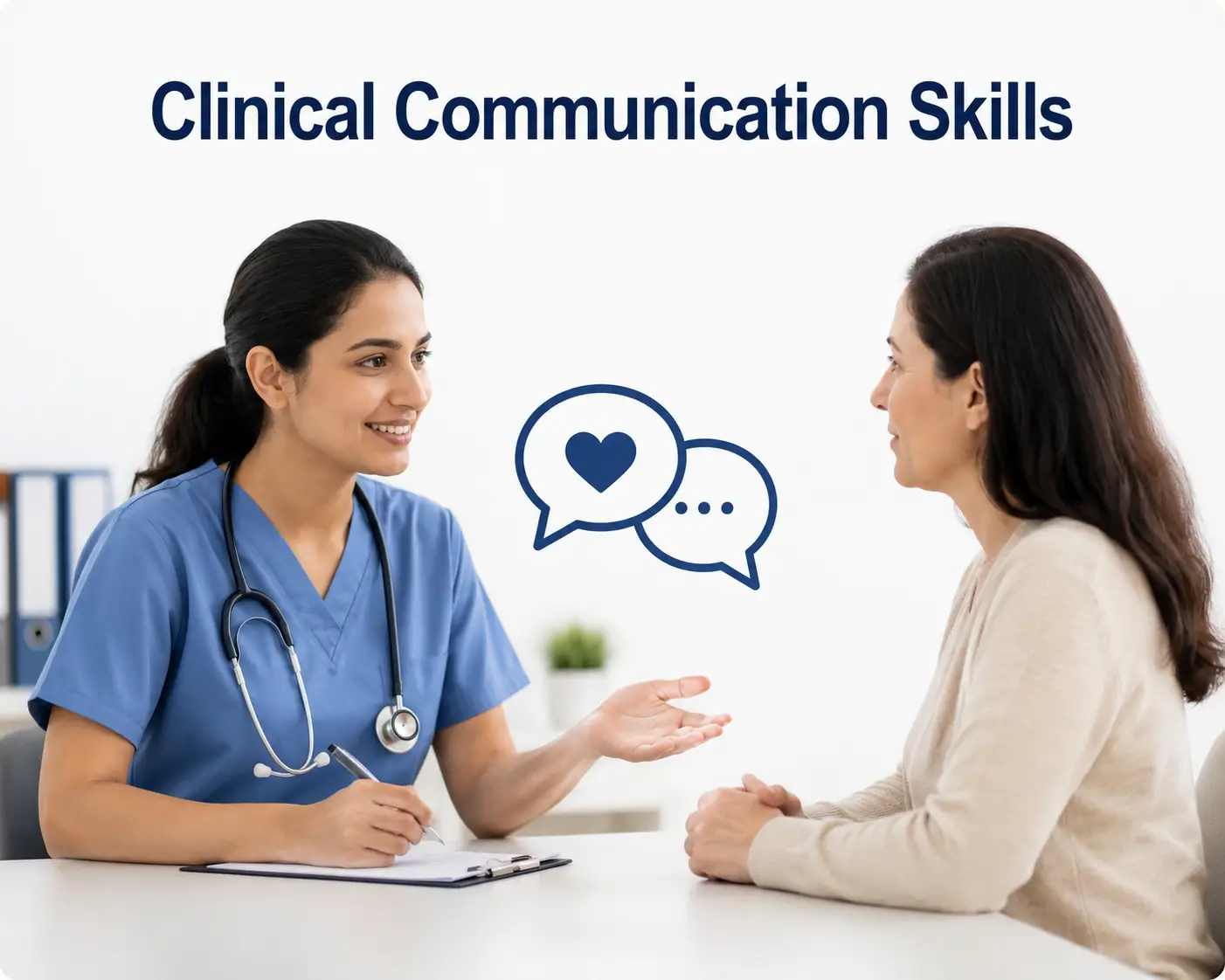
The Clinical Communication Skills Course is a comprehensive training program designed to equip learners with the knowledge and practical skills required for effective communication in healthcare environments. In clinical settings, communication directly impacts patient care and safety. Therefore, clinical communication skills are essential for healthcare success.
Clinical communication involves interaction between healthcare professionals, patients, and families to ensure clarity, trust, and understanding. As a result, healthcare outcomes and patient satisfaction improve significantly.
Whether you are a student, nurse, doctor, or healthcare assistant, this course provides practical knowledge that supports professional communication development.
Course Overview
This course provides a practical introduction to communication practices in clinical environments.
Learners will explore:
- Fundamentals of clinical communication
- Patient interaction techniques
- Active listening skills in healthcare
- Empathy and emotional intelligence
- Doctor-patient communication basics
- Healthcare teamwork communication
- Conflict resolution in clinical settings
- Communication ethics in healthcare
- Breaking bad news communication basics
- Patient counseling techniques
- Non-verbal communication in healthcare
- Communication barriers and solutions
- Professional behavior in hospitals
- Healthcare collaboration skills
Additionally, the course helps learners understand how communication affects patient care quality.
What You Will Learn
Throughout this course, learners will develop strong clinical and interpersonal communication skills.
You will learn how to:
- Communicate effectively with patients
- Improve doctor-patient interaction quality
- Practice empathy in healthcare conversations
- Handle difficult patient situations
- Improve teamwork in clinical environments
- Deliver clear medical information
- Reduce communication errors in healthcare
- Build trust with patients and families
- Improve listening and response skills
- Support better healthcare outcomes
By the end of the course, learners will understand how clinical communication skills improve healthcare delivery.
Skills You Will Gain
After completing this course, learners will develop skills including:
- Clinical communication skills
- Patient interaction skills
- Active listening
- Empathy and emotional intelligence
- Problem-solving
- Conflict resolution
- Team coordination
- Decision-making
- Healthcare professionalism
- Non-verbal communication awareness
- Stress management in communication
- Organizational skills
- Critical thinking
- Cultural sensitivity
- Healthcare teamwork
These transferable skills are valuable across hospitals, clinics, nursing homes, emergency care centers, and healthcare organizations.
Benefits of the Course
This course offers numerous professional advantages.
Some major benefits include:
- Improved patient communication skills
- Better doctor-patient relationships
- Strong teamwork in healthcare environments
- Enhanced career opportunities in healthcare sector
- Better patient satisfaction and trust
- Improved empathy and listening skills
- Reduced communication errors in hospitals
- Strong foundation for healthcare careers
- Better professional behavior in clinical settings
- Improved service quality in healthcare
Furthermore, strong communication is essential for safe and effective patient care.
Who Should Enroll?
This course is ideal for:
- Healthcare students
- Doctors and nurses
- Medical assistants
- Hospital staff
- Clinic reception staff
- Healthcare coordinators
- Anyone working in clinical environments
No prior experience is required. Therefore, beginners can confidently enroll.
Career Opportunities
After completing this course, learners may pursue or support careers in roles such as:
- Clinical Communication Assistant
- Patient Care Coordinator
- Healthcare Support Executive
- Hospital Front Desk Executive
- Medical Assistant
- Nursing Support Staff
- Healthcare Communication Officer (Entry Level)
- Patient Interaction Executive
- Clinic Support Staff
- Healthcare Customer Support Assistant
- Medical Office Assistant
- Emergency Care Support Staff
- Entry-level hospital roles
- Healthcare administration assistant
- Patient Relations Executive
These skills are valuable across hospitals, clinics, diagnostic centers, nursing homes, and healthcare organizations.
Certification
Upon successful completion of the Clinical Communication Skills Course, learners receive a professional certification recognizing their skills in healthcare communication, patient interaction, and clinical professionalism.
The certification demonstrates your ability to communicate effectively in healthcare environments.
Conclusion
The Clinical Communication Skills Course equips learners with essential skills required to communicate effectively in clinical and healthcare settings.
Throughout the course, learners develop expertise in patient interaction, empathy, and professional communication techniques. These capabilities help improve patient care quality and healthcare teamwork.
Whether you are entering the healthcare field or improving communication skills, this course provides valuable knowledge and practical techniques that support long-term professional growth.
FAQ
1. What is the Clinical Communication Skills Course?
It is a professional course that teaches communication skills for healthcare and clinical environments.
2. Who should take this course?
Healthcare students, doctors, nurses, and hospital staff should take this course.
3. Do I need medical experience?
No. It is suitable for beginners as well as professionals.
4. What will I learn in this course?
You will learn patient communication, empathy, and clinical interaction skills.
5. How does this course help in career growth?
It improves communication skills required in healthcare jobs and patient care roles.
6. Is this course useful for hospital jobs?
Yes. It is highly useful for all healthcare and clinical support roles.
7. Will I get a certificate after completion?
Yes. A professional course completion certificate is provided.
8. Does this course include patient handling training?
Yes. It focuses on patient interaction and communication techniques.
9. Can I work in clinics after this course?
Yes. It is useful for hospitals, clinics, and healthcare centers.
10. Why are clinical communication skills important?
Because they improve patient trust, reduce errors, and enhance healthcare outcomes.


Reviews
There are no reviews yet.