
Introduction
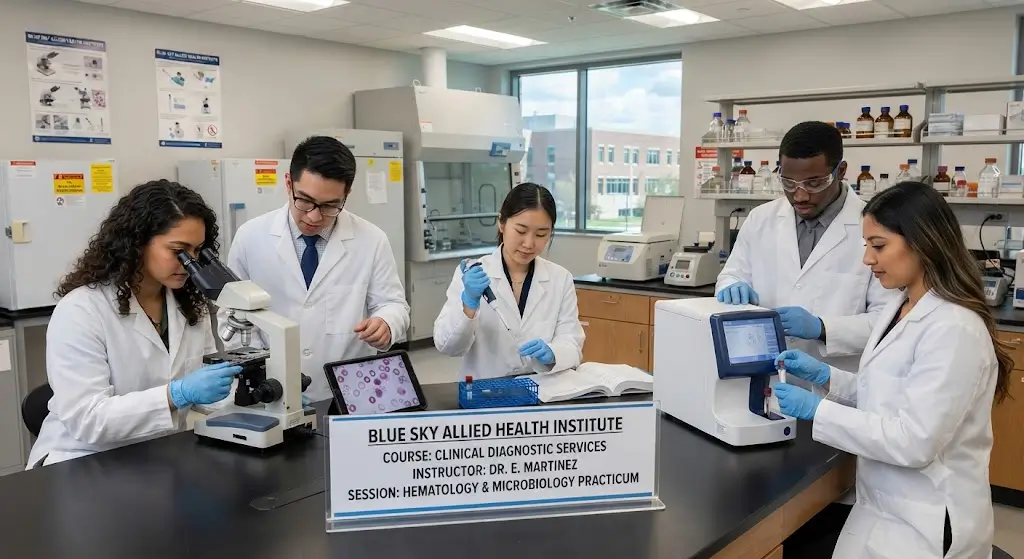
Accurate diagnosis is the foundation of effective medical treatment and quality patient care. The Clinical Diagnostic Services Course introduces learners to the principles, procedures, and technologies used in modern clinical diagnostic laboratories. As healthcare continues to evolve through technological advancements and evidence-based medicine, clinical diagnostic services have become essential for identifying diseases, monitoring health conditions, and supporting clinical decision-making.
Clinical diagnostic services involve the collection, processing, analysis, and interpretation of patient samples to assist healthcare professionals in diagnosing illnesses and developing treatment plans. Therefore, diagnostic laboratories play a crucial role in improving patient outcomes, reducing medical errors, and supporting preventive healthcare.
Moreover, this course explains how laboratory testing, specimen management, quality assurance, infection control, and diagnostic technologies contribute to reliable healthcare services. Learners also become familiar with hematology, clinical biochemistry, microbiology, immunology, molecular diagnostics, laboratory information systems, and healthcare regulations.
In addition, participants develop practical skills in specimen collection, laboratory techniques, equipment handling, quality control, data recording, and professional communication. These competencies prepare learners for careers in hospitals, diagnostic laboratories, medical research institutions, healthcare organizations, and public health agencies.
By completing this course, learners establish a strong foundation in clinical diagnostic services while contributing to accurate diagnosis, patient safety, and high-quality healthcare delivery.
Course Overview
The Clinical Diagnostic Services Course provides comprehensive training in clinical laboratory operations, diagnostic testing, specimen handling, quality assurance, and healthcare standards. Furthermore, the course explains how diagnostic laboratories support disease diagnosis, patient care, and medical decision-making.
Fundamentals of Clinical Diagnostic Services
The course begins by introducing the principles of clinical diagnostics and laboratory medicine. Learners understand laboratory organization, diagnostic workflows, healthcare regulations, ethical practices, and the importance of diagnostic accuracy. Consequently, they develop a strong foundation in clinical laboratory services.
Specimen Collection and Handling
Proper specimen management is essential for reliable diagnostic results. Therefore, learners study blood collection, urine sampling, tissue specimens, transportation procedures, labeling, storage techniques, and sample preservation methods.
Hematology
The course explains blood cell analysis, complete blood count (CBC), blood disorders, coagulation testing, anemia evaluation, and hematological diagnostic procedures. Moreover, participants understand how hematology supports disease diagnosis.
Clinical Biochemistry
Learners explore biochemical testing, enzyme analysis, kidney function tests, liver function tests, glucose monitoring, lipid profiling, electrolyte analysis, and metabolic disorder investigations. Consequently, they understand how biochemical testing supports patient care.
Microbiology and Immunology
The course introduces bacterial identification, viral diagnostics, fungal analysis, culture techniques, antimicrobial testing, immune response evaluation, serological testing, and infection diagnosis. Furthermore, learners understand laboratory procedures used in infectious disease detection.
Molecular Diagnostics
Participants study PCR techniques, genetic testing, DNA analysis, molecular biomarkers, precision medicine, and advanced diagnostic technologies. Therefore, learners become familiar with modern molecular diagnostic methods.
Laboratory Safety and Quality Assurance
The course explains biosafety practices, infection prevention, waste management, laboratory quality control, accreditation standards, documentation, and regulatory compliance. Accordingly, learners develop safe laboratory practices.
Laboratory Information Systems
Learners study digital laboratory management, electronic medical records, laboratory information systems (LIS), data security, reporting procedures, and digital healthcare technologies.
Emerging Trends in Clinical Diagnostics
Finally, participants examine artificial intelligence in diagnostics, automation, digital pathology, telemedicine, point-of-care testing, personalized medicine, and emerging healthcare technologies transforming diagnostic services.
Overall, this course combines medical science with practical laboratory training, enabling learners to understand every aspect of clinical diagnostic services while preparing them for careers in healthcare, diagnostics, and laboratory medicine.
What You Will Learn
The Clinical Diagnostic Services Course equips learners with practical knowledge and technical skills required to perform diagnostic procedures and support quality healthcare services.
Fundamentals of Clinical Diagnostics
First, learners understand laboratory medicine, diagnostic principles, healthcare regulations, and clinical laboratory operations.
Specimen Collection Techniques
Participants learn blood collection, sample handling, transportation procedures, specimen storage, and patient preparation. Furthermore, they understand how proper specimen management improves diagnostic accuracy.
Laboratory Testing Procedures
The course explains hematology, clinical biochemistry, microbiology, immunology, molecular diagnostics, and laboratory testing protocols. Consequently, learners gain practical diagnostic skills.
Diagnostic Equipment Operation
Learners explore laboratory instruments, analytical equipment, automation systems, calibration methods, maintenance procedures, and quality control techniques. Moreover, they understand how laboratory technologies improve diagnostic efficiency.
Infection Control and Biosafety
The course introduces laboratory safety procedures, infection prevention, personal protective equipment, biomedical waste management, and biosafety regulations. Therefore, learners become familiar with safe laboratory practices.
Quality Assurance
Participants study laboratory quality management, documentation, accreditation standards, quality control procedures, error prevention, and continuous improvement systems. In addition, they understand how quality assurance supports reliable diagnostic services.
Digital Laboratory Systems
The course also emphasizes laboratory information systems, digital reporting, healthcare data management, electronic medical records, and emerging diagnostic technologies.
Skills You Will Gain
After completing the Clinical Diagnostic Services Course, learners will develop valuable laboratory, technical, and healthcare skills required for professional clinical diagnostic services.
Clinical Laboratory Skills
Develop the ability to perform laboratory testing, process clinical specimens, and support diagnostic investigations accurately.
Specimen Handling Skills
Learn practical techniques for collecting, labeling, transporting, storing, and processing patient samples according to healthcare standards.
Diagnostic Testing Skills
Gain expertise in hematology, microbiology, clinical biochemistry, immunology, molecular diagnostics, and laboratory procedures.
Laboratory Equipment Skills
Understand laboratory instruments, automated analyzers, calibration methods, maintenance procedures, and quality assurance systems.
Infection Control Skills
Develop practical knowledge of biosafety practices, infection prevention, biomedical waste management, and laboratory safety regulations.
Quality Management Skills
Learn laboratory quality control, documentation, accreditation standards, compliance procedures, and continuous quality improvement practices.
Analytical Skills
Interpret laboratory data, diagnostic reports, quality indicators, and test results to support healthcare professionals in clinical decision-making.
Problem-Solving Skills
Analyze laboratory challenges, identify testing errors, implement corrective actions, and improve diagnostic accuracy through systematic approaches.
Communication Skills
Strengthen professional communication skills required to collaborate effectively with physicians, nurses, laboratory teams, patients, and healthcare organizations.
Professional Competence
Build the confidence to contribute effectively to hospitals, diagnostic laboratories, research institutions, healthcare organizations, medical laboratories, and public health agencies.
Benefits of the Course
The Clinical Diagnostic Services Course provides learners with practical knowledge and technical skills required to deliver accurate diagnostic services and support high-quality patient care. Moreover, the course combines laboratory science with modern diagnostic technologies, enabling learners to perform clinical testing while maintaining professional healthcare standards.
Develop Strong Clinical Diagnostic Knowledge
First, learners gain a comprehensive understanding of clinical laboratory operations, diagnostic procedures, specimen handling, and healthcare regulations. As a result, they develop the confidence to work efficiently in hospitals and diagnostic laboratories.
Improve Laboratory Testing Skills
Accurate laboratory testing is essential for disease diagnosis. Therefore, this course teaches learners how to perform hematology, microbiology, clinical biochemistry, immunology, and molecular diagnostic procedures with precision.
Learn Proper Specimen Management
Reliable diagnostic results depend on proper specimen handling. Consequently, learners study specimen collection, labeling, transportation, storage, processing, and documentation techniques that reduce testing errors and improve laboratory efficiency.
Strengthen Diagnostic Equipment Skills
Modern laboratories rely on advanced technologies. Furthermore, participants learn to operate laboratory instruments, automated analyzers, diagnostic equipment, and laboratory information systems that improve testing accuracy and workflow.
Develop Infection Control Skills
Maintaining a safe laboratory environment is essential for healthcare professionals. Accordingly, learners explore biosafety protocols, infection prevention measures, personal protective equipment, biomedical waste management, and laboratory safety regulations.
Understand Quality Assurance Practices
Quality management improves laboratory reliability. Therefore, learners study quality control procedures, laboratory accreditation standards, documentation practices, regulatory compliance, and continuous quality improvement systems.
Promote Better Patient Care
Clinical diagnostic services support early disease detection and effective treatment planning. Moreover, learners understand how accurate laboratory testing contributes to patient safety, faster diagnosis, and improved healthcare outcomes.
Expand Career Opportunities
The healthcare industry continues to require qualified diagnostic professionals. As a result, completing this course enhances employability across hospitals, diagnostic laboratories, research institutions, public health organizations, and healthcare facilities.
Prepare for Advanced Medical Learning
The course provides a strong academic foundation for advanced studies in medical laboratory technology, pathology, microbiology, clinical research, molecular diagnostics, and healthcare management. In addition, it supports continuous professional development.
Support Modern Healthcare Services
Clinical diagnostics play a central role in disease prevention, treatment monitoring, and healthcare decision-making. Ultimately, this course prepares learners to contribute to accurate diagnosis, quality healthcare services, and patient well-being.
Who Should Enroll
The Clinical Diagnostic Services Course is designed for individuals who want to develop expertise in laboratory diagnostics, clinical testing, and healthcare support services.
Healthcare Students
Students pursuing medical laboratory technology, biotechnology, microbiology, life sciences, nursing, pharmacy, or related healthcare disciplines can strengthen their academic knowledge while preparing for professional careers.
Laboratory Technicians
Laboratory professionals who want to enhance their technical knowledge and improve diagnostic laboratory practices can benefit significantly from this course.
Healthcare Professionals
Healthcare workers seeking to improve their understanding of laboratory diagnostics, specimen handling, and patient care can strengthen their professional expertise.
Clinical Research Professionals
Researchers involved in clinical studies and biomedical research can gain practical knowledge of laboratory procedures and diagnostic technologies.
Hospital Staff
Hospital personnel working in pathology laboratories, diagnostic centers, blood banks, or healthcare facilities can improve their technical and operational skills.
Medical Graduates
Graduates interested in laboratory medicine, clinical diagnostics, or healthcare support services can build a strong professional foundation through this course.
Public Health Professionals
Professionals working in disease surveillance, public health laboratories, or healthcare programs can strengthen their knowledge of diagnostic services.
Anyone Interested in Clinical Diagnostics
Anyone interested in laboratory medicine, diagnostic technologies, or healthcare services can enroll in this course regardless of previous laboratory experience.
Career Opportunities
The growing demand for accurate medical diagnosis has created excellent career opportunities for professionals with expertise in clinical diagnostic services. Therefore, completing the Clinical Diagnostic Services Course can help learners build rewarding careers across hospitals, diagnostic laboratories, research institutions, and healthcare organizations.
Potential career roles include:
- Clinical Laboratory Technician
- Medical Laboratory Technologist
- Diagnostic Laboratory Assistant
- Pathology Laboratory Technician
- Clinical Diagnostics Specialist
- Laboratory Quality Assurance Officer
- Microbiology Laboratory Technician
- Hematology Laboratory Technician
- Clinical Biochemistry Technician
- Molecular Diagnostics Technician
- Laboratory Information System Coordinator
- Blood Bank Technician
- Clinical Research Assistant
- Public Health Laboratory Officer
- Healthcare Laboratory Executive
Graduates may find employment opportunities in:
- Hospitals
- Diagnostic laboratories
- Pathology laboratories
- Medical colleges
- Research institutions
- Blood banks
- Public health laboratories
- Biotechnology companies
- Pharmaceutical companies
- Healthcare organizations
Furthermore, this course provides a strong foundation for advanced education and specialized training in medical laboratory technology, pathology, microbiology, molecular diagnostics, clinical research, and healthcare management.
Certification
Upon successfully completing the Clinical Diagnostic Services Course, learners will receive a Course Completion Certificate that recognizes their knowledge of laboratory diagnostics, specimen management, clinical testing, laboratory safety, quality assurance, and modern diagnostic technologies.
Moreover, the certificate demonstrates your commitment to professional development and continuous learning within the healthcare sector. It can strengthen your resume, improve your professional profile, and increase employment opportunities with hospitals, diagnostic laboratories, research institutions, biotechnology companies, pharmaceutical organizations, and healthcare providers.
Additionally, the certification validates your understanding of laboratory procedures, diagnostic equipment, infection control, healthcare regulations, laboratory information systems, and quality management practices. Consequently, it supports career advancement while preparing learners for technical, supervisory, and healthcare support roles.
Conclusion
Clinical diagnostic services are essential for accurate disease detection, effective treatment planning, and quality patient care. Therefore, professionals with expertise in laboratory diagnostics play a critical role in supporting healthcare providers and improving patient outcomes.
The Clinical Diagnostic Services Course provides comprehensive knowledge of laboratory testing, specimen handling, diagnostic technologies, infection control, quality assurance, and clinical laboratory management. Moreover, learners develop practical skills that enable them to perform diagnostic procedures accurately while maintaining healthcare standards.
Throughout the course, participants strengthen their technical expertise, analytical thinking, attention to detail, and problem-solving abilities while exploring modern laboratory technologies and digital healthcare systems. In addition, they gain valuable insights into quality management and patient safety that contribute to reliable diagnostic services.
Whether your goal is to build a career in clinical diagnostics, work in a medical laboratory, support healthcare professionals, or expand your expertise in laboratory medicine, this course provides the knowledge and confidence needed for long-term success. Ultimately, it prepares learners to contribute to accurate diagnosis, improved patient care, modern healthcare services, and better public health outcomes.
FAQ SECTION
1. What is the Clinical Diagnostic Services Course?
The Clinical Diagnostic Services Course provides comprehensive training in laboratory diagnostics, specimen handling, clinical testing, laboratory safety, quality assurance, and healthcare standards.
2. Who should enroll in this course?
This course is ideal for healthcare students, laboratory technicians, medical graduates, clinical researchers, healthcare professionals, and anyone interested in clinical diagnostic services.
3. Do I need prior laboratory experience?
No. The course is suitable for beginners as well as experienced healthcare professionals who want to strengthen their knowledge of clinical diagnostics.
4. What topics are covered in this course?
The course covers specimen collection, hematology, microbiology, clinical biochemistry, immunology, molecular diagnostics, laboratory safety, quality assurance, and laboratory information systems.
5. What skills will I gain after completing this course?
You will develop skills in laboratory testing, specimen handling, diagnostic procedures, infection control, quality management, laboratory equipment operation, and healthcare communication.
6. Why are clinical diagnostic services important?
Clinical diagnostic services support accurate disease diagnosis, early detection, treatment planning, patient monitoring, infection control, and quality healthcare delivery.
7. What career opportunities are available after completing this course?
Graduates can pursue careers as Clinical Laboratory Technicians, Medical Laboratory Technologists, Diagnostic Laboratory Assistants, Pathology Technicians, Molecular Diagnostics Technicians, Clinical Research Assistants, and Laboratory Quality Assurance Officers.
8. Will I receive a certificate after completing the course?
Yes. Learners who successfully complete the course will receive a Course Completion Certificate that validates their knowledge and practical skills in clinical diagnostic services.
9. How do clinical diagnostic services improve healthcare?
Clinical diagnostic services provide accurate laboratory results, support timely medical decisions, improve patient safety, enable early disease detection, and enhance treatment outcomes.
10. How can this course benefit my career?
This course enhances your technical expertise, strengthens your professional profile, improves employability, and prepares you for career opportunities in hospitals, diagnostic laboratories, research institutions, biotechnology companies, pharmaceutical organizations, and healthcare services.




Reviews
There are no reviews yet.