
Clinical Laboratory Practices Course
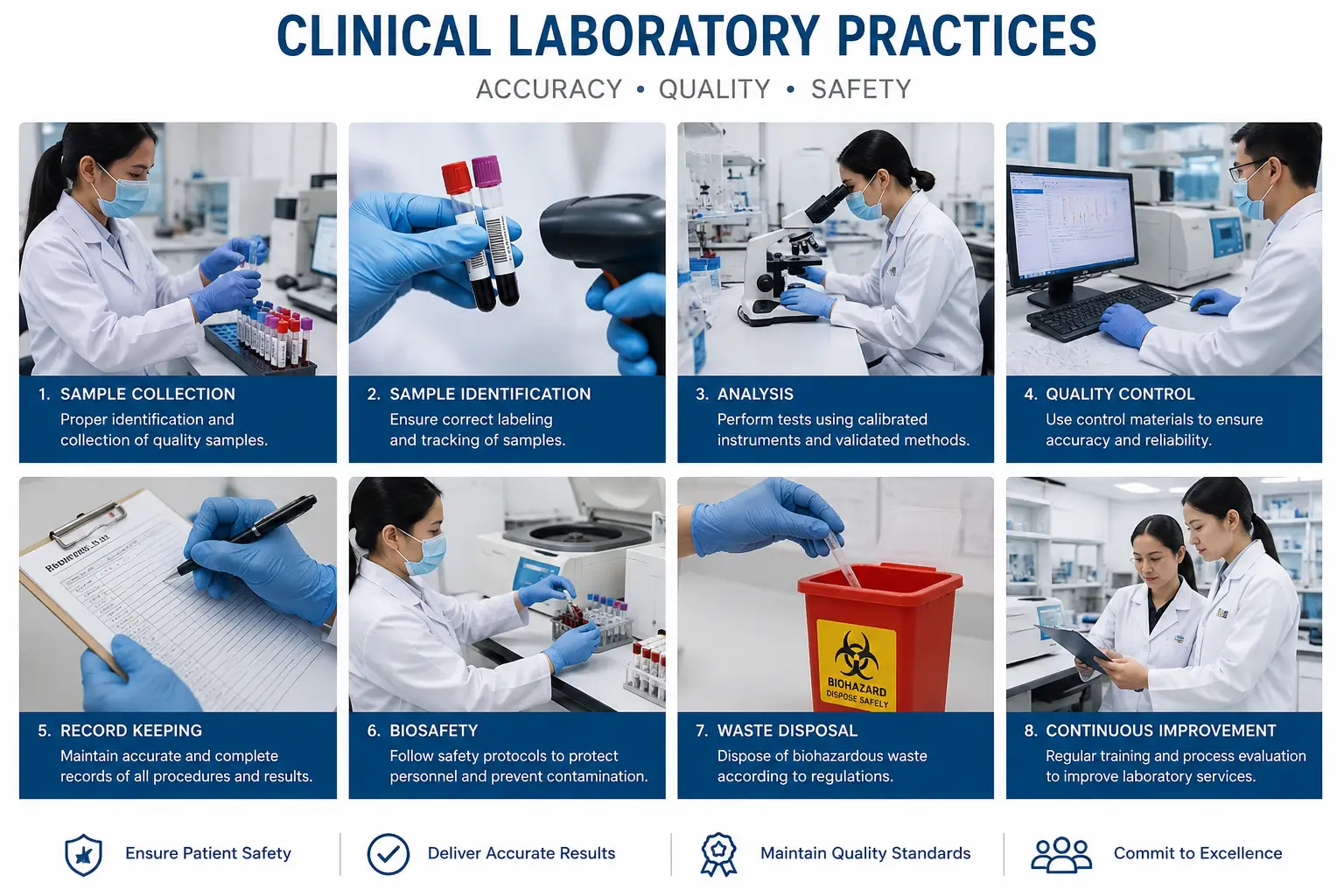
The Clinical Laboratory Practices Course is designed to provide learners with a strong understanding of laboratory procedures, diagnostic testing methods, and healthcare laboratory operations. Moreover, the course covers specimen collection, laboratory safety, quality control, diagnostic techniques, and laboratory management practices. As a result, learners develop the practical knowledge and technical skills required to work effectively in clinical and medical laboratory environments.
Clinical Laboratory Practices Course Overview
Clinical laboratories play a critical role in modern healthcare. Therefore, accurate testing and reliable laboratory procedures are essential for disease diagnosis, treatment planning, and patient care. This Clinical Laboratory Practices Course provides a comprehensive understanding of laboratory operations and diagnostic processes.
In addition, learners explore laboratory technologies, testing protocols, and quality assurance standards. Furthermore, they gain practical insights into maintaining accuracy, safety, and efficiency in laboratory settings.
Fundamentals of Clinical Laboratory Science
The course begins with the fundamentals of clinical laboratory science. Therefore, students learn about laboratory functions, diagnostic procedures, and the role of laboratories in healthcare systems. Moreover, they understand how laboratory testing supports medical decision-making.
These foundations help learners build strong laboratory knowledge.
Laboratory Safety and Ethics
Safety is a top priority in laboratory environments. Consequently, learners study laboratory safety procedures, infection control practices, biohazard management, and workplace regulations. In addition, they explore ethical responsibilities related to patient information and laboratory testing.
As a result, students develop safe and professional laboratory practices.
Specimen Collection and Handling
Accurate specimen collection is essential for reliable test results. Therefore, the course covers specimen identification, collection methods, transportation procedures, and storage requirements. Furthermore, learners understand how proper handling helps maintain sample integrity.
These skills support high-quality laboratory operations.
Diagnostic Testing Procedures
Diagnostic testing is at the heart of clinical laboratory work. Consequently, students learn common laboratory testing techniques, diagnostic methodologies, and result interpretation principles. In addition, they explore testing procedures used in healthcare laboratories.
These concepts strengthen diagnostic laboratory skills.
Laboratory Equipment and Instrumentation
Modern laboratories rely on advanced equipment and technology. Therefore, learners study laboratory instruments, testing devices, calibration procedures, and equipment maintenance practices. Moreover, they understand how technology improves testing accuracy and efficiency.
As a result, students gain practical laboratory technology knowledge.
Quality Control and Quality Assurance
Maintaining accuracy and reliability is essential in laboratory testing. Consequently, the course introduces quality control systems, quality assurance programs, error prevention methods, and laboratory standards. In addition, learners explore techniques for improving laboratory performance.
These skills support reliable testing outcomes.
Laboratory Data Management
Laboratories generate significant amounts of data. Therefore, students learn record-keeping practices, laboratory information systems, data management techniques, and reporting procedures. Furthermore, they understand the importance of confidentiality and data accuracy.
These concepts strengthen laboratory administration capabilities.
Practical Learning and Case Studies
The Clinical Laboratory Practices Course includes practical exercises, laboratory simulations, and real-world case studies. Moreover, learners analyze laboratory scenarios and apply best practices to realistic healthcare situations.
As a result, students gain hands-on experience and industry-relevant knowledge.
Learning Outcomes
By the end of this course, learners will be able to:
- Understand clinical laboratory procedures and operations.
- Apply laboratory safety and infection control practices.
- Perform specimen collection and handling procedures.
- Understand diagnostic testing methods and laboratory workflows.
- Apply quality control and quality assurance principles.
- Operate laboratory equipment effectively.
- Support accurate and reliable healthcare laboratory services.
Who Should Enroll?
This course is ideal for students, laboratory technicians, healthcare professionals, medical assistants, and individuals interested in clinical laboratory science. Moreover, it benefits anyone seeking foundational knowledge of laboratory practices and diagnostic testing.
Conclusion
The Clinical Laboratory Practices Course provides comprehensive training in laboratory safety, specimen handling, diagnostic testing, quality control, and laboratory operations. Furthermore, it combines theoretical concepts with practical applications. As a result, learners gain the expertise needed to support efficient and accurate clinical laboratory services.
9. FAQ SECTION
What is a Clinical Laboratory Practices Course?
A Clinical Laboratory Practices Course teaches laboratory procedures, specimen handling, diagnostic testing, and quality control methods.
Who can enroll in this course?
Students, laboratory technicians, healthcare professionals, and beginners can enroll.
Do I need prior laboratory experience?
No, beginners can learn the fundamentals of clinical laboratory practices.
What skills will I learn?
You will learn laboratory safety, specimen collection, diagnostic testing, quality control, and laboratory management practices.
Is practical training included?
Yes, the course includes laboratory exercises, case studies, and practical learning activities.
Will I receive a certificate?
Yes, learners receive a course completion certificate.
Does the course cover laboratory safety?
Yes, laboratory safety and infection control are major components of the curriculum.
What career opportunities are available?
Career options include Laboratory Technician, Clinical Laboratory Assistant, Medical Laboratory Technician, and Diagnostic Laboratory Support Professional.
Is quality control covered in the course?
Yes, learners study quality assurance and quality control procedures for laboratory testing.
Why should I study Clinical Laboratory Practices?
The course helps develop laboratory skills that support accurate testing, patient care, and healthcare services.




Reviews
There are no reviews yet.