
Introduction
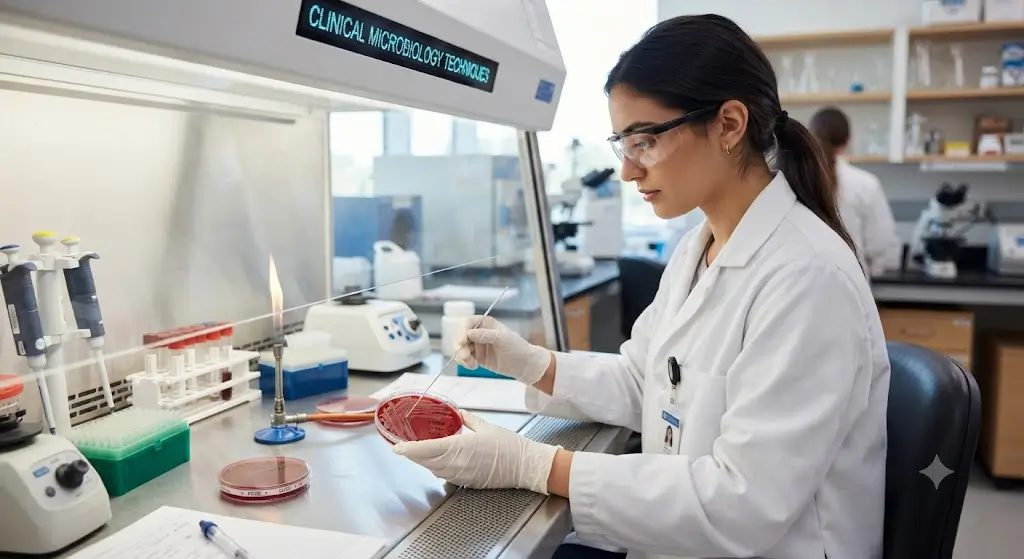
The Clinical Microbiology Techniques Course is a professionally designed training program that introduces learners to the laboratory methods used to identify microorganisms responsible for infectious diseases. Clinical microbiology plays a critical role in modern healthcare by supporting accurate diagnosis, guiding treatment decisions, preventing disease transmission, and improving patient outcomes. Healthcare laboratories rely on standardized microbiological techniques to detect bacteria, viruses, fungi, and parasites while maintaining strict quality and safety standards.
This course provides learners with a solid foundation in specimen collection, microbial culture methods, microscopy, staining procedures, microbial identification, antimicrobial susceptibility testing, laboratory quality management, biosafety practices, and diagnostic reporting. Along with theoretical knowledge, participants gain practical insights into laboratory workflows and the importance of accurate microbiological testing in clinical settings.
Whether you are a microbiology student, laboratory technician, healthcare professional, biomedical science graduate, or someone planning a career in diagnostic laboratories, this course offers practical knowledge and industry-focused skills that support professional growth.
Course Overview
Clinical microbiology laboratories are responsible for detecting infectious microorganisms from patient samples and providing accurate laboratory reports to healthcare providers. Proper specimen handling, reliable laboratory procedures, and quality-controlled testing are essential for achieving accurate diagnostic results.
Throughout this course, learners explore specimen collection methods, laboratory culture techniques, microscopic examination, microbial staining, biochemical identification, antimicrobial susceptibility testing, infection control practices, laboratory documentation, biosafety standards, and quality assurance systems. The curriculum combines theoretical concepts with practical laboratory applications to prepare learners for real-world clinical laboratory environments.
What You Will Learn
During this course, learners will study:
- Fundamentals of clinical microbiology
- Laboratory safety and biosafety principles
- Clinical specimen collection and transportation
- Specimen processing techniques
- Culture media preparation and microbial cultivation
- Microscopy and microscopic examination
- Gram staining and special staining procedures
- Identification of bacteria, fungi, and other microorganisms
- Biochemical testing methods
- Antimicrobial susceptibility testing
- Laboratory quality control and quality assurance
- Diagnostic microbiology documentation
- Infection prevention and control practices
- Ethical laboratory standards
- Emerging technologies in microbiology laboratories
Skills You Will Gain
Upon successful completion of the course, learners will develop skills including:
- Clinical specimen handling
- Microbial culture techniques
- Laboratory microscopy
- Staining and identification methods
- Diagnostic laboratory documentation
- Laboratory safety compliance
- Infection control awareness
- Quality assurance procedures
- Analytical and observational skills
- Scientific problem-solving
These skills are valuable across hospitals, diagnostic laboratories, pathology centers, pharmaceutical companies, biotechnology organizations, public health laboratories, and research institutions.
Benefits of the Course
This course provides learners with a comprehensive understanding of microbiology laboratory procedures used in healthcare diagnostics. Participants strengthen their knowledge of laboratory safety, specimen processing, microbial identification, quality management, and infection prevention while developing practical laboratory competencies.
The course also improves analytical thinking, technical accuracy, documentation skills, and professional confidence. As demand for skilled laboratory professionals continues to grow, expertise in clinical microbiology creates valuable career opportunities across healthcare and life science industries.
Who Should Enroll?
This course is suitable for:
- Microbiology students
- Medical laboratory technicians
- Laboratory technologists
- Healthcare professionals
- Biomedical science graduates
- Pathology laboratory staff
- Research laboratory assistants
- Biotechnology professionals
- Public health laboratory personnel
- Individuals interested in microbiology laboratory careers
No previous laboratory experience is required, making this course suitable for both beginners and working professionals.
Career Opportunities
After completing this course, learners may pursue roles such as:
- Clinical Microbiology Laboratory Technician
- Medical Laboratory Technologist
- Diagnostic Laboratory Assistant
- Microbiology Laboratory Executive
- Biomedical Laboratory Technician
- Research Laboratory Associate
- Infection Control Laboratory Assistant
- Pharmaceutical Laboratory Technician
- Quality Control Associate
- Laboratory Documentation Specialist
The knowledge gained through this course is applicable across hospitals, diagnostic laboratories, pharmaceutical companies, biotechnology firms, research organizations, academic institutions, and public health laboratories.
Certification
Upon successful completion of the course, participants receive a professional certification recognizing their knowledge of clinical microbiology techniques, laboratory safety, microbial identification, specimen handling, antimicrobial susceptibility testing, diagnostic laboratory procedures, and quality assurance practices. This certification enhances professional credibility and supports career advancement in laboratory sciences and healthcare.
Why Choose This Course?
This course combines microbiology fundamentals with practical laboratory applications to provide a complete learning experience. The curriculum focuses on specimen collection, microbial culture, laboratory testing, microscopy, staining methods, biosafety, documentation, quality management, and diagnostic procedures.
Learners gain practical knowledge that prepares them to contribute effectively to diagnostic laboratories while supporting accurate disease diagnosis and improved patient care. Whether your goal is to begin a laboratory career or strengthen your microbiology expertise, this course provides the practical knowledge and professional confidence needed for long-term success.
Start Your Learning Journey
Clinical microbiology is an essential discipline in disease diagnosis and infection control. Completing this course equips learners with laboratory knowledge, technical skills, and professional confidence to pursue rewarding careers in healthcare laboratories, diagnostic centers, pharmaceutical companies, biotechnology organizations, and research facilities.
FAQ Section
1. What is clinical microbiology?
Clinical microbiology is the branch of laboratory science that studies microorganisms causing human diseases and supports disease diagnosis through laboratory testing.
2. Is this course suitable for beginners?
Yes. The course is designed for beginners, microbiology students, laboratory professionals, healthcare workers, and anyone interested in diagnostic laboratory science.
3. What topics are covered?
The course covers specimen collection, microbial culture, microscopy, staining methods, microbial identification, biochemical testing, antimicrobial susceptibility testing, laboratory safety, quality assurance, and infection control.
4. Will I receive a certificate?
Yes. Participants receive a certificate after successfully completing the course.
5. Do I need prior laboratory experience?
No. The course introduces clinical microbiology techniques in a simple and beginner-friendly manner.
6. Who should enroll in this course?
Microbiology students, laboratory technicians, biomedical science graduates, healthcare professionals, research assistants, biotechnology professionals, and individuals planning careers in diagnostic laboratories.
7. Is the course delivered online?
Yes. The course is available online with flexible learning options that allow learners to study at their own pace.
8. What skills will I gain?
You will develop skills in specimen handling, microbial culture, microscopy, laboratory documentation, microbial identification, infection control, laboratory safety, and quality assurance.
9. Can this course improve my career opportunities?
Yes. Clinical microbiology skills are highly valued across hospitals, pathology laboratories, diagnostic centers, pharmaceutical companies, biotechnology firms, research organizations, and public health laboratories.
10. Why are clinical microbiology techniques important?
Clinical microbiology techniques enable accurate identification of infectious microorganisms, support disease diagnosis, guide treatment decisions, improve infection control, and contribute to better patient care.




Reviews
There are no reviews yet.