
Introduction
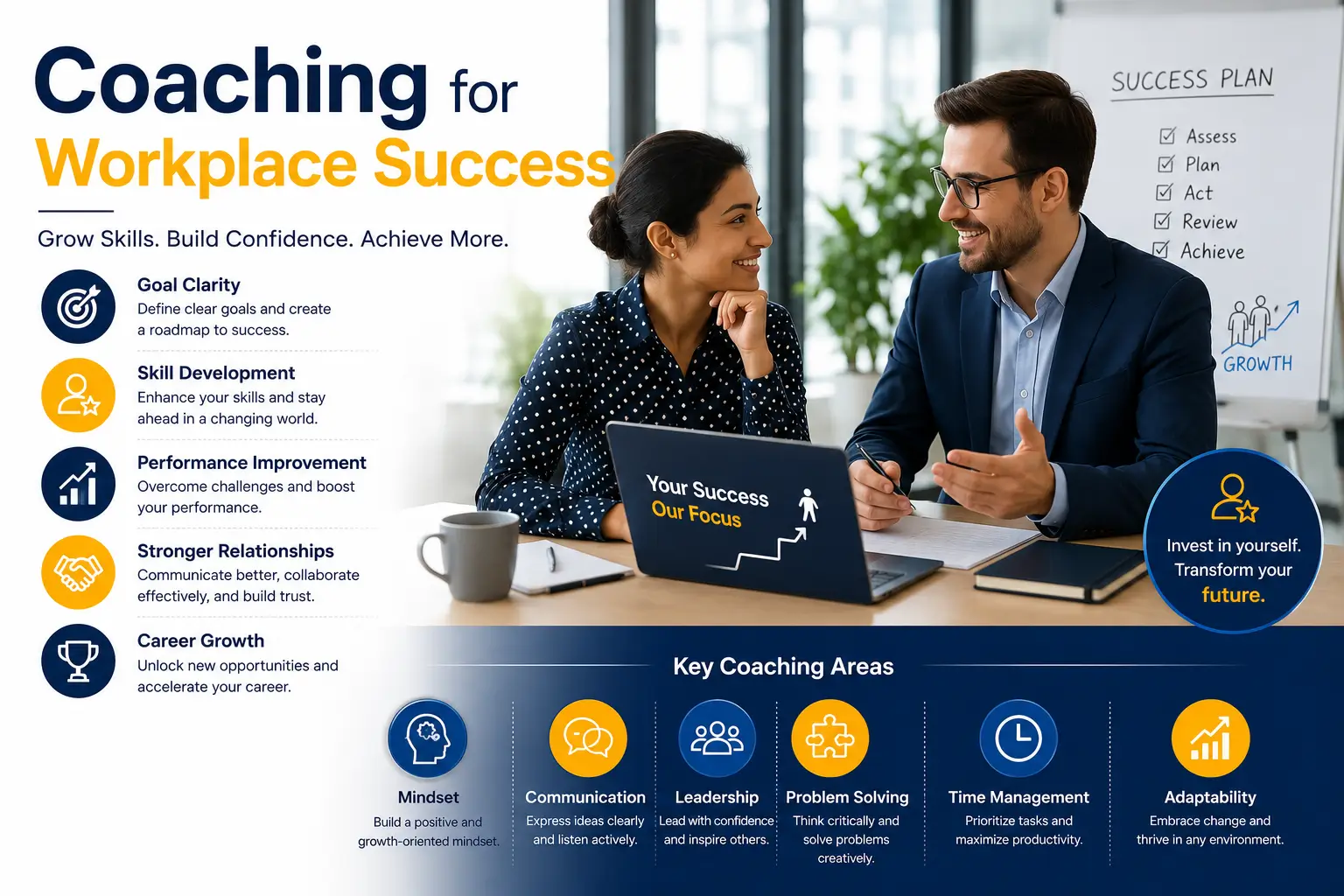
Workplace success depends on strong communication, effective leadership, and continuous employee development. However, many organizations struggle to improve performance because employees lack proper guidance and support. Therefore, workplace coaching has become an important skill for modern professionals.
The Coaching for Workplace Success Course introduces learners to the principles and techniques required to become effective workplace coaches. The course explains how coaching helps individuals improve skills, overcome challenges, and achieve professional goals.
Moreover, workplace coaching is not only about giving instructions. It focuses on listening, understanding challenges, providing feedback, and encouraging personal growth. A strong coaching approach helps create motivated and high-performing teams.
Throughout this course, learners explore coaching models, communication techniques, goal-setting methods, feedback strategies, and employee development practices. Additionally, they understand how successful coaches build trust and improve workplace relationships.
The course also develops practical skills such as active listening, problem-solving, leadership, and emotional intelligence. These abilities help professionals support others effectively.
By completing this course, learners will gain a strong foundation in workplace coaching and understand how coaching contributes to individual and organizational success.
Course Overview
The Coaching for Workplace Success Course provides comprehensive training on workplace coaching methods, leadership communication, employee development, feedback techniques, and performance improvement practices. Furthermore, the course helps learners understand how coaching creates successful workplaces.
Fundamentals of Workplace Coaching
The course begins with coaching concepts, coaching principles, workplace development, and the importance of effective guidance.
Coaching Mindset Development
Learners explore the mindset, attitudes, and behaviors required for becoming successful workplace coaches.
Communication and Active Listening
This section explains effective communication methods, active listening skills, questioning techniques, and relationship building.
Goal Setting and Performance Coaching
Learners understand how to set meaningful goals, support employee performance, and track improvement.
Feedback and Improvement Techniques
The course covers constructive feedback methods, performance discussions, and strategies for encouraging growth.
Employee Development Coaching
Learners explore methods for identifying strengths, improving skills, and supporting career development.
Leadership Coaching Skills
This section explains how leaders use coaching approaches to motivate teams and improve workplace performance.
Handling Workplace Challenges
Learners understand how coaches manage conflicts, workplace issues, and performance-related challenges.
Building Trust and Engagement
The course explains methods for creating positive relationships, improving employee engagement, and encouraging collaboration.
Coaching Tools and Practices
Learners explore practical coaching frameworks, digital tools, and techniques used in professional environments.
Overall, this course combines coaching principles with workplace leadership practices. Therefore, learners develop the skills required to guide individuals and teams toward success.
What You Will Learn
The Coaching for Workplace Success Course helps learners develop practical coaching and leadership skills.
Understand Workplace Coaching Principles
Participants will understand coaching concepts, frameworks, and practices used in professional environments.
Develop Effective Communication Skills
Learners will improve listening, questioning, and communication techniques for better workplace interactions.
Provide Constructive Feedback
This course teaches methods for delivering feedback that supports employee improvement.
Set Professional Goals
Learners will understand how to create goals and support others in achieving them.
Improve Team Performance
Participants will learn coaching methods that encourage teamwork and productivity.
Support Employee Development
The course helps learners identify development needs and create growth opportunities.
Handle Workplace Challenges
Learners will develop skills to manage conflicts and support problem-solving.
Build Leadership Confidence
Participants will gain confidence in guiding, motivating, and developing others.
Skills You Will Gain
After completing the Coaching for Workplace Success Course, learners will develop valuable coaching and leadership skills.
Workplace Coaching Skills
Develop the ability to guide individuals and improve employee performance.
Communication Skills
Learn effective methods for listening, questioning, and workplace communication.
Leadership Skills
Build the ability to motivate teams and support professional growth.
Feedback Skills
Understand techniques for providing constructive and meaningful feedback.
Relationship Building Skills
Develop trust and collaboration in workplace environments.
Emotional Intelligence Skills
Improve self-awareness and understanding of others.
Problem-Solving Skills
Learn approaches for handling workplace challenges effectively.
Performance Management Skills
Understand methods for improving individual and team performance.
Benefits of the Course
The Coaching for Workplace Success Course helps learners develop effective coaching abilities, improve workplace relationships, and support employee growth. Moreover, the course builds practical skills required for successful leadership and team development.
Improve Coaching Abilities
First, learners understand how effective coaching helps individuals improve their skills and performance. As a result, they can guide employees and teams more effectively.
Enhance Communication Skills
Clear communication builds stronger workplace relationships. Therefore, this course helps learners improve listening skills, questioning techniques, and professional conversations.
Support Employee Development
Employees perform better when they receive proper guidance. Additionally, learners understand methods for identifying strengths and supporting professional growth.
Build Stronger Teams
Effective coaching encourages teamwork and collaboration. Furthermore, learners gain knowledge of techniques that improve team engagement and workplace performance.
Improve Leadership Effectiveness
Strong leaders focus on developing people. Consequently, this course helps learners adopt coaching-based leadership approaches.
Provide Better Feedback
Constructive feedback supports continuous improvement. Moreover, learners learn how to provide feedback that encourages positive change.
Increase Workplace Productivity
Coaching improves employee confidence and motivation. Therefore, organizations can achieve better productivity and stronger results.
Develop Emotional Intelligence
Successful coaching requires understanding others. In addition, learners improve self-awareness, empathy, and relationship management skills.
Handle Workplace Challenges
Coaching skills help professionals manage difficult situations. Furthermore, learners develop problem-solving abilities for workplace challenges.
Expand Career Opportunities
Coaching and leadership skills are valuable in many industries. Therefore, this course helps learners prepare for professional growth.
Who Should Enroll
The Coaching for Workplace Success Course is suitable for individuals who want to improve coaching, leadership, communication, and employee development skills.
Managers and Team Leaders
Managers can learn coaching methods to improve team performance and support employee growth.
Human Resource Professionals
HR professionals can develop skills for employee engagement, development programs, and performance improvement.
Business Professionals
Business professionals can understand how coaching supports workplace success and collaboration.
Entrepreneurs and Business Owners
Entrepreneurs can learn how to motivate teams and create a positive workplace culture.
Trainers and Mentors
Trainers can improve their coaching approach and develop better learning experiences.
Project Managers
Project managers can use coaching techniques to improve teamwork and project performance.
Students and Graduates
Students interested in management, leadership, and human resources can gain valuable professional skills.
Consultants
Consultants can strengthen their ability to guide organizations and improve workplace performance.
Career Opportunities
Coaching skills are highly valuable because organizations need professionals who can develop employees, improve teamwork, and create high-performing workplaces. Therefore, learners with coaching knowledge can explore various career opportunities.
Potential career roles include:
- Workplace Coach
- Leadership Coach
- Team Leader
- Human Resource Manager
- Learning and Development Specialist
- Employee Development Manager
- Training Specialist
- Performance Management Specialist
- Organizational Development Consultant
- Project Manager
- Business Manager
- Management Consultant
- Career Coach
- Talent Development Specialist
- People Operations Manager
Professionals can find opportunities in:
- Corporate organizations
- Educational institutions
- Consulting firms
- Healthcare organizations
- Technology companies
- Financial institutions
- Manufacturing industries
- Service businesses
- Startups
- Global enterprises
Furthermore, this course provides a strong foundation for advanced learning in leadership development, human resource management, organizational behavior, and business communication.
Certification
After successfully completing the Coaching for Workplace Success Course, learners will receive a Course Completion Certificate that recognizes their knowledge of workplace coaching, communication methods, feedback techniques, leadership practices, and employee development strategies.
Moreover, the certificate demonstrates your commitment to improving professional coaching and leadership skills. It can strengthen your resume and highlight your ability to support workplace growth.
Additionally, the certification validates your understanding of coaching frameworks, employee engagement methods, performance improvement practices, and communication strategies. Consequently, it supports career growth in leadership, management, and human resource roles.
Conclusion
Workplace coaching plays an important role in improving employee performance, building stronger teams, and creating successful organizations. Effective coaches help individuals develop their skills, overcome challenges, and achieve professional goals. Therefore, coaching has become an essential skill in modern workplaces.
The Coaching for Workplace Success Course provides complete knowledge of coaching techniques, communication methods, feedback practices, leadership approaches, and employee development strategies. Moreover, learners develop practical skills required to guide and support others.
Throughout the course, participants improve their understanding of leadership, relationship building, emotional intelligence, and performance management. In addition, they learn how effective coaching creates positive workplace environments.
Whether your goal is to become a better leader, support employee growth, improve communication skills, or advance your career, this course provides the foundation required for success.
Ultimately, it prepares learners to coach confidently and contribute to workplace excellence.
Frequently Asked Questions (FAQs)
1. What is the Coaching for Workplace Success Course?
The Coaching for Workplace Success Course teaches learners how to develop coaching skills, improve communication, and support employee performance.
2. Who should enroll in this course?
This course is suitable for managers, team leaders, HR professionals, trainers, entrepreneurs, students, and business professionals.
3. Do I need prior coaching experience?
No. The course is suitable for beginners as well as professionals who want to improve their coaching abilities.
4. What topics are covered in this course?
The course covers coaching techniques, communication skills, feedback methods, employee development, leadership coaching, and workplace improvement.
5. What skills will I gain after completing this course?
You will develop skills in coaching, communication, leadership, feedback, emotional intelligence, and performance management.
6. Why is workplace coaching important?
It helps employees improve skills, increases engagement, strengthens teamwork, and supports organizational success.
7. What career opportunities are available after completing this course?
Learners can pursue careers as Workplace Coaches, Leadership Coaches, HR Managers, Training Specialists, and Development Consultants.
8. Will I receive a certificate after completing this course?
Yes. Learners who successfully complete the course will receive a Course Completion Certificate validating their coaching knowledge.
9. How does coaching improve workplace performance?
Coaching improves communication, motivation, accountability, and employee development, which leads to better performance.
10. How can this course benefit my career?
This course strengthens your coaching and leadership skills, improves your professional profile, and prepares you for people-focused roles.




Reviews
There are no reviews yet.