
Introduction
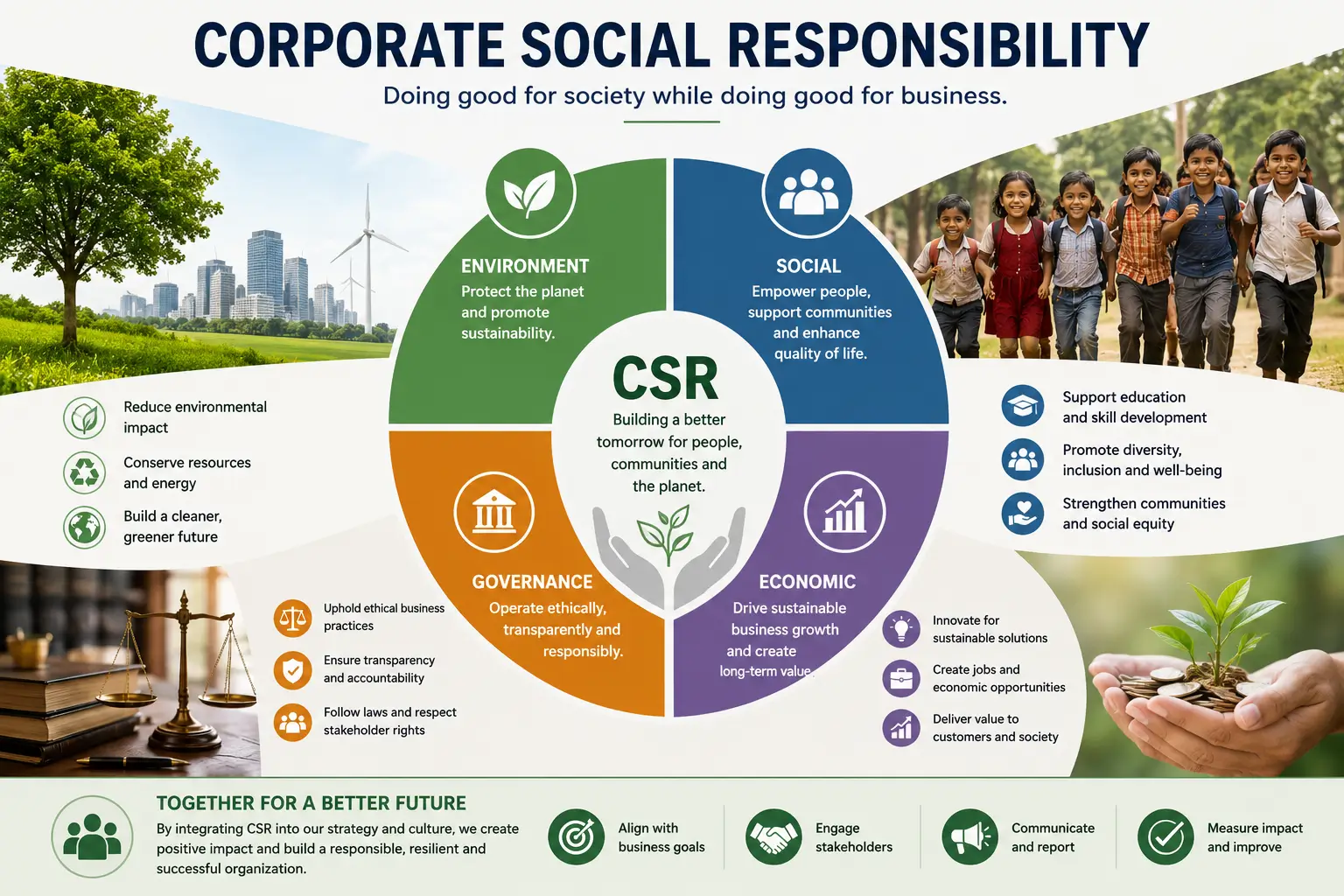
The Corporate Social Responsibility Course is a comprehensive training program designed to help learners understand how businesses can operate responsibly while contributing positively to society. Corporate Social Responsibility (CSR) focuses on ethical business practices, environmental sustainability, and social impact.
In today’s global business environment, organizations are expected to go beyond profit-making and contribute to social, environmental, and ethical standards. Therefore, CSR has become a key part of modern business strategy.
This course introduces learners to CSR principles, sustainability frameworks, ethical decision-making, corporate governance, and community engagement strategies. Participants gain practical knowledge applicable across industries.
Course Overview
Corporate Social Responsibility involves integrating ethical, social, and environmental concerns into business operations.
This course provides a structured approach to understanding how organizations create positive impact while maintaining business growth. Learners explore CSR strategies, ESG principles, sustainability planning, and corporate ethics.
Additionally, participants gain insights into how responsible businesses build trust, improve reputation, and achieve long-term success.
Understanding Corporate Social Responsibility
CSR focuses on the responsibility of businesses toward society and the environment.
Learners will explore:
- CSR fundamentals
- Ethical business principles
- Corporate governance basics
- Sustainability concepts
- Social impact awareness
- Responsible business behavior
These concepts help learners understand the foundation of CSR in modern organizations.
Sustainability and Ethical Practices
Sustainability is a key pillar of CSR.
This section focuses on:
- Environmental sustainability practices
- Ethical decision-making in business
- Resource management strategies
- Waste reduction and efficiency
- Green business initiatives
- Long-term sustainability planning
Participants gain practical knowledge of responsible business operations.
CSR Strategy and Implementation
Effective CSR requires structured planning and execution.
Throughout the course, learners study:
- CSR strategy development
- Stakeholder engagement
- Community development programs
- Corporate philanthropy
- ESG integration basics
- Impact measurement methods
These skills help organizations implement effective CSR initiatives.
Corporate Governance and Responsibility
Good governance ensures accountability and transparency.
Learners explore:
- Corporate governance principles
- Business ethics frameworks
- Compliance and accountability
- Transparency in operations
- Risk management basics
- Ethical leadership practices
These concepts support responsible organizational behavior.
Skills You Will Gain
Upon successful completion of the course, learners will develop skills such as:
- Corporate social responsibility understanding
- Ethical decision-making
- Sustainability planning
- CSR strategy development
- Corporate governance awareness
- Stakeholder management
- ESG basics knowledge
- Community engagement planning
- Responsible business practices
- Impact evaluation skills
These competencies are valuable across corporate organizations, NGOs, consulting firms, and government sectors.
Benefits of the Course
This program offers numerous benefits for learners interested in ethical business and sustainability.
Benefits include:
- Understanding CSR principles
- Improving ethical decision-making
- Learning sustainability practices
- Enhancing corporate awareness
- Supporting responsible business growth
- Building social impact knowledge
As businesses increasingly focus on sustainability, CSR skills remain highly valuable.
Who Should Enroll?
This course is ideal for:
- Business professionals
- Managers
- Entrepreneurs
- HR professionals
- Students
- Corporate executives
- NGO workers
- Sustainability officers
- Consultants
- Policy makers
No prior experience is required.
Career Opportunities
After completing the course, learners may benefit in roles such as:
- CSR Manager
- Sustainability Officer
- Corporate Communications Executive
- HR Manager
- ESG Analyst
- Business Consultant
- Compliance Officer
- NGO Program Manager
- Corporate Affairs Executive
- Ethics and Governance Specialist
These roles exist across corporate companies, NGOs, consulting firms, and public sector organizations.
Certification
Upon successful completion of the Corporate Social Responsibility Course, participants receive a certification recognizing their understanding of CSR principles, sustainability strategies, and ethical business practices.
This certification supports career development in corporate and social impact sectors.
Why Choose This Course?
This course combines practical CSR concepts with real-world sustainability and ethics strategies to create a meaningful learning experience.
Learners gain insights into corporate governance, environmental responsibility, and social impact planning. Furthermore, the curriculum focuses on actionable knowledge that can be applied in modern organizations.
Whether your goal is working in CSR, improving business ethics, or understanding sustainability, this course provides valuable knowledge and skills.
Conclusion
Corporate Social Responsibility is essential for building ethical, sustainable, and socially responsible organizations. Companies that embrace CSR create long-term value for society while strengthening their brand and reputation.
Through sustainability practices, ethical decision-making, governance principles, and CSR strategies, learners gain practical knowledge that supports responsible business development.
As global expectations for ethical business continue to grow, CSR professionals remain highly valuable across industries.
FAQ SECTION
1. What is Corporate Social Responsibility?
Corporate Social Responsibility (CSR) refers to a business’s responsibility toward society, environment, and ethical practices.
2. What will I learn in this course?
You will learn CSR principles, sustainability practices, corporate governance, ethics, ESG basics, and CSR strategy development.
3. Is this course suitable for beginners?
Yes, it is beginner-friendly and suitable for learners from all backgrounds.
4. Do I need business experience?
No prior business experience is required.
5. What skills will I gain from this course?
You will gain skills in CSR strategy, ethical decision-making, sustainability planning, and stakeholder management.
6. Who should enroll in this course?
Business professionals, students, managers, entrepreneurs, and NGO workers should enroll.
7. Why is CSR important?
CSR helps businesses operate ethically, improve reputation, and contribute positively to society.
8. Does this course include practical concepts?
Yes, it includes real-world CSR strategies and implementation techniques.
9. Can this course help in corporate careers?
Yes, CSR skills are valuable in corporate, NGO, and consulting careers.
10. How does CSR benefit businesses?
It improves brand reputation, stakeholder trust, sustainability, and long-term success.





Reviews
There are no reviews yet.