
Introduction to Counseling Fundamentals
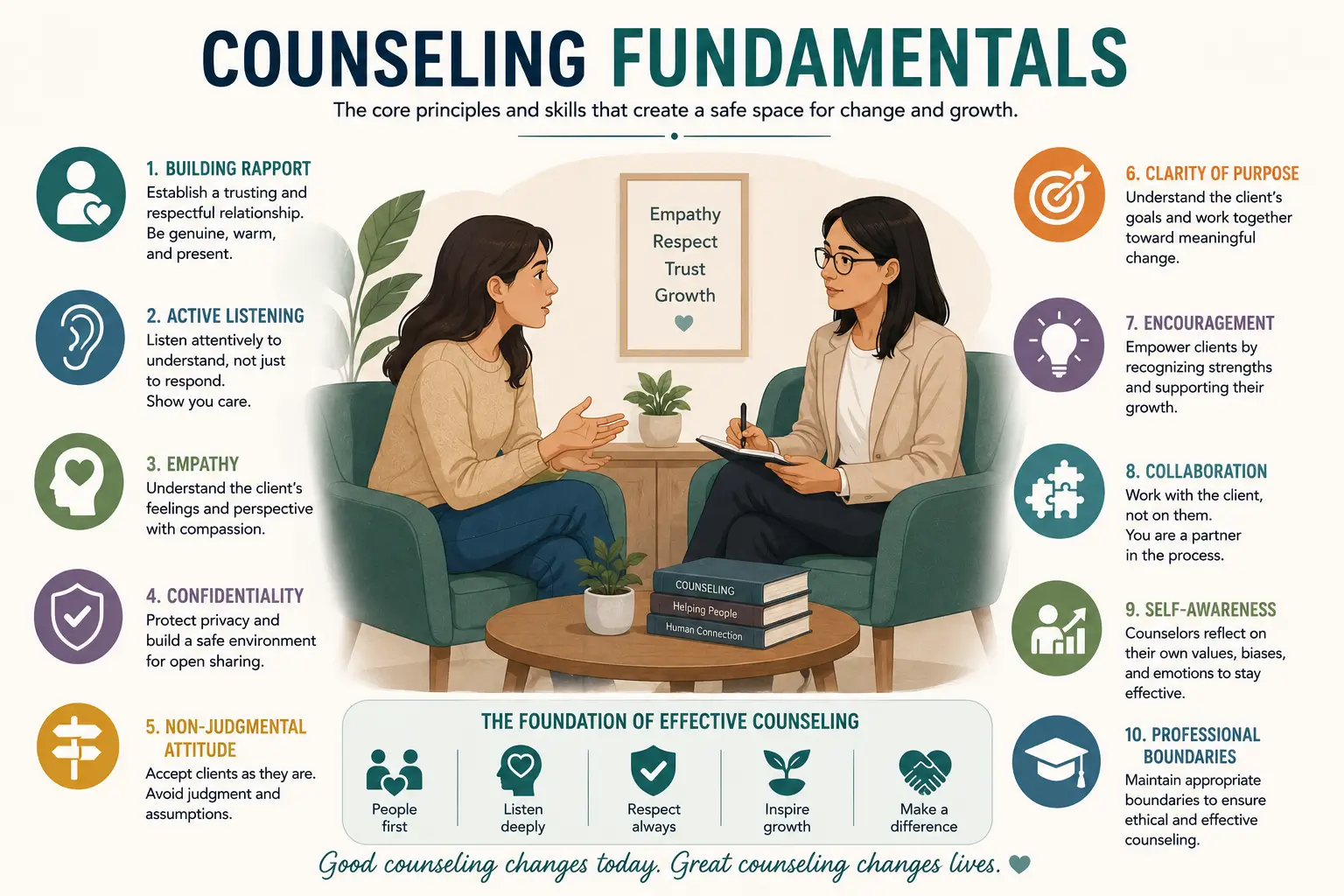
Counseling is a professional helping process that supports individuals in understanding situations, exploring concerns, improving decision-making, and enhancing personal well-being. The Counseling Fundamentals course provides learners with a comprehensive introduction to counseling principles, communication techniques, helping relationships, and supportive interaction skills.
Effective counseling relies on empathy, active listening, trust, respect, and communication. These skills help individuals feel heard, understood, and supported while encouraging personal growth and problem-solving.
This course introduces learners to the foundations of counseling and explores how counseling principles are applied in educational, workplace, healthcare, and community settings.
Importance of Counseling Fundamentals
Counseling skills are valuable in both professional and personal environments.
Studying counseling fundamentals helps learners:
- Improve communication skills
- Develop active listening abilities
- Strengthen interpersonal relationships
- Increase empathy and understanding
- Support effective problem-solving
- Improve emotional awareness
- Enhance helping skills
- Promote positive interactions
These benefits make counseling knowledge valuable across a wide range of professions and situations.
Understanding Counseling Principles
Counseling is based on several important principles that guide supportive interactions.
Respect and Understanding
Learners explore the importance of treating individuals with respect and dignity.
Empathy Awareness
The course explains how understanding another person’s perspective supports helping relationships.
Trust Building
Participants gain awareness of the role of trust in effective counseling.
Supportive Communication
Learners understand how communication contributes to positive outcomes.
These principles form the foundation of effective counseling practices.
Active Listening Skills
Listening is one of the most important counseling skills.
The course introduces:
Listening Awareness
Understanding the role of attentive listening in counseling.
Communication Understanding
Learning how listening improves interpersonal interactions.
Information Gathering
Exploring how counselors understand concerns through communication.
Response Techniques
Understanding supportive communication methods.
Active listening helps create positive and productive helping relationships.
Empathy and Emotional Awareness
Empathy is a core component of counseling.
Learners explore:
Understanding Emotions
Recognizing emotional experiences and responses.
Compassionate Communication
Learning how empathy supports supportive conversations.
Emotional Awareness
Understanding the importance of recognizing feelings and perspectives.
Relationship Development
Exploring how empathy strengthens helping relationships.
These concepts help create supportive and respectful interactions.
Building Helping Relationships
Strong helping relationships are essential in counseling environments.
The course covers:
Relationship Skills
Understanding how positive relationships are developed.
Trust and Rapport
Learning the importance of creating comfortable communication environments.
Respectful Interaction
Exploring professional and supportive communication practices.
Client-Centered Awareness
Understanding the importance of focusing on individual needs and perspectives.
Helping relationships encourage communication, growth, and understanding.
Communication in Counseling
Effective communication supports successful counseling outcomes.
Learners gain awareness of:
- Verbal communication skills
- Non-verbal communication awareness
- Questioning techniques
- Supportive responses
- Interpersonal communication
- Professional communication practices
These communication skills are valuable in counseling and many other professions.
Ethical Awareness in Counseling
Ethical behavior is an important part of counseling practice.
The course discusses:
Professional Responsibility
Understanding appropriate conduct in helping relationships.
Respect for Individuals
Learning the importance of fairness and respect.
Confidentiality Awareness
Exploring the importance of privacy and trust.
Ethical Decision-Making
Understanding responsible communication and support practices.
Ethical awareness contributes to professionalism and trust.
Counseling Applications in Everyday Settings
Counseling principles are useful in many environments.
Learners understand applications in:
Education
Supporting students and learning environments.
Workplace Settings
Improving communication and employee support.
Community Services
Assisting individuals and groups within communities.
Personal Development
Applying counseling skills to improve relationships and communication.
These applications demonstrate the practical value of counseling knowledge.
Skills You Will Gain
Upon completing this course, learners may develop:
- Active listening skills
- Communication skills
- Empathy awareness
- Relationship-building abilities
- Emotional awareness
- Helping skills
- Problem-solving support awareness
- Professional communication understanding
- Ethical awareness
- Interpersonal effectiveness
These competencies are valuable in education, healthcare, human services, and workplace environments.
Benefits of Studying Counseling Fundamentals
This course offers several valuable benefits:
- Improved communication abilities
- Better listening skills
- Enhanced empathy awareness
- Stronger interpersonal relationships
- Increased emotional understanding
- Improved helping skills
- Greater professional awareness
- Preparation for advanced counseling studies
The knowledge gained helps learners become more effective communicators and supportive individuals.
Who Should Join
This course is suitable for:
- Students
- Teachers
- Human resource professionals
- Community workers
- Healthcare support staff
- Social service learners
- Workplace professionals
- Personal development enthusiasts
- Communication learners
- Beginners interested in counseling
No prior experience is required.
Career Opportunities
After completing this course, learners may explore opportunities such as:
- Counseling Assistant
- Community Support Worker
- Human Resources Assistant
- Student Support Assistant
- Social Service Support Worker
- Customer Relations Executive
- Employee Support Coordinator
- Education Support Assistant
- Community Outreach Assistant
- Communication Support Associate
FAQ Section
1. What is Counseling Fundamentals?
It is a beginner-friendly course that introduces counseling principles, communication skills, and helping relationships.
2. Who can join this course?
Students, teachers, professionals, and anyone interested in helping others can join.
3. Do I need prior counseling knowledge?
No, the course is designed for beginners.
4. What will I learn?
You will learn active listening, empathy, communication skills, relationship-building, and counseling principles.
5. Why is counseling important?
Counseling helps support communication, understanding, personal growth, and problem-solving.
6. Does the course cover active listening?
Yes, active listening is one of the core topics covered in the course.
7. What skills will I gain?
You will gain communication skills, empathy awareness, listening abilities, and interpersonal effectiveness.
8. Is this course suitable for beginners?
Yes, it is specifically designed for learners with no prior experience.
9. Can this course support careers in human services and education?
Yes, it provides foundational knowledge useful in counseling, education, community services, and human resources.
10. Is Counseling Fundamentals useful for personal development?
Yes, it helps improve communication, relationships, emotional awareness, and supportive interaction skills.




Reviews
There are no reviews yet.