
Introduction to Cultural Tourism Management
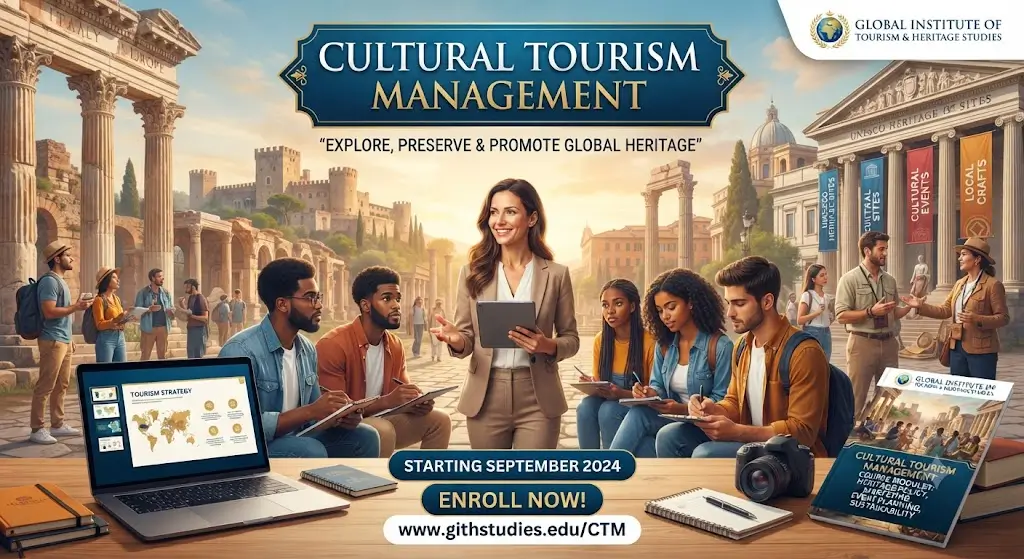
The Cultural Tourism Management Course is a comprehensive professional training program designed to prepare learners for managing tourism experiences centered on history, art, architecture, traditions, festivals, cuisine, heritage sites, museums, and local cultures. Cultural tourism connects travelers with the identity and traditions of destinations while generating economic opportunities for local communities.
Effective cultural tourism management requires balancing visitor demand with heritage conservation, community participation, and sustainable destination development. Tourism organizations must protect cultural resources while creating engaging, educational, and memorable experiences for visitors.
This course combines tourism management principles with heritage management strategies to help learners understand how cultural tourism contributes to economic development, cultural preservation, destination branding, and community empowerment. Whether working in museums, heritage sites, tourism boards, cultural organizations, or destination management companies, participants gain practical knowledge applicable across the tourism and hospitality industry.
Why Cultural Tourism Management Matters
Cultural tourism is one of the fastest-growing segments of the global tourism industry. Travelers increasingly seek authentic experiences that allow them to explore local history, traditions, arts, architecture, festivals, cuisine, and cultural lifestyles.
Professional cultural tourism management helps protect heritage resources, improve visitor experiences, strengthen destination identity, support local artisans, increase tourism revenue, and encourage sustainable development. It also promotes cross-cultural understanding while preserving traditions for future generations.
The Cultural Tourism Management Course helps learners understand how responsible cultural tourism management creates long-term benefits for destinations, visitors, and local communities.
Course Overview
The Cultural Tourism Management Course introduces learners to the planning, promotion, and management of cultural tourism destinations and experiences.
Participants begin by studying cultural tourism concepts, heritage resources, visitor behavior, and destination planning. The course explores heritage conservation, museum management, cultural interpretation, tourism marketing, event planning, community participation, sustainability, tourism policy, and destination branding.
Learners also study digital technologies, visitor engagement, quality management, risk management, tourism regulations, cultural entrepreneurship, and performance evaluation.
Practical case studies demonstrate how successful destinations preserve cultural heritage while creating engaging tourism experiences that strengthen destination competitiveness and community development.
Topics Covered
Throughout the Cultural Tourism Management Course, learners will study:
Cultural Tourism Fundamentals
Understand cultural tourism concepts, visitor motivations, tourism markets, and heritage tourism principles.
Heritage Conservation
Learn heritage preservation, archaeological site management, conservation planning, restoration principles, and cultural resource protection.
Destination Planning
Study destination development, cultural tourism planning, infrastructure management, visitor flow, and sustainable destination strategies.
Museum and Heritage Site Management
Explore museum operations, exhibition planning, interpretation techniques, educational programming, and visitor services.
Cultural Interpretation
Understand storytelling, guided tours, heritage communication, visitor engagement, multilingual interpretation, and educational experiences.
Tourism Marketing
Learn destination branding, digital marketing, cultural tourism promotion, content creation, social media strategies, and tourism campaigns.
Community-Based Tourism
Study local community participation, artisan development, indigenous tourism, cultural entrepreneurship, and stakeholder collaboration.
Sustainable Cultural Tourism
Explore responsible tourism, environmental conservation, cultural preservation, ethical tourism practices, and sustainable destination management.
Tourism Technology
Understand digital heritage platforms, virtual tours, online booking systems, customer relationship management (CRM), and tourism analytics.
Performance Evaluation
Learn visitor satisfaction measurement, quality assurance, tourism indicators, impact assessment, reporting, and continuous improvement.
Skills You Will Gain
After completing the Cultural Tourism Management Course, learners will develop valuable professional skills including:
- Cultural tourism management
- Heritage conservation
- Destination planning
- Museum management
- Visitor experience management
- Tourism marketing
- Community engagement
- Sustainable tourism practices
- Tourism technology
- Stakeholder management
- Leadership
- Communication
- Strategic planning
- Problem-solving
- Decision-making
These competencies are valuable across museums, heritage sites, tourism boards, destination management organizations, hotels, resorts, cultural institutions, NGOs, government agencies, and tourism consultancies.
Benefits of the Course
The Cultural Tourism Management Course equips learners with practical knowledge for managing cultural tourism destinations while preserving heritage and supporting sustainable tourism development.
Participants gain confidence in planning cultural tourism experiences, protecting heritage resources, engaging communities, promoting destinations, and improving visitor satisfaction. The course also strengthens leadership, communication, analytical thinking, and project management skills that support long-term career growth.
As travelers increasingly seek authentic cultural experiences, professionals with expertise in cultural tourism management continue to be highly valued across the global tourism industry.
Who Should Enroll?
This course is suitable for:
- Tourism management students
- Heritage professionals
- Museum staff
- Destination managers
- Hospitality professionals
- Tourism consultants
- Travel planners
- Tourism entrepreneurs
- Government tourism officers
- Individuals interested in cultural tourism
No previous cultural tourism experience is required.
Career Opportunities
After completing the Cultural Tourism Management Course, learners may pursue careers such as:
- Cultural Tourism Manager
- Heritage Site Manager
- Museum Manager
- Destination Development Officer
- Tourism Consultant
- Cultural Events Coordinator
- Heritage Interpretation Specialist
- Tourism Marketing Executive
- Destination Manager
- Community Tourism Coordinator
- Tourism Project Manager
- Cultural Program Manager
- Tourism Development Officer
- Heritage Conservation Coordinator
- Hospitality and Tourism Manager
Certification
Upon successful completion of the Cultural Tourism Management Course, learners receive a professional certificate recognizing their expertise in cultural tourism management, heritage conservation, destination planning, tourism marketing, community engagement, sustainability, tourism technology, and visitor experience management. This certification supports career advancement across museums, heritage organizations, tourism boards, destination management organizations, government agencies, hospitality businesses, and cultural institutions.
Frequently Asked Questions (FAQs)
1. What is the Cultural Tourism Management Course?
The course teaches how to develop, promote, and manage cultural tourism experiences while preserving heritage and supporting sustainable tourism.
2. Who should enroll in this course?
Tourism students, heritage professionals, museum staff, hospitality managers, destination planners, tourism consultants, entrepreneurs, and government tourism officers can benefit from this course.
3. Do I need previous cultural tourism experience?
No. The course is suitable for beginners as well as professionals seeking to strengthen their cultural tourism management skills.
4. What topics are covered?
Topics include cultural tourism, heritage conservation, museum management, destination planning, tourism marketing, community engagement, sustainability, tourism technology, and visitor experience management.
5. Will I receive a certificate?
Yes. Participants receive a certificate after successfully completing the course.
6. What skills will I develop?
You will develop skills in heritage management, destination planning, cultural interpretation, tourism marketing, visitor management, sustainability, leadership, and stakeholder collaboration.
7. Is this course suitable for museum and heritage professionals?
Yes. The course is highly relevant for museum professionals, heritage site managers, cultural organizations, tourism boards, and destination management agencies.
8. Can this course improve my tourism career?
Yes. It prepares learners for planning, management, consulting, heritage conservation, marketing, and leadership positions across tourism and cultural organizations.
9. Does the course include tourism technology?
Yes. The course introduces virtual tours, digital heritage platforms, CRM systems, tourism analytics, and online visitor engagement tools.
10. Why is cultural tourism management important?
Cultural tourism management protects heritage, supports local communities, enhances visitor experiences, strengthens destination identity, encourages sustainable tourism, and contributes to long-term economic development.





Reviews
There are no reviews yet.