
Introduction
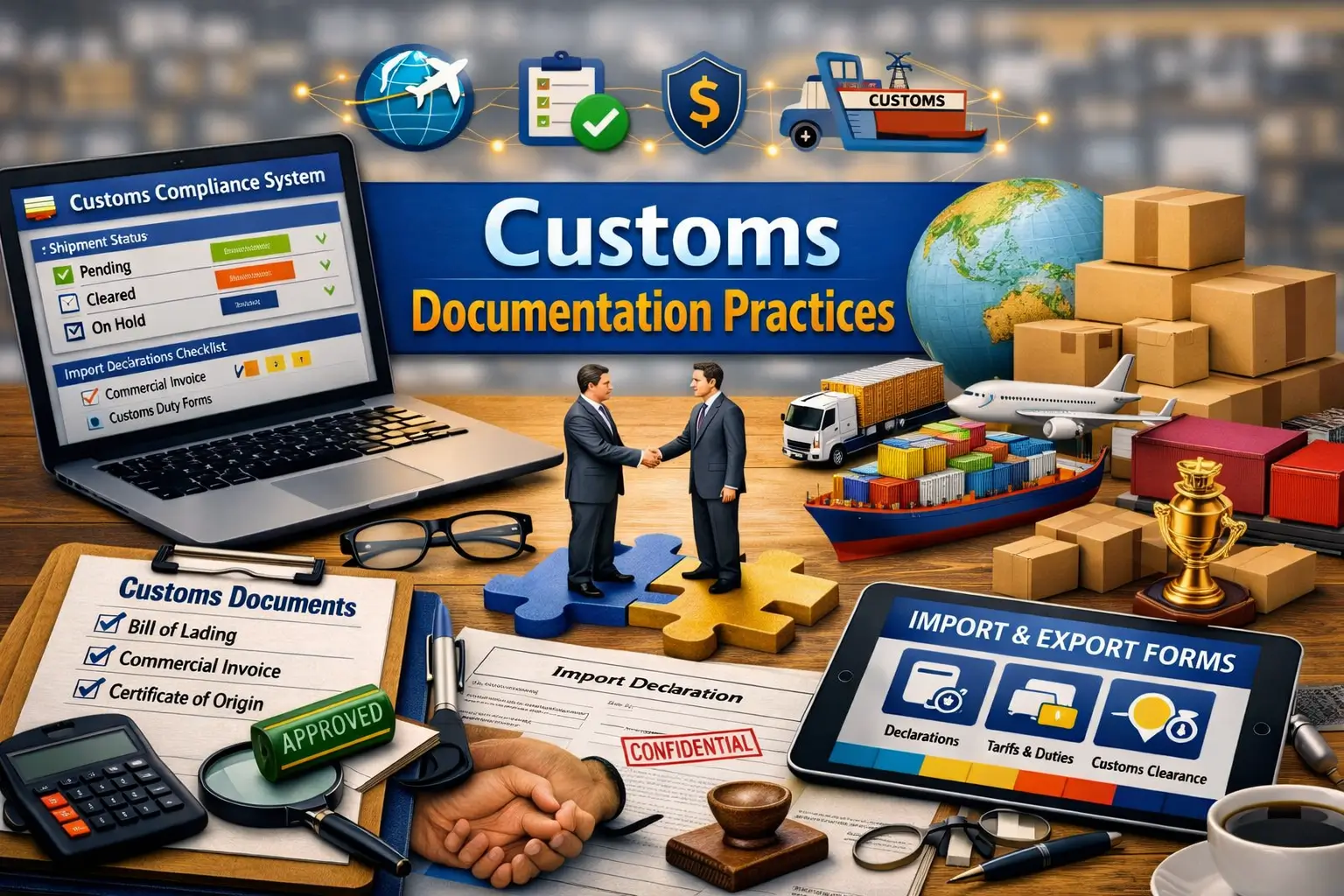
International trade depends on accurate customs documentation to ensure goods move smoothly across borders while complying with national and international regulations. Proper documentation reduces shipment delays, minimizes legal risks, and supports efficient customs clearance processes. The Customs Documentation Practices Course introduces learners to the principles, procedures, and best practices required for managing customs documentation effectively.
Customs documentation involves preparing, verifying, and maintaining the records required for importing and exporting goods. Therefore, professionals with expertise in customs documentation play a vital role in supporting international trade, logistics operations, and regulatory compliance.
Moreover, this course explains how organizations prepare customs declarations, shipping documents, commercial invoices, packing lists, certificates of origin, bills of lading, and other trade-related documents. Learners explore customs regulations, tariff classifications, import-export compliance, documentation accuracy, and international shipping procedures.
In addition, participants develop practical skills in documentation management, customs coordination, compliance verification, analytical thinking, and international trade administration. These competencies prepare learners for careers in customs operations, logistics management, freight forwarding, shipping, international business, and supply chain management.
By completing this course, learners establish a strong foundation in customs documentation practices while contributing to efficient international trade, regulatory compliance, and successful global logistics operations.
Course Overview
The Customs Documentation Practices Course provides comprehensive training in customs documentation, import-export procedures, trade compliance, shipping documentation, customs clearance, and international logistics management. Furthermore, the course explains how organizations ensure accurate and compliant customs processes.
Fundamentals of Customs Documentation
The course begins by introducing the core concepts of customs documentation and its importance in international trade. Learners understand customs procedures, documentation requirements, compliance standards, and regulatory frameworks.
Import and Export Documentation
Learners explore the documents required for international trade, including commercial invoices, packing lists, shipping instructions, certificates, and customs declarations.
Customs Clearance Procedures
The course explains customs clearance processes, inspection procedures, regulatory approvals, and documentation verification methods.
Tariff Classification and Trade Compliance
Participants learn tariff codes, customs valuation, trade regulations, import-export restrictions, and compliance management practices.
Freight and Shipping Documentation
Learners understand bills of lading, airway bills, freight invoices, cargo documentation, shipping instructions, and transportation records.
Digital Customs Documentation Systems
The course covers electronic documentation, customs software, digital filing systems, online trade platforms, and document automation.
Documentation Accuracy and Risk Management
Learners explore methods for preventing documentation errors, reducing compliance risks, maintaining records, and improving operational accuracy.
International Trade Regulations
Participants learn international trade agreements, customs policies, documentation standards, and global trade compliance requirements.
Record Management and Auditing
The course explains document storage, record maintenance, audit preparation, compliance monitoring, and documentation control.
Future Trends in Customs Documentation
Finally, learners explore automation, blockchain, artificial intelligence, paperless trade systems, and emerging technologies transforming customs documentation.
Overall, this course combines customs knowledge with international trade practices, enabling learners to understand every aspect of customs documentation while preparing them for careers in logistics, customs operations, and global trade.
What You Will Learn
The Customs Documentation Practices Course equips learners with practical knowledge and skills required to prepare, verify, and manage customs documentation for international trade.
Understanding Customs Documentation Principles
First, learners understand customs regulations, documentation standards, compliance requirements, and international trade procedures.
Preparing Import and Export Documents
Participants learn how to prepare commercial invoices, packing lists, certificates, shipping documents, and customs declarations.
Managing Customs Clearance
Learners explore customs clearance procedures, documentation verification, inspections, and regulatory compliance.
Applying Tariff Classification
The course teaches learners tariff coding, customs valuation, and trade classification methods.
Maintaining Documentation Accuracy
Participants gain knowledge of document verification, record management, compliance monitoring, and error prevention techniques.
Using Digital Customs Systems
Learners develop an understanding of customs software, electronic documentation, and paperless trade platforms.
Supporting International Logistics
The course explains how customs documentation supports freight operations, supply chain management, and global trade.
Improving Compliance Management
Participants learn methods for ensuring legal compliance, reducing documentation risks, and supporting efficient customs operations.
Skills You Will Gain
After completing the Customs Documentation Practices Course, learners will develop valuable customs, logistics, and international trade management skills.
Customs Documentation Skills
Develop the ability to prepare, verify, and manage customs documentation accurately.
Import-Export Management Skills
Learn documentation procedures used in international import and export operations.
Trade Compliance Skills
Gain knowledge of customs regulations, tariff classifications, and international trade compliance.
Freight Documentation Skills
Understand shipping documents, cargo records, bills of lading, and freight management processes.
Analytical Skills
Develop the ability to review documentation, identify errors, and maintain compliance.
Problem-Solving Skills
Learn how to resolve documentation issues and support efficient customs clearance.
Technology Skills
Understand digital customs systems, electronic documentation, and automation tools.
Administrative Skills
Develop strong documentation management, record-keeping, and compliance monitoring abilities.




Reviews
There are no reviews yet.