
Introduction
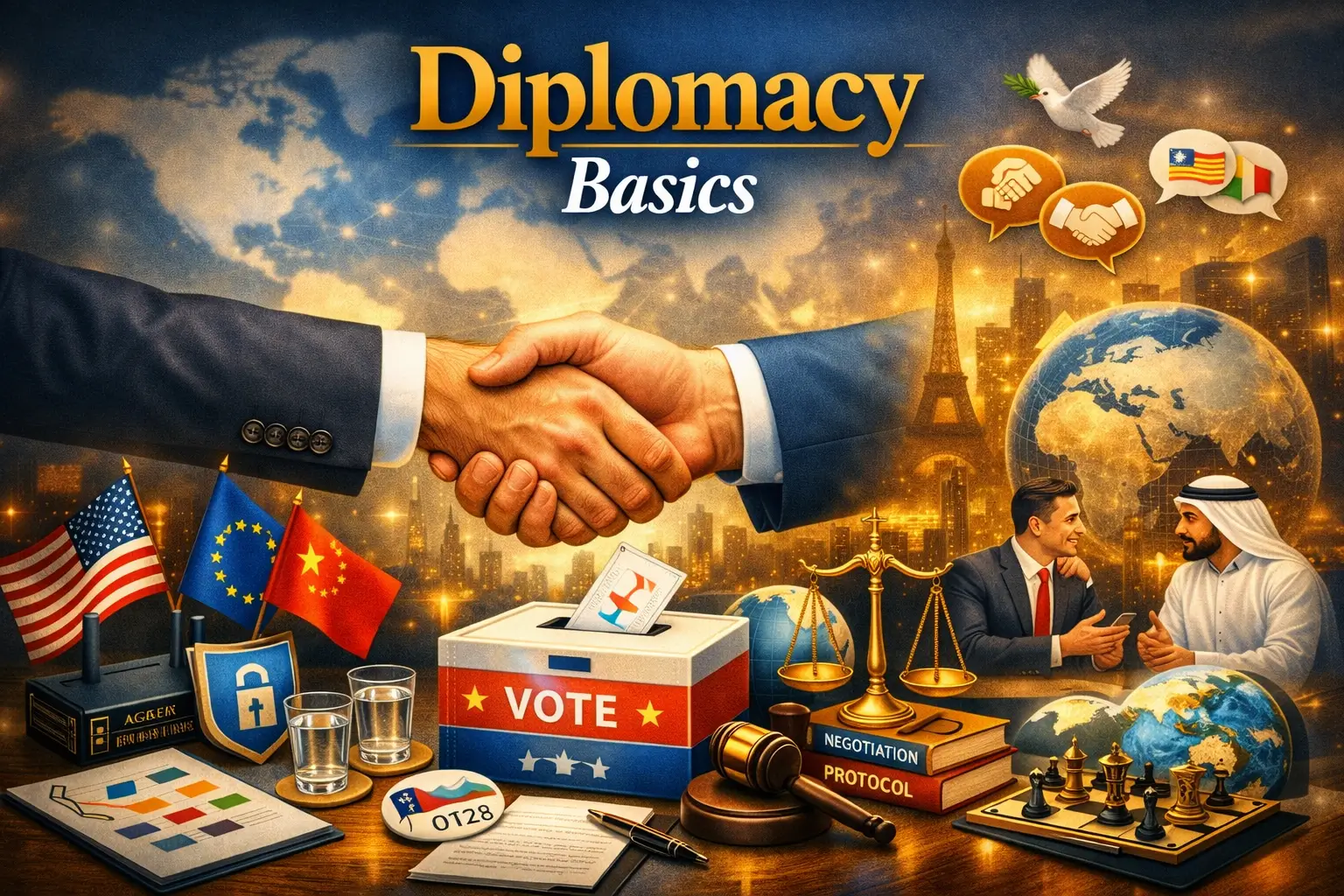
The Diplomacy Basics Course is a comprehensive introductory program designed to help learners understand how diplomatic relations shape global peace and cooperation. As countries interact across political, economic, and cultural boundaries, diplomacy becomes essential. Therefore, learning diplomacy basics is highly important.
Diplomacy refers to the practice of managing international relations through negotiation and communication. As a result, it helps maintain peaceful relations between nations.
Whether for academic knowledge or career growth, this course provides essential global communication skills.
Course Overview
Modern global systems depend heavily on diplomatic relations. Therefore, understanding diplomacy is critical.
In this course, learners explore diplomatic communication, negotiation strategies, international protocols, conflict resolution, and foreign relations basics. Additionally, participants gain knowledge of global interaction and representation systems.
The course combines theoretical understanding with practical diplomatic scenarios.
What You Will Learn
First, learners will understand the basics of diplomacy. Next, they will learn how international communication works.
After that, learners will explore negotiation and conflict resolution techniques. Moreover, the course explains how diplomatic missions operate.
Finally, participants will gain practical awareness of global diplomatic systems.
Skills You Will Gain
- Diplomacy fundamentals
- International communication skills
- Negotiation techniques
- Conflict resolution skills
- Foreign relations understanding
- Public diplomacy awareness
- Global etiquette knowledge
- Critical thinking in diplomacy
- Cultural sensitivity skills
- Policy interpretation basics
Additionally, these skills are valuable in government, NGOs, and international organizations.
Benefits of the Course
First and foremost, this course improves communication and negotiation skills. In addition, it enhances global awareness.
Furthermore, learners gain understanding of international cooperation. As a result, they become more effective communicators in global contexts.
At the same time, diplomacy knowledge supports peaceful conflict resolution.
Who Should Enroll?
This course is ideal for:
- Students
- Beginners
- Civil service aspirants
- Political science learners
- International relations students
- NGO workers
- Communication enthusiasts
- Social science learners
- Career changers
- Anyone interested in global affairs
No prior experience is required. Therefore, beginners can easily start learning.
Career Opportunities
After completing this course, learners may pursue roles such as:
- Diplomatic Support Assistant
- International Relations Assistant
- Policy Research Assistant
- NGO Global Programs Staff
- Foreign Affairs Support Staff
- Communication Coordinator (Entry Level)
- Government Policy Assistant
- Embassy Support Staff (Entry Level)
- Public Relations Assistant
- Global Affairs Support Staff
Moreover, these skills are highly valuable in embassies, government offices, NGOs, and international organizations.
Certification
Upon completion, learners receive a certification validating their diplomacy basics and international communication knowledge. This certificate demonstrates readiness for entry-level roles in diplomacy, governance, and global affairs.
Conclusion
In conclusion, the Diplomacy Basics Course provides a strong foundation for understanding international communication and negotiation. Overall, it helps learners develop confidence, cultural awareness, and global thinking.
Moreover, it prepares individuals to engage in peaceful and effective international interactions. As a result, learners become more informed and capable global communicators.
Finally, whether for education or career growth, this course builds essential diplomacy skills for a connected world.
FAQ Section
1. What is Diplomacy Basics?
It is a course that teaches international communication, negotiation, and diplomacy skills.
2. Is this course suitable for beginners?
Yes, it is designed for beginners with no prior experience.
3. What topics are covered?
Diplomacy, negotiation, and international relations basics are covered.
4. Do I need experience?
No prior experience is required.
5. Will I get a certificate?
Yes, a certificate is provided after completion.
6. Who should take this course?
Students, civil service aspirants, and global learners should take it.
7. What skills will I learn?
You will learn diplomacy, communication, and negotiation skills.
8. Where are these skills used?
These skills are used in government, NGOs, and international organizations.
9. Can this course help in getting a job?
Yes, it helps in diplomatic and communication support roles.
10. What jobs can I get after this course?
You can work as Diplomatic Assistant, Policy Support Staff, or International Relations Assistant.




Reviews
There are no reviews yet.