
Introduction
Efficient distribution is essential for businesses that need to deliver products quickly, reliably, and cost-effectively. Poor route planning can increase transportation expenses, create delivery delays, and reduce customer satisfaction. Therefore, organizations require effective distribution route planning strategies to improve logistics performance.
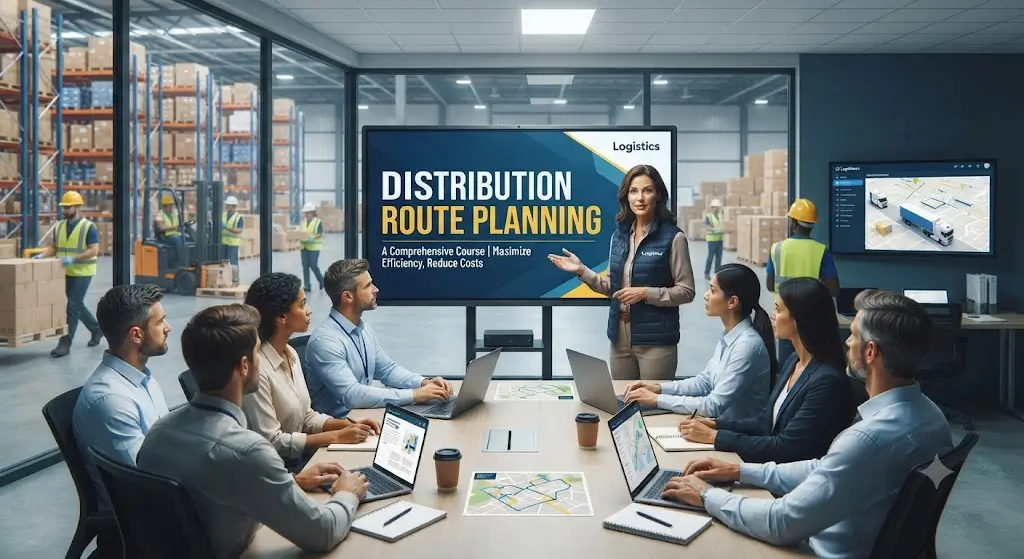
The Distribution Route Planning Course introduces learners to the principles, methods, and tools used to design optimized delivery routes. The course explains how businesses analyze transportation requirements, manage delivery schedules, and improve fleet utilization.
Moreover, route planning involves balancing multiple factors such as delivery locations, vehicle capacity, traffic conditions, customer requirements, and operational costs. By applying effective planning techniques, organizations can improve efficiency and maintain reliable delivery services.
Throughout this course, learners explore route optimization methods, transportation management, geographic analysis, delivery planning, logistics technology, and performance evaluation. In addition, they understand how data and digital solutions support smarter route decisions.
The course also develops practical skills such as analytical thinking, problem-solving, resource planning, and operational decision-making. These abilities help professionals manage distribution networks and improve transportation outcomes.
By completing this course, learners will gain a strong foundation in distribution route planning and understand how optimized routing contributes to successful supply chain operations.
Course Overview
The Distribution Route Planning Course provides comprehensive training on route optimization, transportation planning, delivery management, logistics analytics, and distribution network improvement. Furthermore, the course explains how organizations create efficient delivery strategies.
Fundamentals of Distribution Route Planning
The course begins with the basics of route planning, including distribution concepts, transportation challenges, delivery requirements, and the importance of efficient routing.
Transportation Planning Strategies
Learners explore transportation planning methods, delivery scheduling, fleet management, resource allocation, and improving logistics efficiency.
Route Optimization Techniques
This section explains route design, distance reduction, delivery sequencing, cost optimization, and methods for improving transportation performance.
Geographic and Location Analysis
Learners understand geographic factors, delivery zones, location planning, mapping solutions, and analyzing distribution areas.
Fleet Management and Vehicle Utilization
The course covers fleet planning, vehicle capacity management, driver coordination, fuel efficiency, and improving vehicle productivity.
Delivery Scheduling Management
Learners explore delivery time planning, customer requirements, order priorities, and methods for improving delivery reliability.
Logistics Data Analysis
This section explains transportation data, performance metrics, analytics methods, reporting, and data-driven route improvement.
Technology in Route Planning
Learners understand GPS systems, route optimization software, transportation management systems, automation tools, and digital logistics solutions.
Cost and Performance Optimization
The course covers transportation cost analysis, efficiency measurement, performance evaluation, and continuous improvement strategies.
Future Trends in Distribution Planning
Finally, learners explore artificial intelligence, predictive analytics, autonomous delivery systems, smart logistics, and future developments in route optimization.
Overall, this course combines logistics management with strategic route planning techniques. Therefore, learners develop the skills required to improve delivery efficiency and optimize distribution operations.
What You Will Learn
The Distribution Route Planning Course equips learners with practical knowledge and skills required to manage efficient delivery and transportation operations.
Understand Route Planning Concepts
Learners will understand distribution networks, routing principles, transportation challenges, and efficient delivery planning methods.
Develop Route Optimization Skills
Participants will learn how to design efficient routes, reduce travel time, minimize costs, and improve delivery performance.
Improve Transportation Planning
Learners will explore vehicle planning, delivery scheduling, fleet coordination, and transportation management techniques.
Analyze Distribution Data
The course teaches learners how to use logistics data, performance metrics, and analytics for better route decisions.
Manage Delivery Operations
Learners will understand delivery coordination, customer requirements, order priorities, and operational planning.
Use Technology Solutions
Participants will learn about GPS systems, route planning software, tracking tools, and digital transportation platforms.
Reduce Logistics Costs
Learners will develop knowledge of fuel optimization, resource utilization, and cost reduction strategies.
Improve Decision-Making Skills
The course helps learners develop analytical thinking, problem-solving abilities, and strategic planning skills.
Skills You Will Gain
After completing the Distribution Route Planning Course, learners will develop valuable logistics and transportation management skills.
Route Optimization Skills
Develop the ability to create efficient routes and improve delivery performance.
Transportation Management Skills
Gain knowledge of fleet coordination, delivery planning, and transportation efficiency.
Logistics Planning Skills
Learn distribution planning, resource allocation, scheduling, and operational coordination.
Data Analysis Skills
Understand logistics data evaluation, performance tracking, and analytical decision-making.
Cost Management Skills
Learn methods to reduce transportation expenses and improve resource utilization.
Technology Application Skills
Understand GPS systems, route planning software, and digital logistics tools.
Problem-Solving Skills
Improve the ability to identify routing challenges and develop effective solutions.
Supply Chain Coordination Skills
Develop the ability to support efficient distribution networks and logistics operations.
Benefits of the Course
The Distribution Route Planning Course helps learners understand how to create efficient delivery routes, improve transportation performance, and support reliable distribution operations. Moreover, the course develops practical skills that help organizations reduce costs and improve customer satisfaction.
Improve Route Planning Skills
First, learners understand the principles of route planning and delivery scheduling. As a result, they can create efficient transportation plans that improve operational performance.
Enhance Transportation Efficiency
Efficient transportation helps businesses save time and resources. Therefore, this course teaches route optimization techniques, fleet coordination, and delivery scheduling methods that improve transportation efficiency.
Reduce Logistics Costs
Transportation costs have a major impact on business profitability. Additionally, learners gain knowledge of fuel optimization, route improvement, vehicle utilization, and cost-control strategies that support efficient logistics operations.
Strengthen Fleet Management Knowledge
Managing vehicles effectively improves distribution performance. Furthermore, learners explore fleet planning, vehicle capacity management, maintenance considerations, and resource allocation techniques.
Improve Delivery Performance
Timely deliveries increase customer satisfaction and operational reliability. Consequently, learners understand delivery planning, order prioritization, service scheduling, and methods for improving delivery accuracy.
Develop Data-Driven Decision-Making Skills
Modern logistics relies on accurate information. Moreover, learners use logistics metrics, route analytics, and performance reports to evaluate transportation activities and make informed decisions.
Learn Modern Route Planning Technologies
Technology plays a vital role in distribution management. In addition, learners become familiar with GPS navigation, route optimization software, transportation management systems, and digital tracking tools.
Enhance Problem-Solving Abilities
Distribution operations often involve unexpected challenges such as traffic congestion, route disruptions, and changing customer requirements. Therefore, learners develop analytical thinking and practical problem-solving skills to address operational issues.
Support Sustainable Logistics Practices
Optimized routes reduce unnecessary travel and improve resource utilization. As a result, learners understand how efficient planning contributes to lower fuel consumption and environmentally responsible logistics operations.
Expand Career Opportunities
Distribution and transportation professionals are in demand across multiple industries. Therefore, this course helps learners prepare for rewarding careers in logistics, supply chain management, transportation planning, and operations management.
Who Should Enroll
The Distribution Route Planning Course is suitable for individuals who want to develop expertise in transportation planning, logistics coordination, and supply chain operations.
Logistics Professionals
Logistics professionals can strengthen their knowledge of distribution planning, route optimization, and transportation management.
Supply Chain Managers
Supply chain managers can improve their ability to coordinate deliveries, optimize logistics networks, and enhance operational performance.
Transportation Managers
Transportation professionals can learn advanced methods for fleet management, delivery scheduling, and route efficiency.
Fleet Supervisors
Fleet supervisors can improve vehicle utilization, resource planning, driver coordination, and transportation productivity.
Operations Managers
Operations professionals can understand how efficient route planning supports business performance and customer satisfaction.
Warehouse and Distribution Professionals
Warehouse and distribution teams can gain knowledge of delivery coordination, shipment planning, and logistics integration.
Students and Graduates
Students pursuing logistics, supply chain management, transportation, or business administration can build valuable industry-ready skills.
Entrepreneurs and Business Owners
Business owners can understand how optimized distribution planning reduces operating costs, improves delivery reliability, and strengthens customer relationships.
Career Opportunities
Distribution route planning is an essential function in modern logistics and supply chain management. Therefore, professionals with route planning and transportation optimization skills can explore a wide range of career opportunities.
Potential career roles include:
- Distribution Route Planner
- Logistics Planner
- Transportation Planner
- Logistics Coordinator
- Fleet Manager
- Distribution Manager
- Supply Chain Analyst
- Transportation Operations Manager
- Delivery Operations Manager
- Warehouse Operations Manager
- Logistics Consultant
- Route Optimization Specialist
- Operations Executive
- Supply Chain Coordinator
- Logistics Performance Analyst
Professionals can find opportunities in:
- Logistics companies
- E-commerce organizations
- Retail businesses
- Manufacturing companies
- Distribution centers
- Courier and parcel services
- Third-party logistics providers
- FMCG companies
- Healthcare supply chains
- Global supply chain organizations
Furthermore, this course provides a strong foundation for advanced learning in transportation management, logistics analytics, fleet optimization, supply chain planning, and distribution management.
Certification
Upon successfully completing the Distribution Route Planning Course, learners will receive a Course Completion Certificate that recognizes their knowledge of route optimization, transportation planning, fleet coordination, delivery management, and logistics performance improvement.
Moreover, the certificate demonstrates your commitment to developing professional logistics and transportation management skills. It can strengthen your resume and showcase your ability to support efficient distribution operations.
Additionally, the certification validates your understanding of route planning strategies, logistics technologies, performance analysis, cost optimization, and continuous improvement practices. Consequently, it supports career growth in logistics management, transportation planning, supply chain operations, and distribution management.
Conclusion
Efficient distribution route planning is essential for organizations that want to reduce transportation costs, improve delivery performance, and strengthen customer satisfaction. Businesses rely on skilled professionals who can optimize routes, manage transportation resources, and support reliable logistics operations. Therefore, route planning expertise has become increasingly valuable across many industries.
The Distribution Route Planning Course provides comprehensive knowledge of transportation planning, route optimization, fleet management, logistics analytics, delivery coordination, and technology-driven distribution solutions. Moreover, learners develop practical skills that support efficient logistics operations and long-term business success.
Throughout the course, participants strengthen their planning abilities, analytical thinking, problem-solving skills, and understanding of modern logistics technologies. In addition, they learn how optimized route planning contributes to operational excellence, lower transportation costs, and improved supply chain performance.
Whether your goal is to build a career in logistics, improve transportation management skills, support supply chain operations, or enhance business efficiency, this course provides the foundation required for success. Ultimately, it prepares learners to design effective distribution routes and contribute to smarter, more efficient logistics networks.
FAQ SECTION
1. What is the Distribution Route Planning Course?
The Distribution Route Planning Course teaches learners how to plan efficient delivery routes, optimize transportation operations, and improve logistics performance.
2. Who should enroll in this course?
This course is suitable for logistics professionals, transportation managers, supply chain specialists, warehouse teams, students, entrepreneurs, and business professionals.
3. Do I need prior logistics experience?
No. The course is suitable for beginners as well as professionals who want to improve their understanding of route planning and transportation management.
4. What topics are covered in this course?
The course covers route optimization, transportation planning, fleet management, delivery scheduling, logistics analytics, GPS technologies, and performance improvement.
5. What skills will I gain after completing this course?
You will develop skills in route planning, transportation coordination, fleet management, logistics analysis, cost optimization, and operational decision-making.
6. Why is distribution route planning important?
Distribution route planning improves delivery efficiency, reduces transportation costs, enhances customer satisfaction, and increases operational productivity.
7. What career opportunities are available after completing this course?
Graduates can pursue careers as Route Planners, Logistics Coordinators, Transportation Managers, Fleet Managers, Distribution Managers, and Supply Chain Analysts.
8. Will I receive a certificate after completing this course?
Yes. Learners who successfully complete the course will receive a Course Completion Certificate validating their knowledge of distribution route planning and logistics operations.
9. How does technology improve route planning?
Technology supports route planning through GPS navigation, real-time tracking, route optimization software, transportation management systems, and logistics analytics.
10. How can this course benefit my career?
This course strengthens your logistics and transportation management skills, enhances your professional profile, and prepares you for opportunities in supply chain, distribution, and logistics operations.




Reviews
There are no reviews yet.