
Introduction
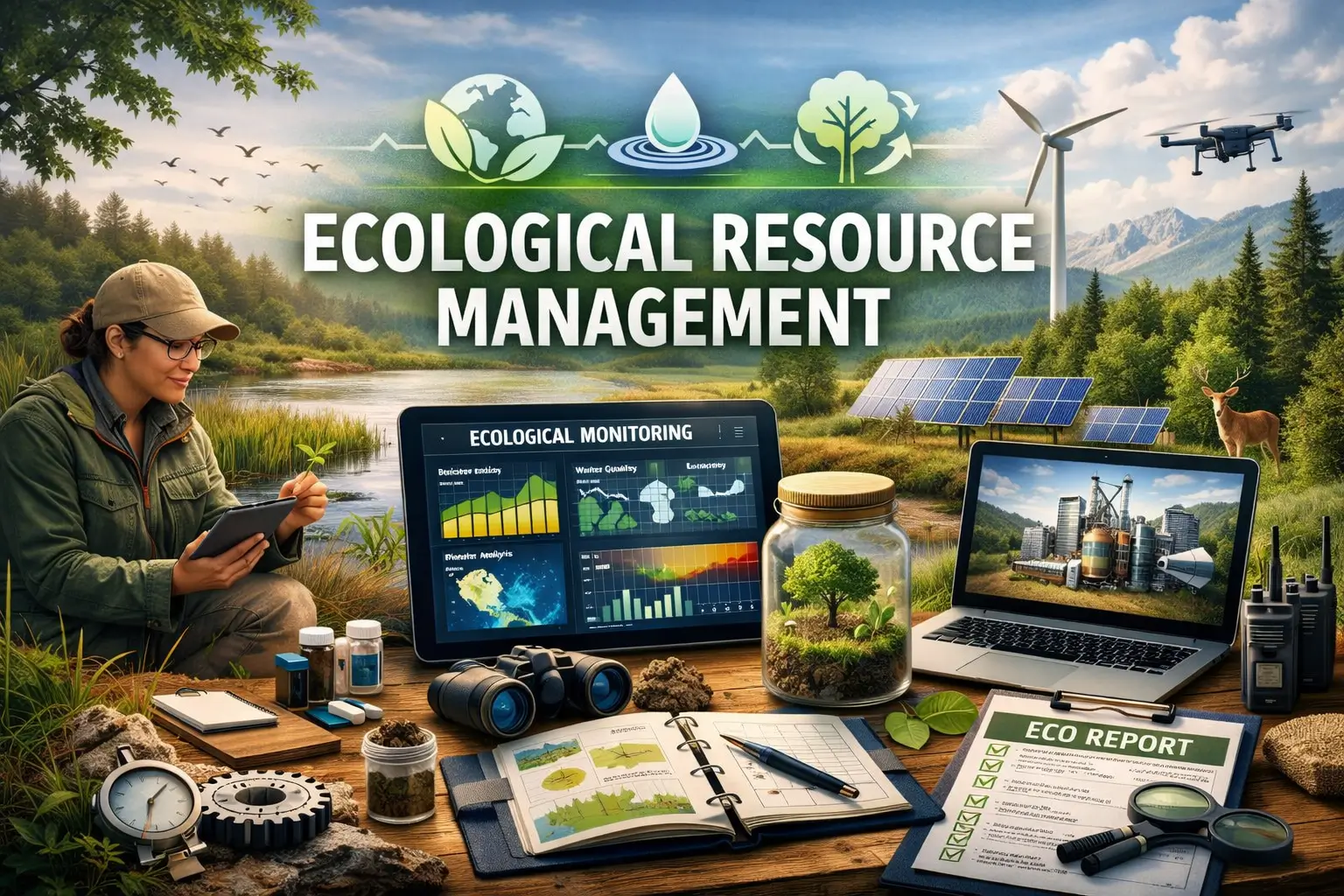
The Ecological Resource Management Course is a comprehensive program designed to help learners develop a strong understanding of how natural ecosystems and resources are managed to ensure environmental sustainability and long-term ecological balance. In today’s world, increasing population growth, industrialization, and urban expansion have placed immense pressure on natural resources, making ecological management more important than ever.
Ecological resource management focuses on the sustainable use, conservation, and restoration of natural resources such as land, water, forests, wildlife, and biodiversity systems. It aims to balance human needs with environmental protection to maintain ecosystem stability.
This course provides learners with practical knowledge of ecological systems by combining environmental science, resource management principles, conservation strategies, sustainability frameworks, and real-world applications. Whether you are a student, researcher, environmental professional, or sustainability enthusiast, this course provides essential knowledge for managing natural resources responsibly.
Course Overview
Ecological resources are the foundation of life on Earth, and their sustainable management is critical for environmental stability and human survival. Poor resource management can lead to deforestation, soil degradation, water pollution, and biodiversity loss.
First, learners explore the importance of ecological resource management in maintaining environmental balance and supporting sustainable development. Next, they understand how human activities impact natural ecosystems.
Additionally, the course explains ecosystem structure and function, biodiversity conservation, land and water resource management, forest conservation, wildlife protection, and sustainable agriculture practices. Learners also gain knowledge of environmental monitoring systems and ecological assessment techniques.
Furthermore, the curriculum combines theoretical ecological concepts with real-world case studies, helping learners understand how natural resources are managed in different environmental and geographical contexts.
What You Will Learn
The Ecological Resource Management Course covers a wide range of environmental science and sustainability topics.
First, learners study the fundamentals of ecology and understand how ecosystems function and maintain balance.
Next, participants learn biodiversity conservation techniques, including species protection, habitat preservation, and ecosystem restoration.
Additionally, the course introduces land resource management, including soil conservation, land-use planning, and sustainable development practices.
Furthermore, participants study water resource management, including watershed management, water conservation techniques, and sustainable usage strategies.
The course also explains forest resource management, including afforestation, deforestation control, and sustainable forestry practices.
Moreover, learners gain knowledge of wildlife conservation and the importance of protecting endangered species and natural habitats.
In addition, the curriculum covers environmental monitoring and assessment techniques used to evaluate ecosystem health.
Participants also study sustainable agriculture practices that minimize environmental impact while improving productivity.
Additionally, learners explore ecological restoration techniques for degraded ecosystems.
Furthermore, the course explains environmental policies and conservation frameworks that support ecological sustainability.
Finally, participants analyze real-world case studies of ecological resource management practices across different regions.
Skills You Will Gain
Upon successful completion of the course, learners will develop valuable professional skills, including:
- Ecological systems understanding
- Natural resource management
- Biodiversity conservation knowledge
- Ecosystem restoration techniques
- Water and land management skills
- Forest conservation awareness
- Environmental monitoring
- Sustainable agriculture understanding
- Climate and ecosystem analysis
- Environmental impact assessment
- Policy and conservation analysis
- Problem-solving skills
- Research and data interpretation
- Sustainability planning
- Ecological awareness
These skills are highly valuable across environmental organizations, government agencies, NGOs, research institutions, conservation groups, and sustainability consulting firms.
Benefits of the Course
The Ecological Resource Management Course provides learners with essential knowledge of environmental conservation and sustainable resource use.
First, the course helps learners understand how ecosystems function and why resource management is critical for environmental stability.
Additionally, participants gain awareness of global environmental challenges such as biodiversity loss, deforestation, and water scarcity.
Furthermore, learners develop practical skills in conservation, ecological assessment, and sustainable resource planning.
The course also enhances environmental awareness, analytical thinking, and problem-solving abilities.
As environmental sustainability becomes a global priority, professionals with ecological expertise are increasingly in demand.
Finally, learners gain the ability to contribute to conservation projects and environmental protection initiatives.
Who Should Enroll?
This course is ideal for:
- Environmental science students
- Ecology enthusiasts
- Conservation professionals
- NGO workers
- Government environmental officers
- Sustainability professionals
- Researchers
- Agricultural professionals
- Forestry workers
- Anyone interested in ecology and environmental protection
No prior experience is required. Beginners can easily understand the concepts.
Career Opportunities
After completing the course, learners may pursue opportunities such as:
- Ecologist
- Environmental Scientist
- Conservation Officer
- Sustainability Consultant
- Wildlife Conservationist
- Environmental Researcher
- Forestry Officer
- Water Resource Analyst
- Environmental Policy Assistant
- NGO Program Coordinator
- Ecological Data Analyst
- Environmental Educator
- Land Use Planner
- Climate Adaptation Officer
- Biodiversity Specialist
Additionally, learners can work across government agencies, environmental NGOs, conservation organizations, research institutes, and international development programs.
Certification
Upon successful completion of the Ecological Resource Management Course, participants receive a certification recognizing their understanding of ecosystems, biodiversity conservation, natural resource management, environmental monitoring, and ecological sustainability. This certification supports careers in environmental science and conservation fields.
Why Choose This Course?
The Ecological Resource Management Course combines ecological science with practical conservation strategies to prepare learners for sustainability-focused careers.
First, learners develop a strong understanding of ecosystems and natural resource management.
Additionally, the curriculum focuses on biodiversity conservation, environmental monitoring, and sustainable resource use.
Furthermore, participants gain real-world insights into ecological challenges and solutions.
Whether your goal is to work in environmental science, conservation, or sustainability, this course provides the knowledge, skills, and confidence needed to succeed.
Enroll today and build a strong foundation in ecological resource management and environmental conservation.
FAQ Section
1. What is the Ecological Resource Management Course?
It teaches how ecosystems and natural resources are managed sustainably for environmental protection.
2. Is this course suitable for beginners?
Yes. It is designed for students and beginners in environmental studies.
3. What topics are covered?
Topics include ecology, biodiversity, water and land management, forestry, and conservation practices.
4. Will I receive a certificate?
Yes. A certificate is provided upon completion.
5. Do I need prior ecology knowledge?
No. The course starts from basic environmental concepts.
6. Who should enroll in this course?
Students, researchers, NGO workers, and environmental professionals.
7. Is the course online?
Yes. It is available online with flexible learning.
8. What skills will I gain?
You will gain skills in ecology, conservation, and sustainable resource management.
9. Can this course help my career?
Yes. Ecological management skills are important in environmental careers.
10. Why is ecological resource management important?
It ensures the sustainable use of natural resources and protects ecosystems for future generations.



Reviews
There are no reviews yet.