
Introduction
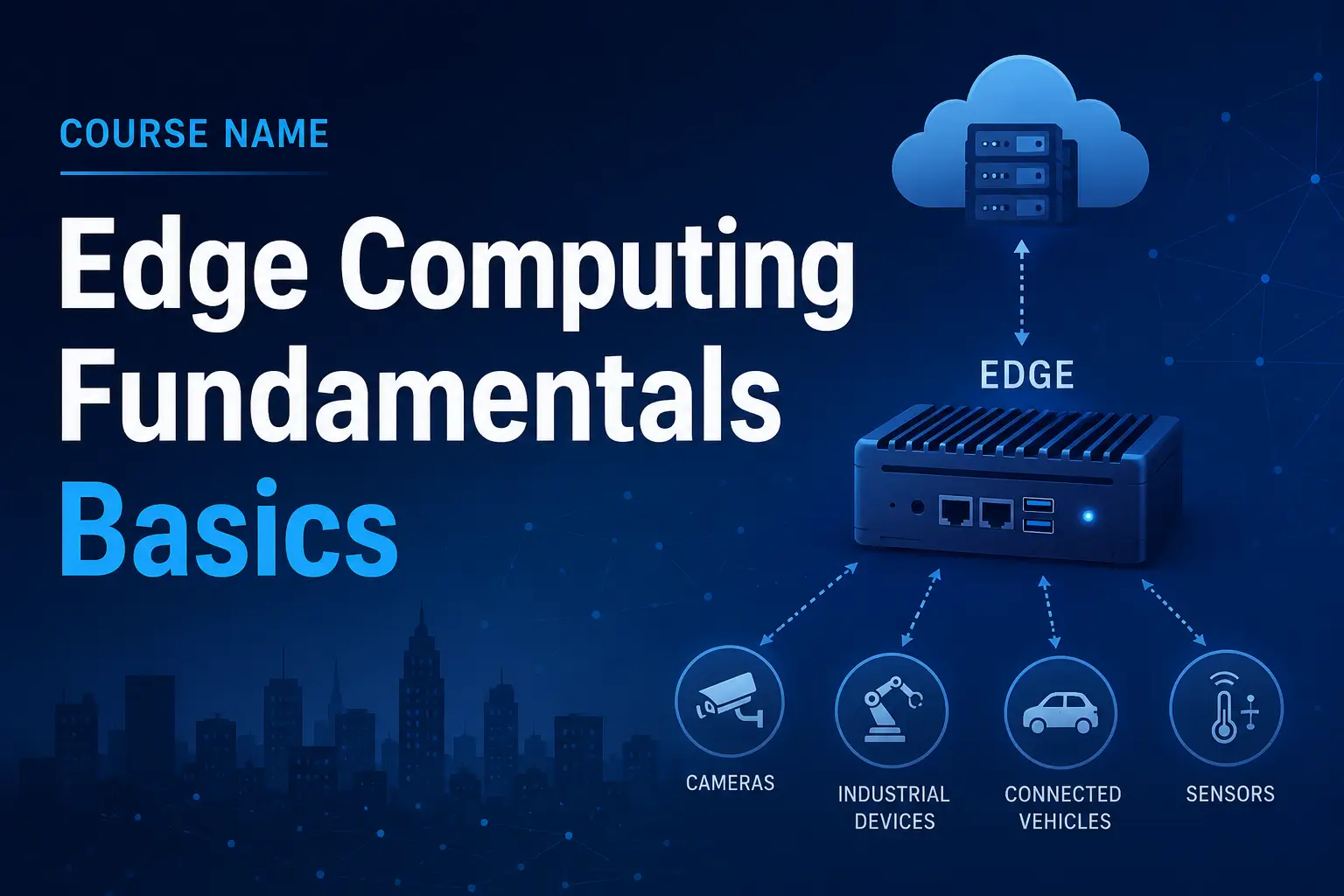
The Edge Computing Fundamentals Basics Course is a structured beginner-level program designed to help learners understand how edge computing processes data closer to the source instead of relying only on centralized cloud servers. In today’s connected world, where IoT devices and real-time applications are rapidly growing, edge computing plays a crucial role in improving speed, efficiency, and system performance.
Course Overview
Edge computing is a distributed computing model that brings data processing closer to devices such as sensors, mobile devices, and local servers. Additionally, it reduces latency by processing data locally instead of sending it to distant cloud servers.
Furthermore, this course explains how edge computing integrates with cloud systems and IoT networks to create faster and more efficient digital ecosystems. As a result, learners gain a clear understanding of modern distributed computing architecture.
Why Choose This Course?
With the rise of IoT devices, smart systems, and real-time applications, edge computing has become an essential technology. Moreover, industries require faster data processing and reduced network load for better performance.
Consequently, learning edge computing fundamentals provides strong career opportunities in cloud computing, IoT, networking, and system architecture roles.
This course simplifies complex distributed computing concepts so beginners can easily understand how edge systems function in real-world environments.
What You Will Learn
Edge Computing Fundamentals
Understand the core concepts of edge computing and distributed systems.
Cloud vs Edge Computing
Learn the differences between cloud computing and edge computing models.
IoT and Edge Integration
Understand how IoT devices use edge computing for faster processing.
Real-Time Data Processing
Learn how edge systems process data instantly for quick decision-making.
Edge Architecture Basics
Understand how edge networks and systems are structured.
Industry Applications
Explore use cases in smart cities, healthcare, manufacturing, and autonomous systems.
Skills You Will Gain
After completing this course, learners will develop:
Edge computing awareness
Distributed systems understanding
IoT fundamentals knowledge
Network architecture basics
Real-time processing concepts
Cloud computing comparison skills
Analytical thinking ability
System design awareness
Technology integration understanding
Future tech knowledge
Benefits of the Course
The Edge Computing Fundamentals Basics Course helps learners build essential knowledge required in modern computing environments. Additionally, it improves understanding of how data is processed in real-time systems.
Furthermore, edge computing skills are highly valuable in IoT, cloud computing, automation, and smart technology industries. As a result, learners gain strong exposure to next-generation computing careers.
Benefits include:
Strong foundation in edge computing
Better understanding of IoT systems
Improved knowledge of distributed computing
Exposure to future technologies
Career opportunities in cloud and IoT fields
Understanding of real-time systems
Industry-relevant technical awareness
Future-ready computing skills
Who Should Enroll?
This course is suitable for:
Students
IT beginners
Network engineers
IoT enthusiasts
Cloud computing learners
Software developers
Tech enthusiasts
Engineering students
System administrators
Data technology learners
Career Opportunities
After completing this course, learners may pursue roles such as:
Edge Computing Assistant
IoT Support Technician
Cloud Support Associate
Network Operations Assistant
System Analyst Trainee
Data Processing Assistant
IT Infrastructure Trainee
Smart Systems Support Executive
Junior Cloud Technician
Technology Analyst Intern
Certification Details
Upon successful completion of the Edge Computing Fundamentals Basics Course, learners receive a certification recognizing their understanding of edge computing principles, distributed systems, and real-time data processing concepts.
Conclusion
The Edge Computing Fundamentals Basics Course provides a strong foundation in distributed computing, IoT systems, and real-time data processing technologies. Furthermore, edge computing is becoming a key technology for modern smart systems and digital infrastructure.
Therefore, developing edge computing knowledge helps learners build future-ready skills and prepares them for advanced careers in cloud computing, IoT, and emerging technologies.
FAQ SECTION
1. What is Edge Computing Fundamentals Basics Course?
It is a beginner-level course that teaches how edge computing works.
2. Who should take this course?
This course is suitable for students and IT beginners.
3. Do I need coding knowledge?
No, it is beginner-friendly.
4. What will I learn in this course?
You will learn edge computing, IoT, and distributed systems.
5. Why is edge computing important?
It improves speed and reduces data processing delay.
6. Is this course technical?
It is foundational and easy to understand.
7. Can I get a job after this course?
It helps in entry-level IT and IoT roles.
8. Will I learn cloud computing basics?
Yes, cloud vs edge concepts are included.
9. Will I get a certificate?
Yes, a completion certificate is provided.
10. Is this useful for future careers?
Yes, it is highly useful for IoT and cloud computing careers.



Reviews
There are no reviews yet.