
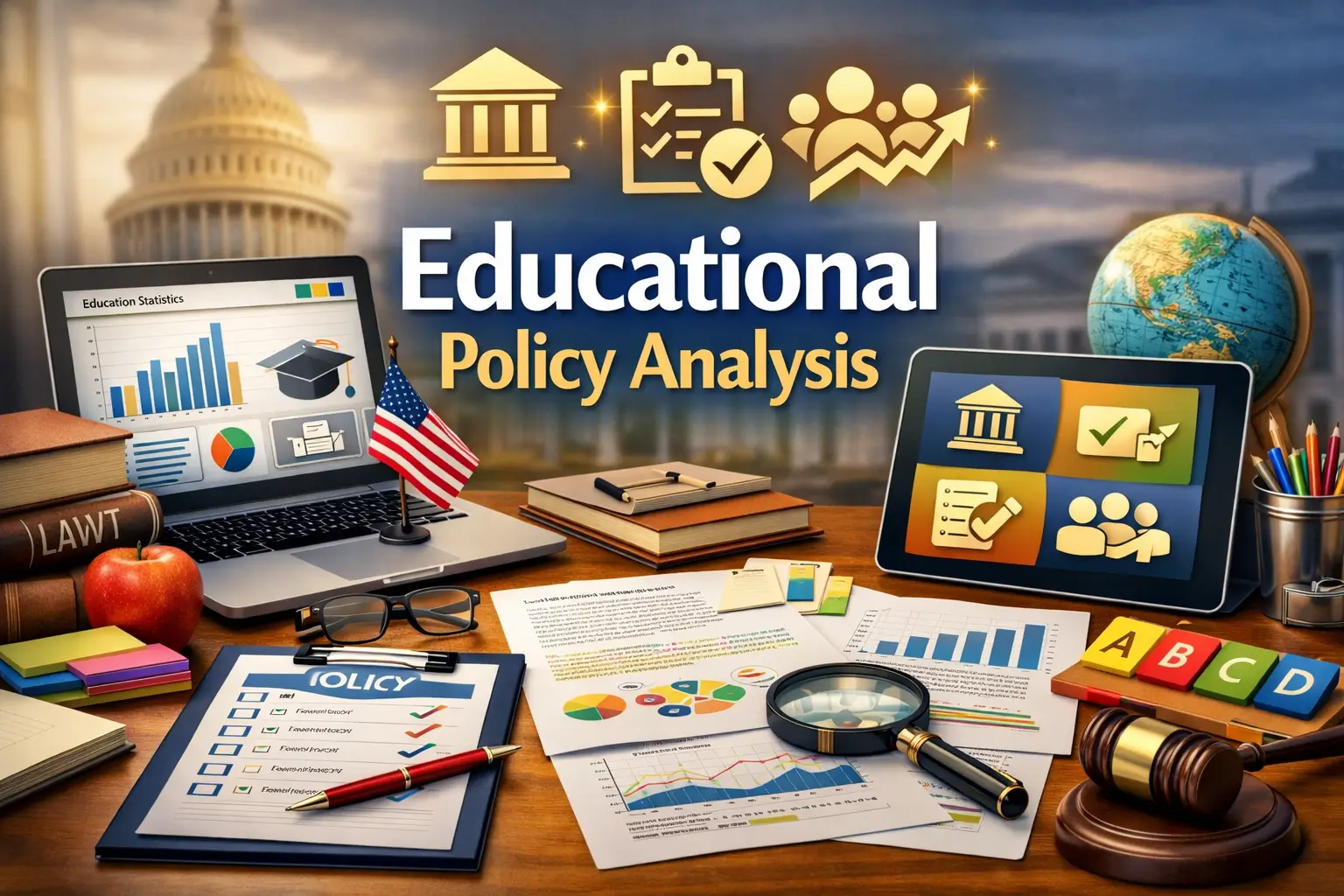
Educational Policy Analysis Course
The Educational Policy Analysis Course is designed to help learners understand how education policies are developed, implemented, monitored, and evaluated to improve educational systems and learning outcomes. Educational policies influence curriculum design, school administration, teacher development, student achievement, funding, governance, and equal access to quality education.
This course introduces the core concepts of educational policy analysis, including education governance, policy formulation, strategic planning, policy evaluation, education reform, stakeholder engagement, research-based decision-making, legal considerations, ethics, and evidence-based policy development. Learners will gain practical knowledge of analyzing education policies and assessing their impact on schools, institutions, communities, and national education systems.
Whether you are an educator, school administrator, policymaker, researcher, education consultant, student, or public sector professional, this course provides a comprehensive foundation in educational policy analysis.
Course Overview
The course explores how educational policies shape teaching, learning, administration, and institutional performance. Learners will examine policy development frameworks, implementation strategies, monitoring techniques, and evaluation methods while understanding the role of research and data in policy decisions.
The curriculum combines policy theory with practical examples and real-world case studies, helping learners develop analytical skills for evaluating education policies across different educational environments.
What You Will Learn
By completing this course, you will be able to:
- Understand educational policy concepts.
- Analyze education systems and governance.
- Evaluate education policies using analytical frameworks.
- Understand policy development processes.
- Support education planning and reform initiatives.
- Apply evidence-based policy analysis techniques.
- Assess policy implementation strategies.
- Monitor educational policy outcomes.
- Interpret education data for decision-making.
- Engage education stakeholders effectively.
- Understand legal and ethical policy considerations.
- Evaluate education reform initiatives.
- Strengthen strategic thinking skills.
- Improve policy communication.
- Support continuous improvement in education.
Course Curriculum
The curriculum begins with educational policy fundamentals before progressing through governance, policy development, strategic planning, analytical frameworks, education reform, implementation, monitoring, evaluation, stakeholder engagement, legal and ethical issues, comparative education systems, practical case studies, and future policy trends.
Practical learning activities help learners apply policy analysis methods to real-world educational challenges.
Skills You Will Gain
After completing the course, you will develop skills in:
- Educational Policy Analysis
- Education Governance
- Policy Development
- Strategic Planning
- Policy Evaluation
- Education Research
- Evidence-Based Decision Making
- Stakeholder Engagement
- Educational Leadership
- Public Policy Analysis
- Critical Thinking
- Data Interpretation
- Communication Skills
- Education Management
- Problem-Solving
Benefits of the Course
This course helps learners understand how educational policies influence institutions, educators, and students while strengthening analytical, leadership, and strategic planning skills. Knowledge of educational policy analysis supports informed decision-making, institutional improvement, and effective policy implementation.
These skills are valuable across schools, universities, government education departments, nonprofit organizations, international education agencies, research institutions, and consulting firms.
Who Should Enroll
This course is ideal for:
- School Administrators
- Teachers
- University Faculty
- Education Consultants
- Education Researchers
- Policy Analysts
- Government Officials
- Academic Coordinators
- Education Students
- Nonprofit Education Professionals
- Curriculum Developers
- Institutional Leaders
- Program Managers
- Public Administration Professionals
- Anyone interested in education policy
Career Opportunities
After completing the Educational Policy Analysis Course, learners may pursue or strengthen careers in roles such as:
- Education Policy Analyst
- Education Consultant
- School Administrator
- Academic Coordinator
- Education Researcher
- Program Manager
- Government Education Officer
- Policy Research Associate
- Education Project Coordinator
- Institutional Development Specialist
These skills are valuable across government education departments, schools, universities, educational organizations, nonprofit institutions, research centers, consulting firms, and international education agencies.
Certification Details
Upon successful completion, learners receive a Certificate of Completion recognizing their expertise in Educational Policy Analysis and education governance. This certification enhances your professional profile and supports career advancement in education management, public policy, educational leadership, research, and institutional development.
If you want to understand how education policies influence learning systems and contribute to educational improvement, the Educational Policy Analysis Course provides practical, industry-relevant knowledge for today’s education sector.
FAQ SECTION
1. What is the Educational Policy Analysis Course?
It teaches how to analyze, evaluate, and understand educational policies, governance systems, and education reform strategies.
2. Is this course suitable for beginners?
Yes. The course begins with educational policy fundamentals and is suitable for beginners and experienced education professionals.
3. What topics are covered?
Educational policy, governance, policy development, strategic planning, policy evaluation, education reform, stakeholder engagement, legal considerations, and evidence-based decision-making.
4. Do I need previous policy experience?
No. The course is designed for educators, students, administrators, researchers, policymakers, and anyone interested in education policy.
5. Is the course online?
Yes. It is fully online and self-paced.
6. Will I receive a certificate?
Yes. A certificate is awarded after successfully completing the course.
7. Who should enroll?
Teachers, school administrators, researchers, education consultants, policymakers, government officials, academic coordinators, and education students.
8. What skills will I gain?
Educational policy analysis, governance, policy evaluation, strategic planning, research, stakeholder engagement, communication, critical thinking, and evidence-based decision-making.
9. Can this course help my career?
Yes. Educational policy analysis skills are valuable in schools, universities, government agencies, nonprofit organizations, consulting firms, research institutions, and international education organizations.
10. Why is Educational Policy Analysis important?
Educational Policy Analysis helps improve education systems by evaluating policies, supporting evidence-based decisions, promoting effective governance, guiding education reforms, and enhancing learning outcomes through informed planning and implementation.



Reviews
There are no reviews yet.